
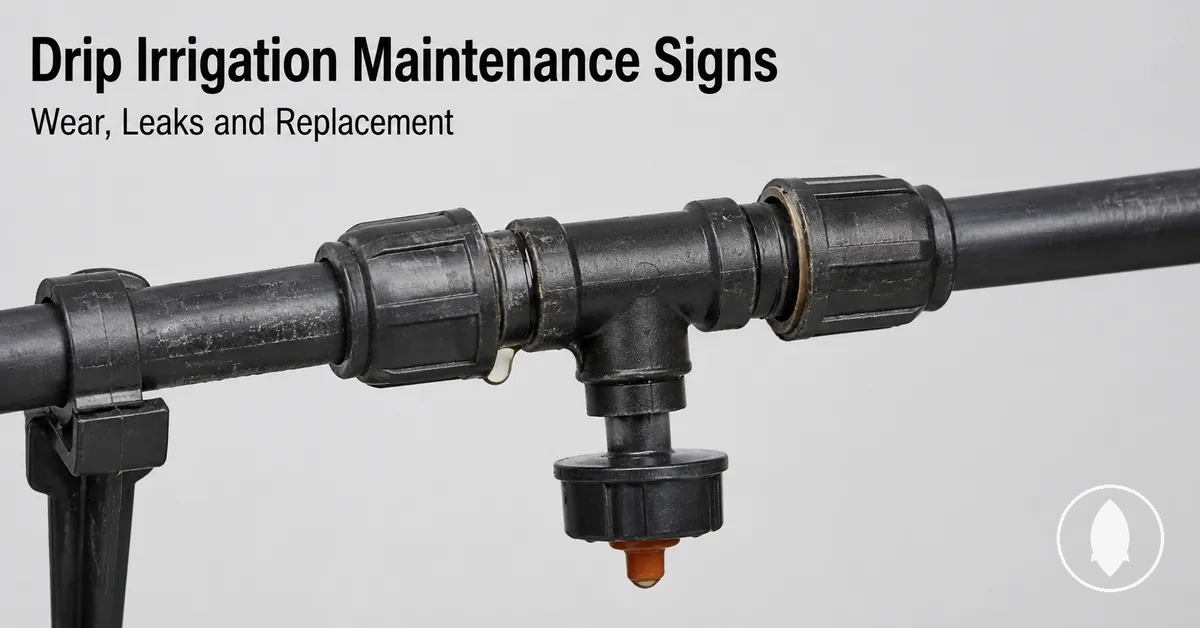
Drip irrigation fitting maintenance and replacement signs
Drip irrigation fittings are connection components that need maintenance attention to help identify changing conditions before connection reliability is affected. Maintenance focuses on inspecting fitting condition, connection points, and sealing behaviour, while replacement signs are conditional signals that may indicate a fitting needs further evaluation.
Drip irrigation fitting condition is influenced by how leaks, wear signs, pressure changes, and reuse are considered together during inspection. A fitting that shows seepage, looseness, cracking, or reduced seal reliability may require closer checking because the cause can depend on the fitting body, tubing contact, pressure behaviour, and surrounding system conditions.
This page focuses on recognising maintenance conditions rather than providing a full repair or replacement procedure. Drip irrigation fittings can be assessed through inspection-led criteria that consider wear signs, connection points, seal reliability, and reuse condition before deciding what action may be appropriate.
What fitting maintenance covers in a drip irrigation system
Drip irrigation fitting maintenance is the process of assessing fitting condition, connection points, and sealing reliability to understand whether a connection remains suitable for continued use. The maintenance scope covers inspection, cleaning, tubing contact, reuse condition, and replacement cues based on observed conditions rather than a fixed replacement schedule.
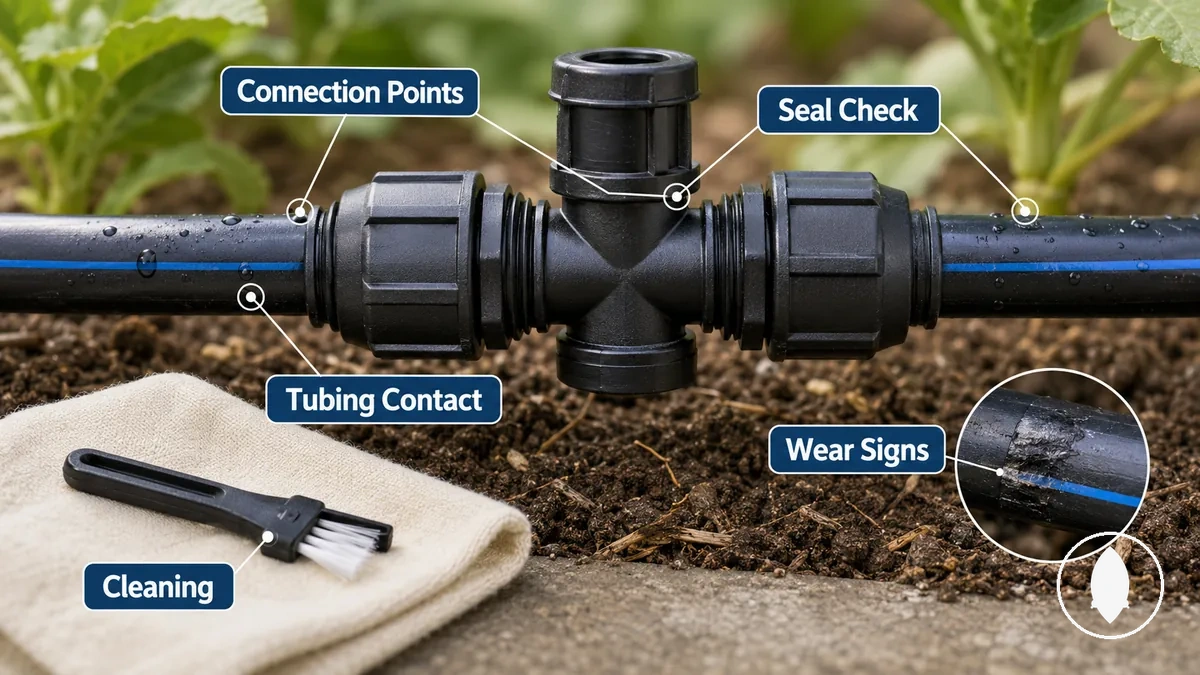
Maintenance of drip irrigation fittings focuses on recognising conditions that may affect connection reliability. Inspection may include looking at connectors, couplings, and end plugs for changes such as dirt buildup, poor seating, visible wear, or altered sealing behaviour. Cleaning or reseating may be considered in some situations, but the need for further action depends on wear, seal condition, tubing contact, and pressure behaviour.
Fitting maintenance is separate from installation, leak repair, and replacement procedures. The purpose of maintenance is to recognise condition changes and possible replacement cues before a separate repair or replacement decision is needed. For broader information about the fitting category and related connection options, see the drip irrigation fittings hub.
Common wear signs on drip irrigation fittings
Drip irrigation fittings can show wear signs through changes in the fitting body, connection points, seal condition, and water behaviour around the system. These signs help identify when inspection may be needed, but a visible mark or ageing sign does not automatically mean a fitting requires replacement.
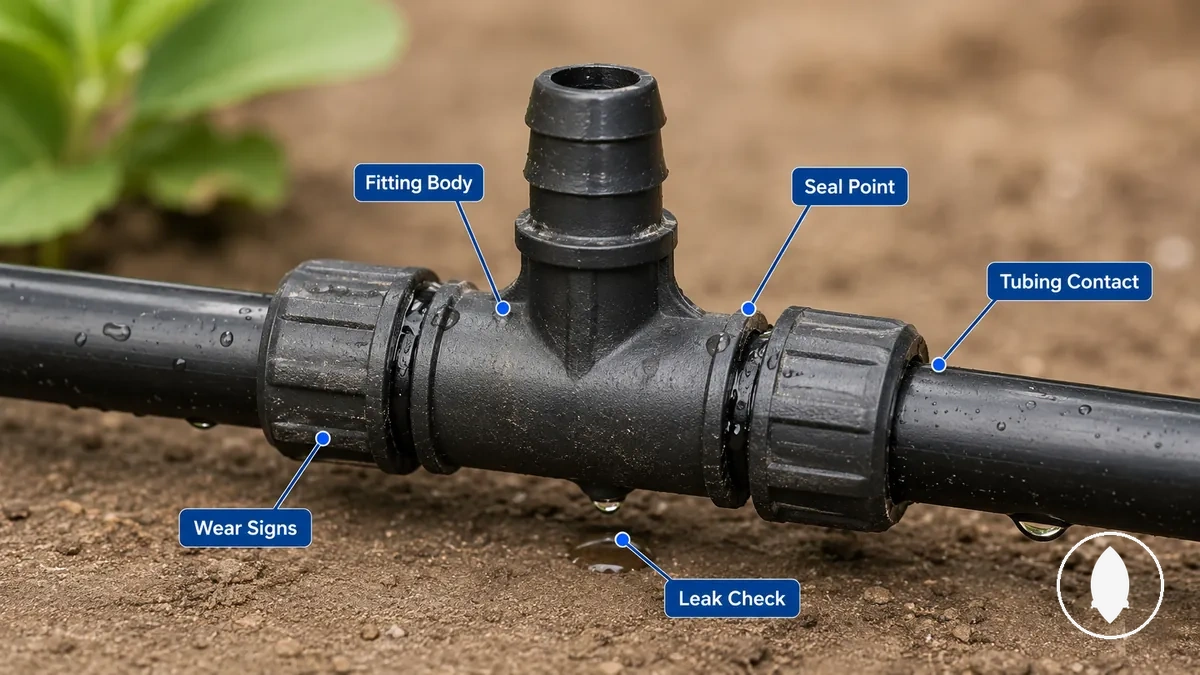
Wear signs depend on the condition of the fitting, tubing contact, and how water behaves near the connection. Inspection can help distinguish normal ageing from conditions that may affect seal reliability, such as cracking, looseness, poor seating, or visible leaks around fitting connections.
Common wear signs on drip irrigation fittings can be reviewed by checking each part and its condition:
- Fitting body: Cracking, brittleness, or distortion may indicate a change in fitting condition that could affect connection reliability.
- Seal point: Seepage or changes in sealing contact may indicate that the connection needs closer inspection.
- Tubing contact: Movement or reduced grip between tubing and fittings may increase leak risk depending on the connection condition.
- Connector opening: Dirt, blockage, or poor seating may affect how securely components connect.
- Water symptoms: Visible leaks or moisture around connection points can act as signals that further checking may be needed.
Wear signs on drip irrigation fittings should be interpreted through inspection of the specific condition rather than treated as automatic failure. The main purpose is to connect visible changes with possible effects on sealing reliability and maintenance needs.
Leaks, seepage, and wet soil around connection points
Leaks, seepage, and wet soil around a drip irrigation fitting connection point are symptoms that require inspection to identify the possible source of the issue. Water at a connection may indicate a condition involving the fitting seal, tubing movement, pressure behaviour, or connection quality, but the visible symptom does not confirm a single cause.
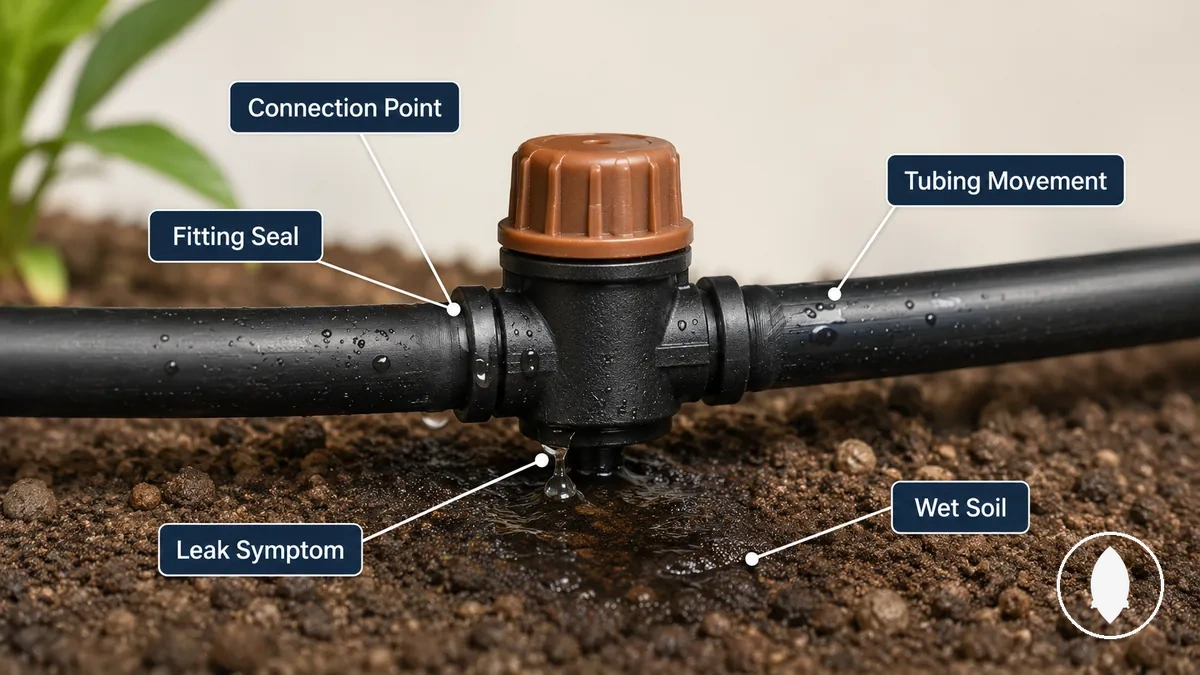
Inspecting leaks around drip irrigation fittings involves looking at where water appears and how the connection behaves. Seepage near a fitting may relate to poor seating, movement between tubing and the fitting, pressure changes, or a damaged seal. Wet soil around one connection can differ from moisture across multiple areas of a watering line, which may suggest a wider condition rather than a single fitting issue.
A visible fitting leak and a wider watering-line issue can create similar symptoms, so the connection point should be considered before deciding on the next maintenance action. For more detailed guidance on identifying these conditions, see leak symptoms to inspect.
Cracked, brittle, loose, or distorted fitting bodies
Drip irrigation fitting bodies can show physical damage through cracks, brittleness, distortion, looseness, or reduced grip that may affect connection reliability. These fitting-body conditions are signs for inspection because changes around the connection area can increase seal risk depending on tubing contact, pressure behaviour, and the severity of the damage.
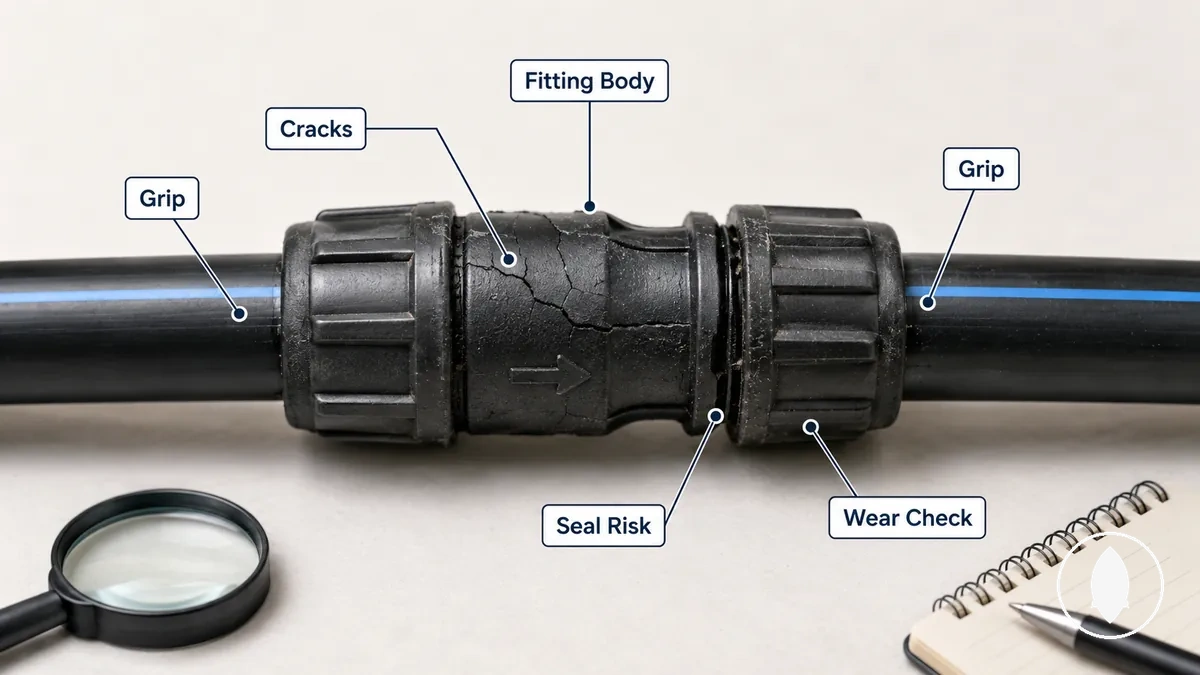
Visible fitting-body changes should be interpreted as condition signals rather than automatic replacement decisions. Cracks, split barbs, misshapen ends, or reduced grip may affect how securely a fitting seals, while stiffness, discoloration, or surface changes can vary based on material quality, UV exposure, mineral buildup, and operating conditions.
Common fitting-body conditions to inspect include:
- Cracks: Visible splits may increase seal risk when they affect the fitting connection area.
- Brittleness: A brittle fitting body may have reduced flexibility and may need closer inspection before reuse.
- Distortion: Misshapen ends or damaged barbs can affect tubing contact and connection stability.
- Looseness: Reduced grip or movement between the fitting and tubing may increase leak risk under certain pressure conditions.
A fitting body that no longer maintains dependable sealing contact may need further evaluation. The condition of the fitting, tubing connection, pressure cycles, and recurrence of issues can help determine whether continued use is suitable.
Blocked, scaled, or hard-to-seat connector openings
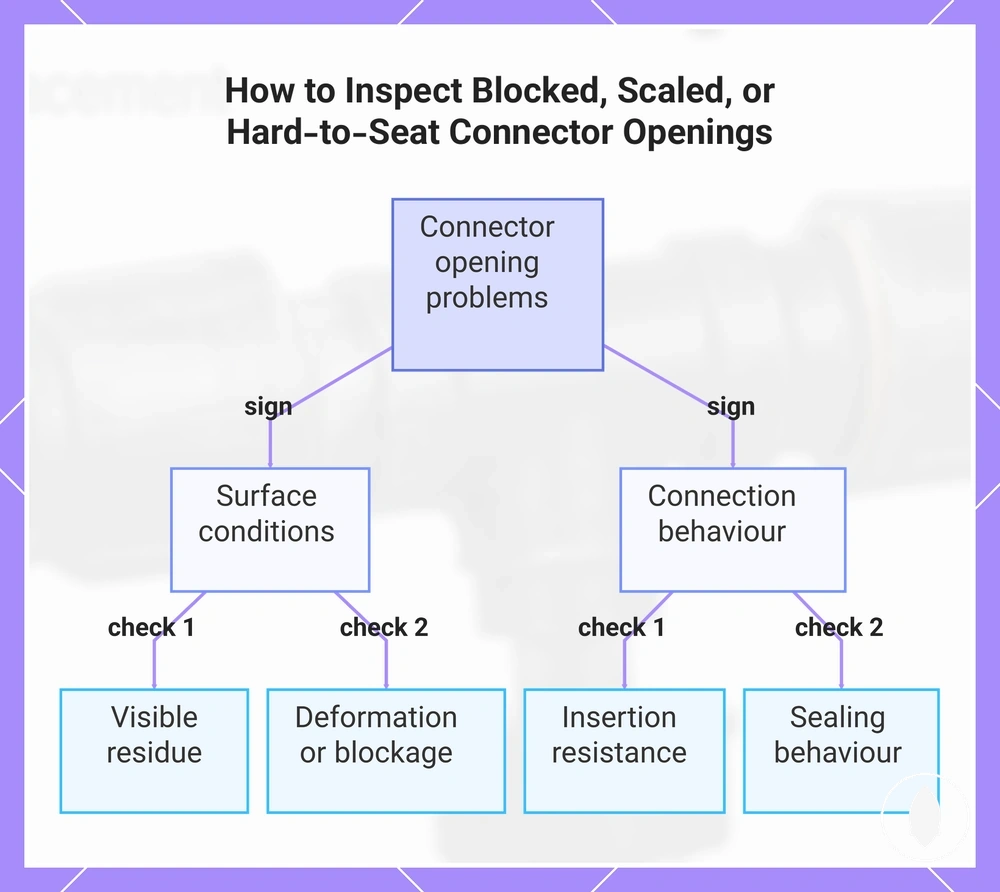
Drip irrigation fitting openings that are blocked, scaled, or difficult to seat can affect connector reliability by changing how components connect and maintain sealing contact. These conditions are wear signs that deserve inspection because residue, deformation, partial blockage, or poor seating may increase leak risk or affect connection behaviour.
Connector opening condition should be assessed by looking at the fitting body, connection points, and tubing contact rather than assuming every restriction has the same cause. Mineral buildup, dirt, or removable residue may require cleaning consideration, while deformation or damaged openings may indicate a less reliable fitting condition.
Inspection of blocked, scaled, or hard-to-seat drip irrigation fitting openings can focus on these conditions:
- Visible residue: Dirt or buildup around an opening may affect seating and should be checked during maintenance.
- Insertion resistance: Unusual difficulty when seating a connector may indicate a condition issue at the opening or connection point.
- Opening condition: Deformation or partial blockage may affect how securely the fitting connects.
- Sealing behaviour: Changes around the connection point may indicate reduced seal reliability or increased leak risk.
This chart shows the key signs and inspection points for blocked, scaled, or hard-to-seat drip irrigation fitting openings.
How long drip irrigation fittings usually last
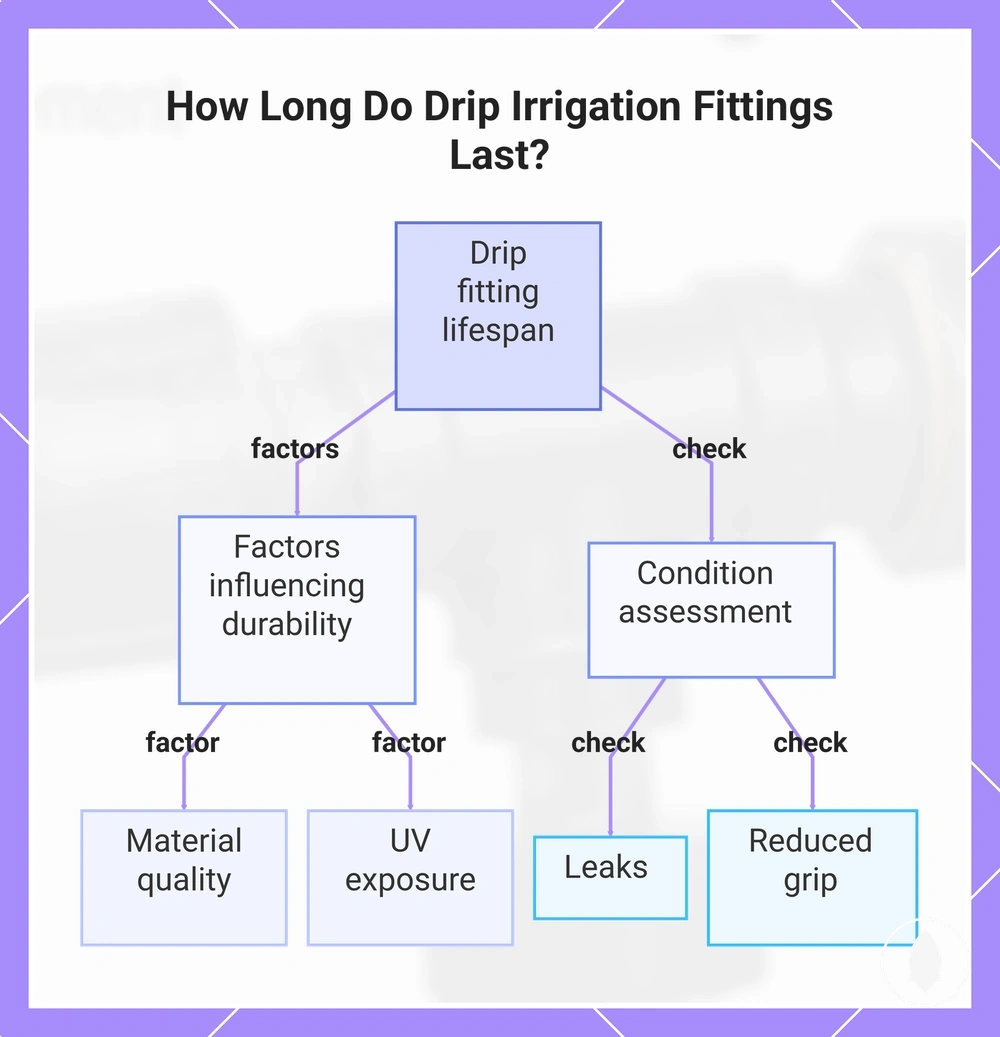
Drip irrigation fittings do not have a fixed lifespan because their condition depends on material quality, exposure, pressure, reuse, storage, and system conditions. The reliability of a fitting is assessed through wear signs, inspection, seal reliability, connection points, and whether the fitting continues to maintain suitable tubing contact.
Factors such as UV exposure, mineral buildup, seasonal removal, water pressure, and repeated reuse can influence how fitting bodies, seals, and connections behave over time. A fitting may show different durability patterns depending on its environment, maintenance conditions, and how the connection performs during use.
Drip irrigation fitting lifespan is therefore better understood through condition-based assessment rather than age alone. Checking for leaks, reduced grip, changes in fitting body condition, or connection movement can help identify when a fitting may need closer inspection or further evaluation.
This chart shows the key factors affecting drip fitting durability and the condition-based checks used to assess their lifespan.
Material quality, UV exposure, water pressure, and mineral buildup
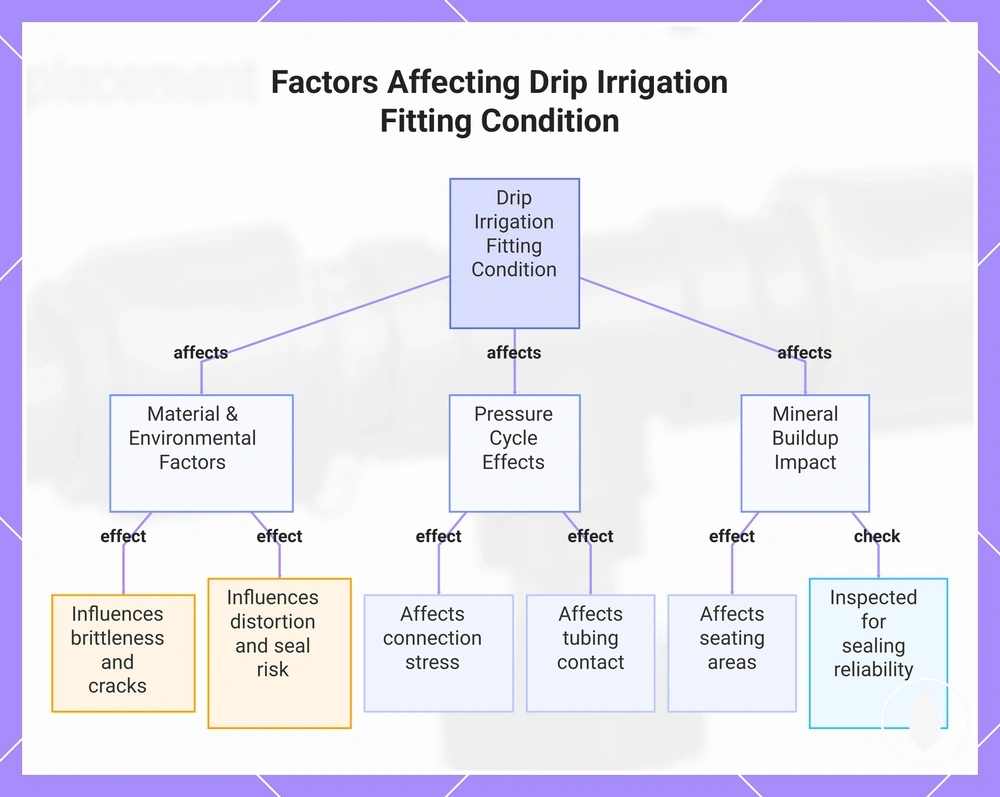
Drip irrigation fitting condition can change when material quality, UV exposure, water pressure, and mineral buildup affect the fitting body and connection areas. These conditions can influence brittleness, cracks, distortion, and seal risk, but the effect depends on the fitting, environment, and level of exposure.
Material and operating conditions should be considered as connected attributes rather than isolated causes. Plastic quality, UV exposure, and heat may relate to changes in fitting-body condition, while pressure cycles can affect connection stress and tubing contact. Mineral buildup may affect seating areas in some situations, and inspection helps determine whether a change may affect sealing reliability.
These factors can be reviewed through condition-based maintenance checks. For further details on how these considerations relate to fitting durability, see durability and material factors.
This chart shows the main factors (material quality, UV exposure, water pressure, mineral buildup) that influence drip irrigation fitting condition and the resulting effects on fitting body, connection stress, and seating areas.
Seasonal use, storage, and repeated reuse effects
Drip irrigation fitting condition can change after seasonal use, storage, and repeated reuse, especially when fittings are removed and reconnected multiple times. Reconnection should be checked because tubing ends, connector grip, dirt entry, and seal fatigue can affect whether a fitting maintains a reliable connection.
Seasonal use and storage conditions can influence how a fitting behaves when returned to service. Repeated disconnection may affect tubing contact, heat exposure may contribute to condition changes, and dirt entry may affect connection areas. An intact-looking reused fitting may still need inspection if it no longer holds securely after reconnection due to changes in grip or seal condition.
Checks after storage or reconnection can focus on these fitting conditions:
- Removal condition: Repeated disconnection may affect tubing ends and the grip between the fitting and tubing.
- Storage exposure: Heat, dirt entry, or storage conditions may influence fitting and seal condition.
- Reconnection fit: A connector that feels different during reconnection may need inspection before reuse.
- Seal condition: Changes in sealing contact may increase leak risk depending on the fitting condition.
Routine inspection points for drip irrigation fittings
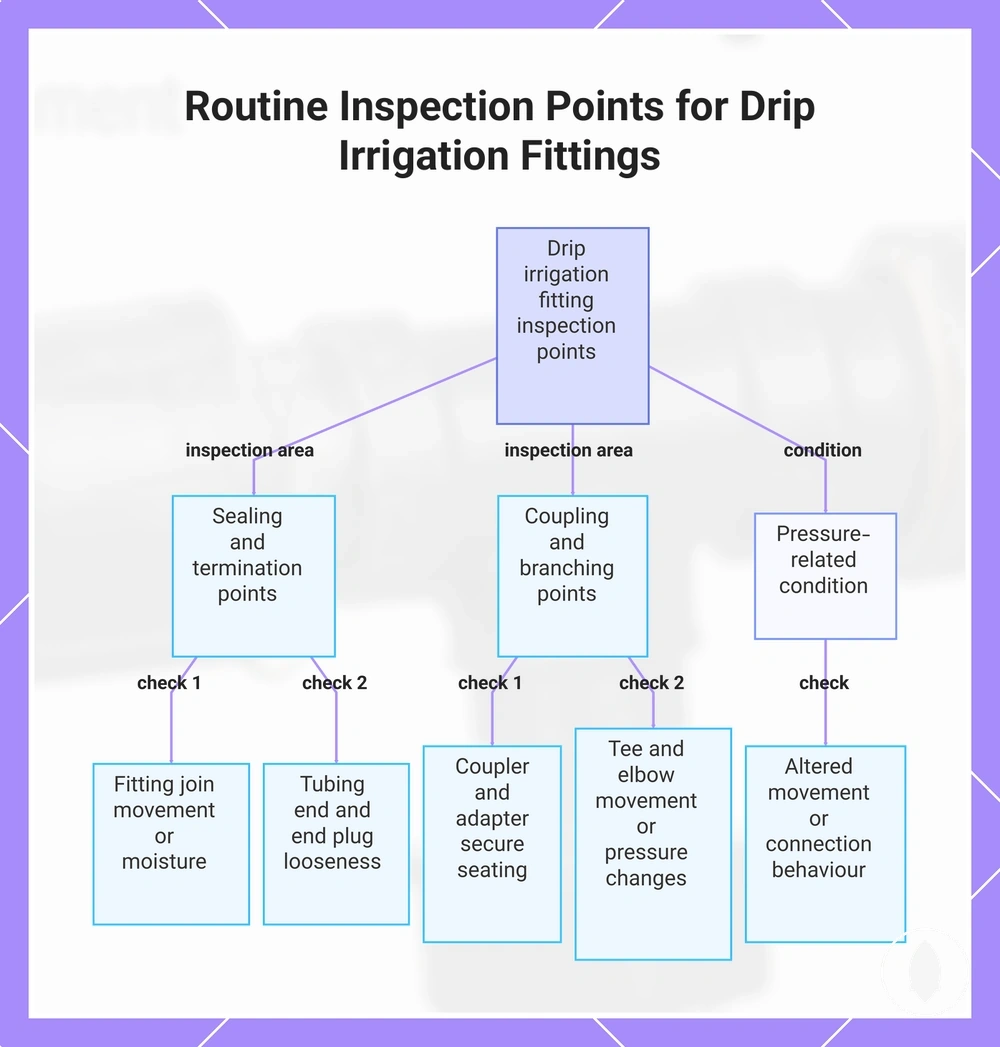
Routine inspection of drip irrigation fittings follows the places where fittings seal, branch, terminate, or move under pressure. These inspection points help identify connection conditions that may need attention, such as changes in grip, movement, sealing contact, or visible signs that require further checking.
The most useful inspection pattern focuses on the role each fitting point plays rather than treating every connection the same. Checking these areas can help determine whether a fitting should be cleaned, monitored, adjusted, or flagged for further evaluation.
- Connection points: Inspect fitting joins for movement, visible moisture, or changes in sealing contact that may indicate a condition worth checking.
- Tubing ends: Check tubing ends where they meet fittings because changes in grip or contact may affect connection reliability.
- Couplers and adapters: Review joining points for secure seating and changes that may affect how components connect.
- End plugs: Inspect termination points for looseness, residue, or sealing changes that may influence leak risk.
- Tees and elbows: Check branching and directional fittings where movement or pressure changes may affect connection conditions.
- Pressure changes: Consider fitting condition after pressure changes because altered movement or connection behaviour may require inspection.
A routine inspection path helps organise maintenance around fitting function and connection roles. The purpose is to identify fitting conditions that may need cleaning, monitoring, or further attention without turning inspection into a full system audit.
This chart groups the main inspection areas for drip irrigation fittings by function: sealing/termination, coupling/branching, and pressure-related conditions.
Couplers, end plugs, adapters, elbows, tees, and branch connections
Drip irrigation fitting connection roles determine where routine inspection may be most useful because couplers, end plugs, adapters, elbows, tees, and branch connections create points where fittings seal, join, redirect, or support tubing contact. These connection points deserve closer attention because movement, grip changes, leaks, or sealing changes may indicate a condition that requires further inspection.
Inspection of these fitting roles focuses on function rather than treating each component as a separate product type. Branch and end-point fittings may show maintenance concerns when movement or seal changes occur, while straight tubing sections may not show the same connection-related conditions.
Common fitting roles to review during inspection include:
- Couplers: Inspect joining points for tubing contact, grip, and seal reliability changes that may affect the connection.
- End plugs: Check closure points for movement or sealing changes that may increase leak risk.
- Adapters: Review transition points where connections meet for secure seating and condition changes.
- Elbows: Inspect redirected connections where movement may affect tubing contact or seal condition.
- Tees and branch connections: Check split points where multiple paths meet and where connection movement may require closer attention.
Inspecting fittings by their connection role creates a more focused maintenance approach. The goal is to identify changes in seal reliability, movement, or tubing contact rather than treat every fitting condition as a failure.
Fit security after flushing, pressure changes, or line movement
Drip irrigation fitting fit security can change after flushing, pressure changes, or line movement when connection points shift or tubing contact becomes less stable. Movement, seepage, or loosening after pressure resumes are signs that deserve inspection because they may indicate a weaker connection condition.
Post-flush reconnection and pressure changes can reveal fitting conditions that are not obvious during normal operation. A loose grip, tubing movement, or a fitting that shifts under operating pressure may affect seal reliability, while the specific cause depends on the fitting body, connection points, and surrounding conditions.
Verification after movement or pressure-related events can focus on these fitting conditions:
- Post-flush reconnection: Check whether fittings remain seated correctly after reconnection and whether connection points maintain stable contact.
- Tubing movement: Inspect tubing contact and grip where movement may affect fitting stability or leak risk.
- Pressure changes: Observe fittings after pressure resumes for shifting, seepage, or changes around the connection point.
- Loose connections: Review fittings that move or show reduced sealing contact for further inspection.
Fit security checks help distinguish event-related connection changes from wider conditions. If multiple fittings show similar symptoms, the cause may involve a broader system condition rather than one isolated fitting.
When to repair a fitting and when to replace it
Repair or replace decisions for drip irrigation fittings depend on the damage pattern, seal reliability, tubing condition, and whether the issue returns after maintenance. Repair may suit minor sealing or connection issues, while replace decisions may be considered when fittings are damaged, unreliable, or repeatedly showing the same problem.
The right direction depends on the fitting condition, connection points, and recurrence of the issue. A repair coupling, end plug, or similar repair approach may suit a limited connection problem when the fitting body and tubing condition remain suitable, while cracks, distortion, recurring leaks, or reduced grip may indicate a less reliable connection.
The following comparison organises common decision factors by fitting condition and likely maintenance outcome:
| Condition | Repair or replace consideration |
|---|---|
| Minor seal or connection issue with stable fitting condition | Repair may be suitable when seal reliability can be maintained. |
| Damage pattern such as cracks, distortion, or unreliable fitting body condition | Replace consideration may apply when the connection no longer remains dependable. |
| Recurrence after previous maintenance | Repeated issues may indicate that further evaluation is needed rather than another minor repair. |
| Changed tubing condition or reduced grip | The tubing condition may affect whether a repair remains suitable. |
The repair versus replace choice should be based on the condition of the fitting, seal, and connection rather than a single symptom. When replacement is the appropriate direction after these criteria are considered, see remove and replace worn fittings for the next stage.
Minor sealing problems suitable for plugs, washers, or repair couplings
Minor sealing problems in drip irrigation fittings may be suitable for repair when the fitting and nearby tubing can still maintain reliable seal reliability. Small issues involving end closures, washers, or repair coupling situations can be considered for maintenance when the damage pattern is limited and the connection remains stable.
Repair suitability depends on the condition of the fitting, sealing surfaces, and tubing condition after inspection. These criteria help identify situations where a simple repair may be appropriate:
- Seal issue: A minor sealing problem may suit repair when the fitting connection and sealing surface can still support reliable contact.
- Small tubing hole: A small puncture may be suitable for repair when the surrounding tubing condition remains suitable for a secure connection.
- End closure: An end plug or similar closure may address a local issue when the fitting and connection area remain stable.
- Repair coupling: A repair coupling may suit a limited connection problem when tubing grip and seal reliability can still be maintained.
Repair is not suitable for every fitting condition, and recurrence after maintenance can indicate that a replace decision may need consideration. The key factors are the damage pattern, fitting condition, seal reliability, and whether the repaired connection can continue to hold securely.
Damage patterns that make replacement the safer choice
Damage patterns in drip irrigation fittings can indicate when replace decisions may be more suitable than repeated repair. Replacement consideration increases when structural damage, recurring problems, or poor seating affect seal reliability and the ability of the connection to remain dependable.
The decision depends on damage severity, recurrence, fitting condition, and tubing condition rather than a single symptom. The following criteria help identify conditions where further repair may be less suitable:
- Cracked fitting body: Visible cracks may affect seal reliability when they interfere with the connection area or fitting structure.
- Warped ends or failed barbs: Distorted connection points may reduce tubing grip and prevent dependable seating.
- Brittle plastic: Brittleness may indicate a fitting condition where repeated repair may not maintain reliable connection performance.
- Poor seating or looseness: A fitting that shifts after reconnection may require closer replacement consideration when the connection cannot remain stable.
- Recurring leaks: Repeated leaks after maintenance may indicate an unresolved damage pattern rather than a one-time sealing issue.
A single leak does not always mean a fitting must be replaced, especially when the fitting and tubing condition remain suitable for repair. However, recurring failure or structural damage changes the decision because maintaining seal reliability may become more difficult.
When reused fittings are no longer reliable
Reused drip irrigation fittings should be inspected before reuse because a fitting can appear intact while no longer maintaining a dependable connection. Reuse may become unsuitable when reduced grip, changed tubing contact, seal fatigue, dirt contamination, or recurrence affects seal reliability.
The condition of reused fittings should be assessed through the fitting, connection area, and tubing condition rather than appearance alone. These reuse-readiness checks help identify when continued use may require further evaluation:
- Reduced grip: Check whether the fitting maintains suitable grip on tubing or whether movement may increase leak risk.
- Tubing contact: Inspect stretched tubing contact areas because changed fit may affect connection reliability.
- Seal condition: Consider seal fatigue or worn sealing surfaces when a reused fitting no longer maintains dependable contact.
- Dirt contamination: Check connection areas for residue or contamination that may affect sealing performance.
- Recurrence: Repeated issues after reconnection may indicate that repair is less suitable and replacement may need consideration.
A fitting that looks undamaged may still need replacement consideration if it repeatedly loses grip or develops leaks after reconnection. Reuse is not automatically unsafe or unsuitable, but the fitting condition and tubing condition should support a reliable connection before continued use.
Seasonal maintenance practices that reduce fitting failure
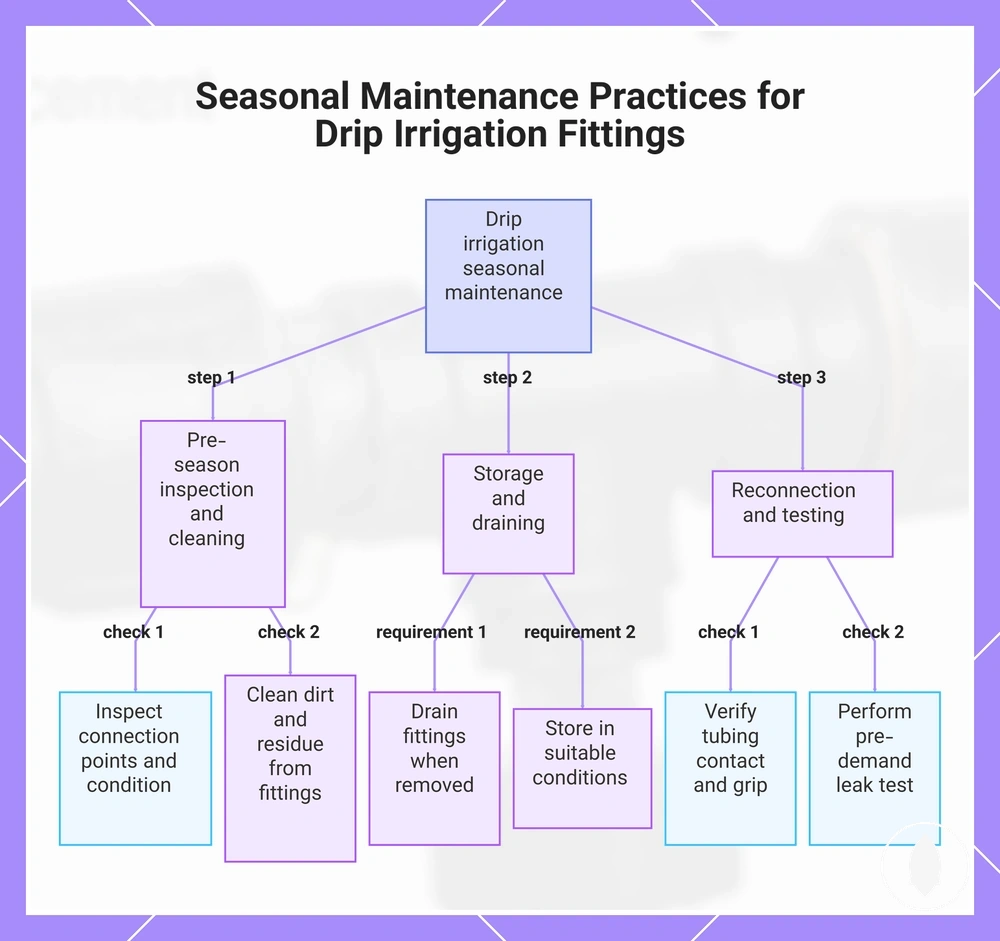
Seasonal maintenance practices for drip irrigation fittings help manage changing use conditions by focusing on cleanliness, storage condition, reconnection, and pressure readiness. Inspection, cleaning, draining where relevant, and pre-demand testing are maintenance practices that can help identify fitting conditions before they contribute to leaks or reduced seal reliability.
Drip irrigation fitting maintenance should consider how seasonal changes affect connection points, fitting body condition, and tubing contact. Checking wear signs, cleaning connection areas, and reviewing reconnection points can help identify changes in grip, movement, or sealing condition before regular operation resumes.
A seasonal maintenance checklist can help organise fitting-related checks:
- Inspection timing: Review connection points and fitting condition before periods of increased use or after storage.
- Cleaning: Check fitting areas for dirt or residue that may affect seal reliability and connection condition.
- Draining and storage: Consider storage conditions where fittings are removed or stored between use periods.
- Reconnect checks: Verify tubing contact, grip, and connection stability when fittings return to service.
- Pre-demand testing: Observe fittings before regular use to identify leaks or changes that may require further inspection.
Seasonal maintenance does not guarantee that every fitting failure will be prevented, but it provides a structured approach for monitoring fitting condition. The focus is on maintaining reliable connections through inspection, cleaning, storage awareness, and condition-based decisions.
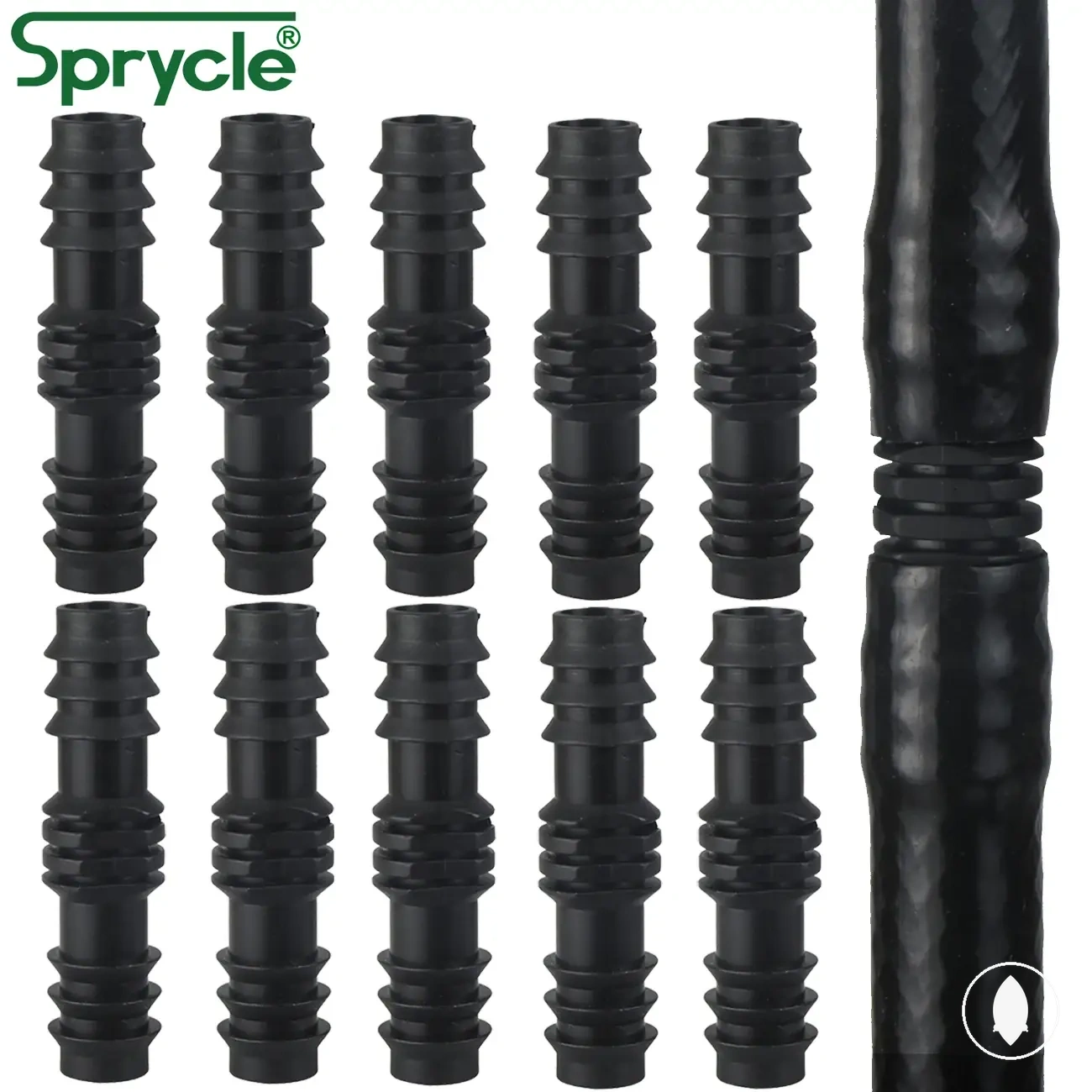
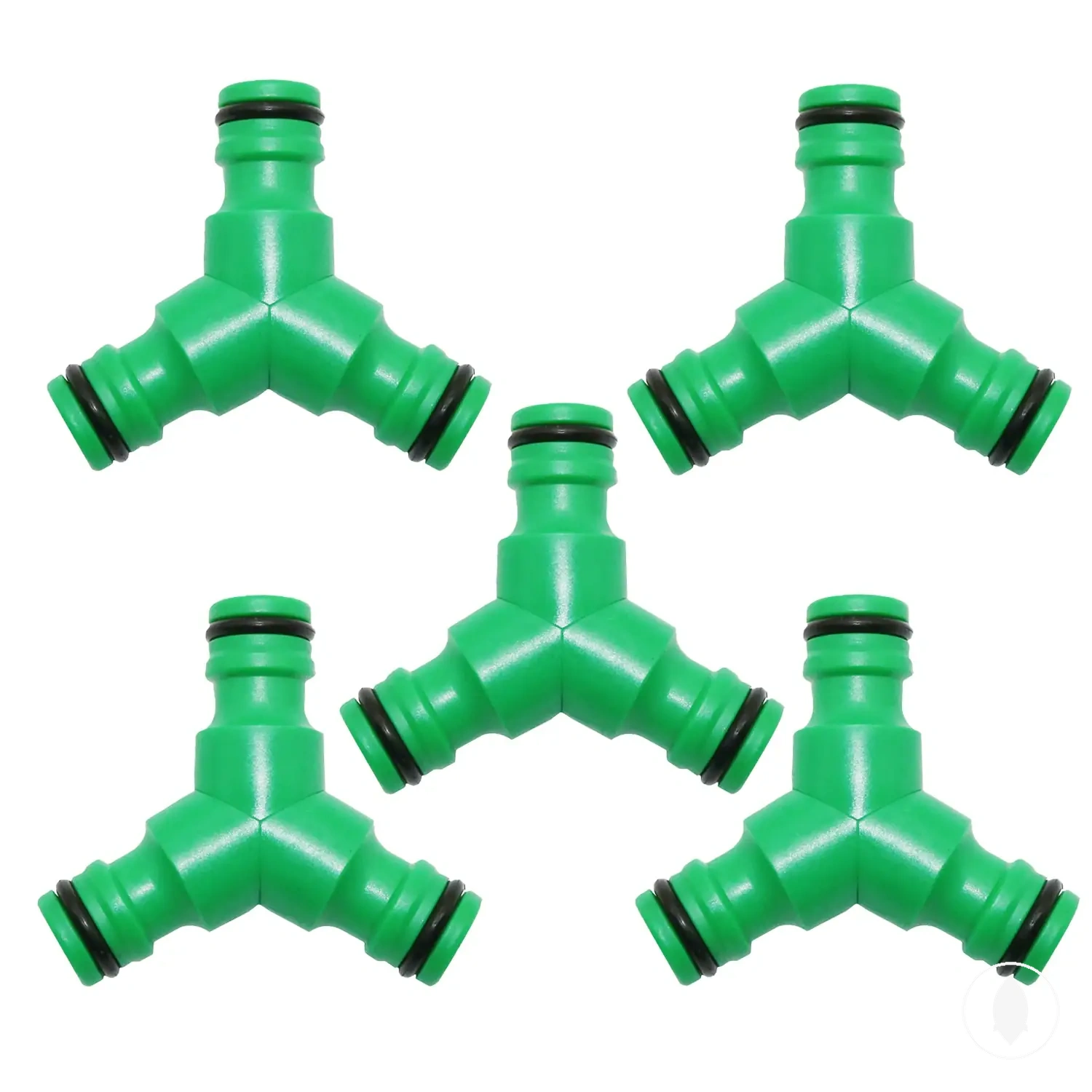
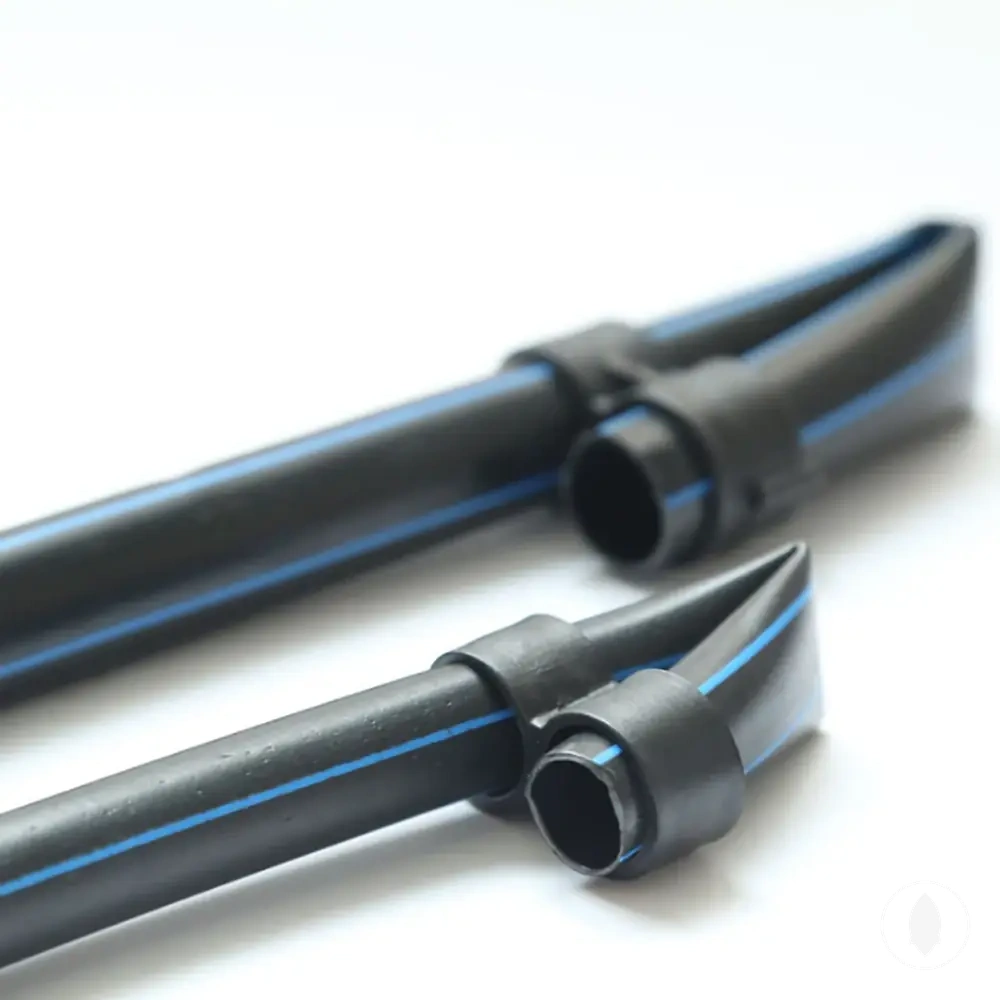
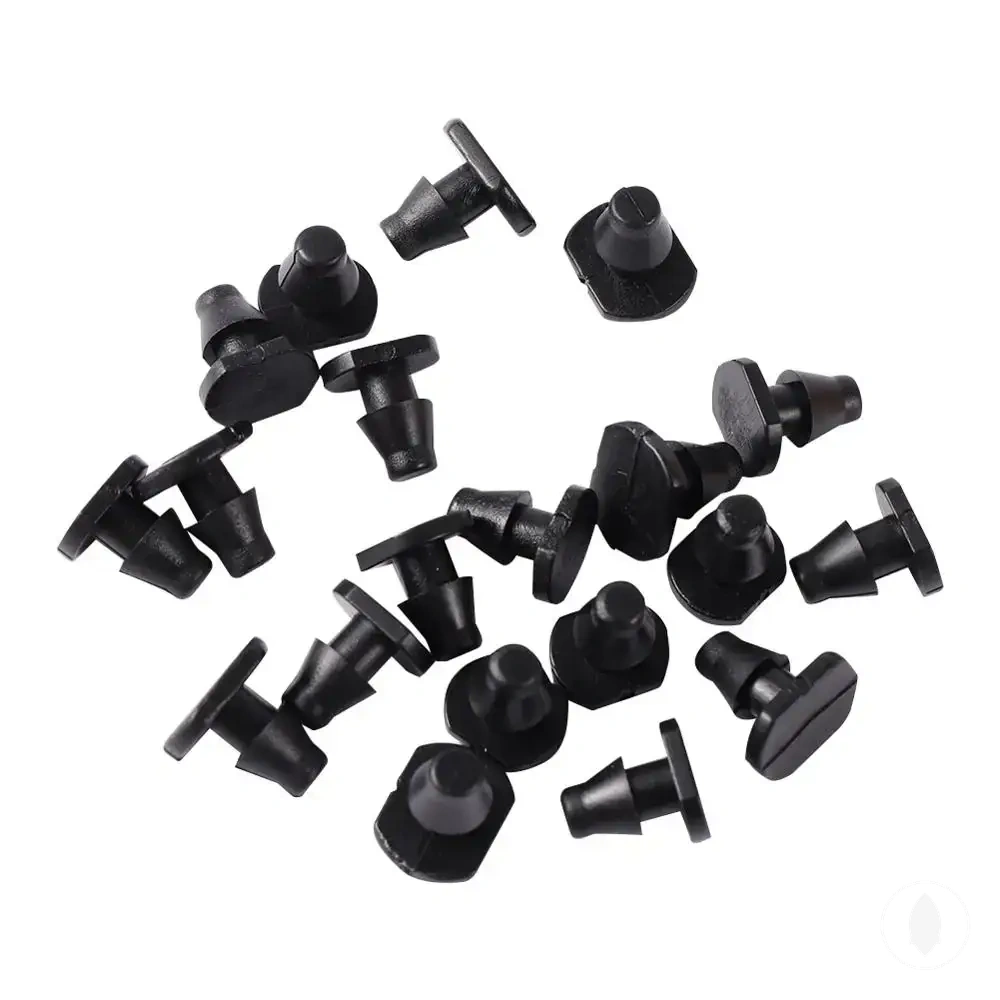
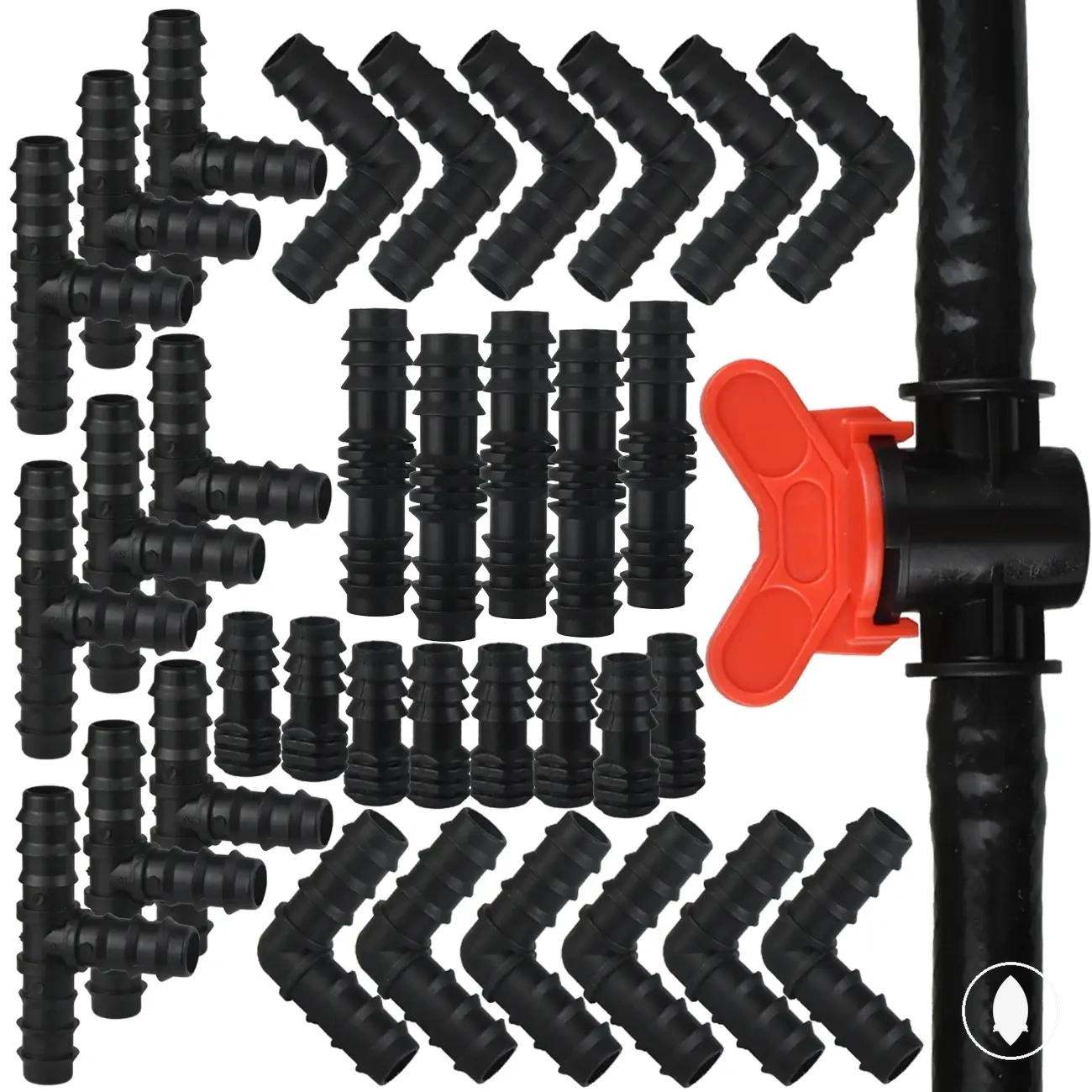
Here are product examples that may make comparison easier. Before buying, always review the compatibility criteria, essential features, and product details.
This chart shows the key seasonal maintenance practices for drip irrigation fittings, focusing on inspection, cleaning, storage, and testing to reduce fitting failure.
Start-of-season checks before full watering demand
Start-of-season checks for drip irrigation fittings confirm whether stored and reconnected fittings can maintain seal reliability under normal watering conditions. These checks can reveal leaks, cracked parts, loose fittings, or poor reconnection before full watering demand increases and makes maintenance issues harder to identify.
The focus of start-of-season inspection is verifying fitting readiness through connection points, fitting body condition, and tubing contact. A compact checklist helps identify whether fittings remain suitable before regular use:
- Reconnection: Inspect connection points after reconnection to confirm fittings maintain suitable grip and seal reliability.
- Cracked parts: Check the fitting body for visible damage that may affect connection condition or leak risk.
- Plug and coupling condition: Review end plugs and couplings for secure seating and suitable tubing contact.
- Pressure test: Observe fittings during testing for movement, leaks, or changes that may require further inspection.
- Early wet spots: Check unexpected moisture around fittings as a signal that a connection condition may need attention.
Testing a small watering zone first can help identify a loose connection or leaking fitting before broader use creates additional maintenance concerns. Start-of-season checks are focused on pre-demand verification of fitting condition rather than a full installation or startup procedure.
End-of-season cleaning, draining, and storage checks
End-of-season cleaning, draining, and storage checks for drip irrigation fittings help manage fitting condition during inactive periods. These checks focus on reducing conditions that may affect future seal reliability, including residue, dirt, trapped water, storage exposure, and connection changes before fittings return to use.
Storage condition can influence how fitting components and connection points perform after an inactive period. Cleaning and inspection help review the fitting body, tubing contact, and sealing areas, while draining needs may depend on the fitting setup and local conditions.
A fitting-focused storage checklist helps organise conditions that may require attention:
- Cleaning: Inspect fitting areas for mineral residue or dirt that may affect seal reliability and connection condition.
- Trapped water: Review fittings and connection areas where remaining water may require attention before storage.
- Pressure left in the line: Consider connection conditions where remaining pressure may affect fitting readiness during inactive periods.
- Storage exposure: Check storage conditions where UV exposure or environmental exposure may influence fitting condition.
- Connection points: Inspect fittings before reuse for wear signs, leaks, or changes in tubing contact.
End-of-season fitting maintenance focuses on managing fitting condition for future use rather than completing full system shutdown procedures. The need for cleaning, draining, or further inspection depends on the fitting condition, storage environment, and connection requirements.
Pressure and leak symptoms that need separate troubleshooting
Pressure and leak symptoms need separate troubleshooting when repeated popping, widespread leaks, or pressure-linked failures appear beyond a single fitting condition. These symptoms can require broader diagnosis because multiple connection points, fitting seals, or tubing movement may be involved rather than ordinary fitting wear alone.
The following comparison separates local fitting wear from wider pressure or leak patterns that may affect multiple connections:
| Symptom pattern | Possible scope to consider |
|---|---|
| Single connection point with visible seepage or wear signs | May relate to fitting condition, fitting seal, or a local connection issue. |
| Repeated leaks across multiple connectors | May indicate a broader leak pattern that needs separate troubleshooting. |
| Fittings popping off or shifting after pressure changes | May involve tubing movement, grip changes, or pressure-related connection conditions. |
| Sudden seepage or wet soil after pressure resumes | May require assessment beyond ordinary fitting maintenance. |
Repeated symptoms across multiple connection points are boundary signals that deeper diagnosis may be needed. If the pattern extends beyond individual fitting inspection, further pressure checks can help evaluate the wider condition.