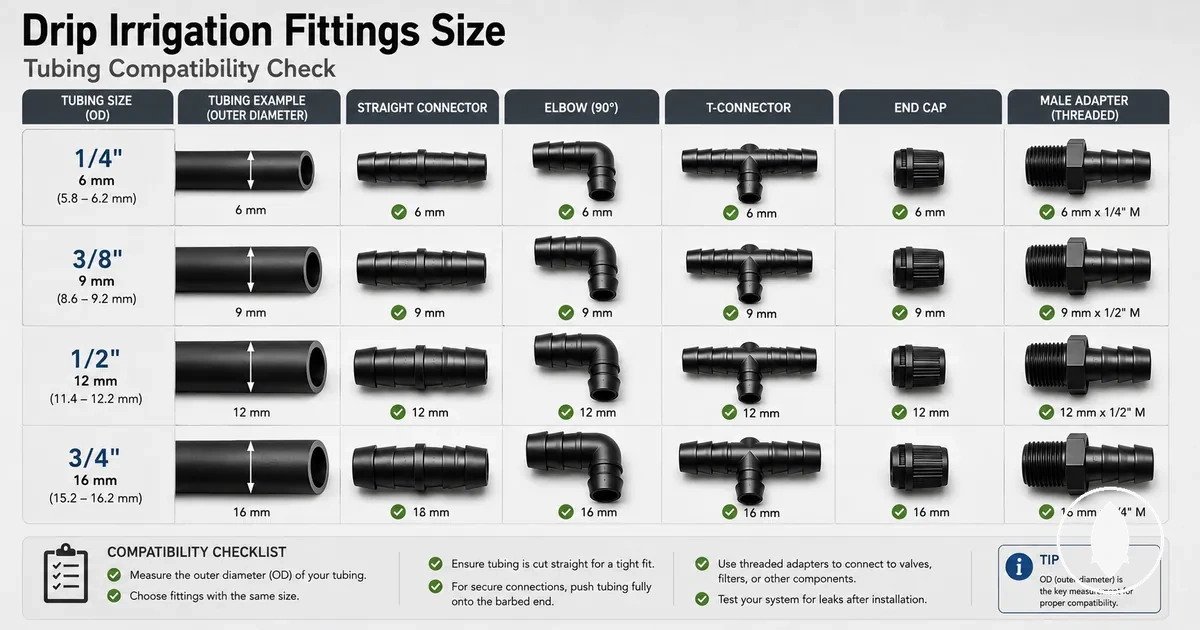
Drip Irrigation Fitting Size Compatibility
Drip irrigation fitting size compatibility depends on tubing dimensions, fitting style, and connection use rather than the size label alone. A compatible connection requires checking how drip irrigation fittings relate to the tubing they connect with, including tubing dimensions, fitting style, and the purpose of the connection.
Drip irrigation fittings are connection components that join, redirect, transition, or close parts of a watering line. A nominal size can describe a tubing group, but the actual fit depends on measured dimensions such as inside diameter and outside diameter. The drip irrigation fittings hub provides the broader fitting context, while this page focuses on the compatibility checks that help reduce poor fit risks.
A gardener replacing a connector or expanding a layout may see similar size labels across different tubing products, but the connection may still require verification. Mainline tubing and micro tubing can use different fitting families, and barbed fittings, compression fittings, and adapters may rely on different fit conditions. Checking tubing measurements before selecting a connector can help identify possible poor fit issues such as leaks, loose connections, or pop-offs.
This compatibility approach creates a clearer path for comparing fitting size, tubing compatibility, and connection requirements. Later sections examine measurement factors, fitting styles, verification checks, and common poor-fit symptoms without treating labels alone as proof of compatibility.
Tubing Measurements That Control Fitting Fit
Tubing measurement controls whether drip irrigation fittings can grip, seal, or insert correctly. A fitting connection depends on labeled size, actual diameter, and wall behavior rather than the size label alone.
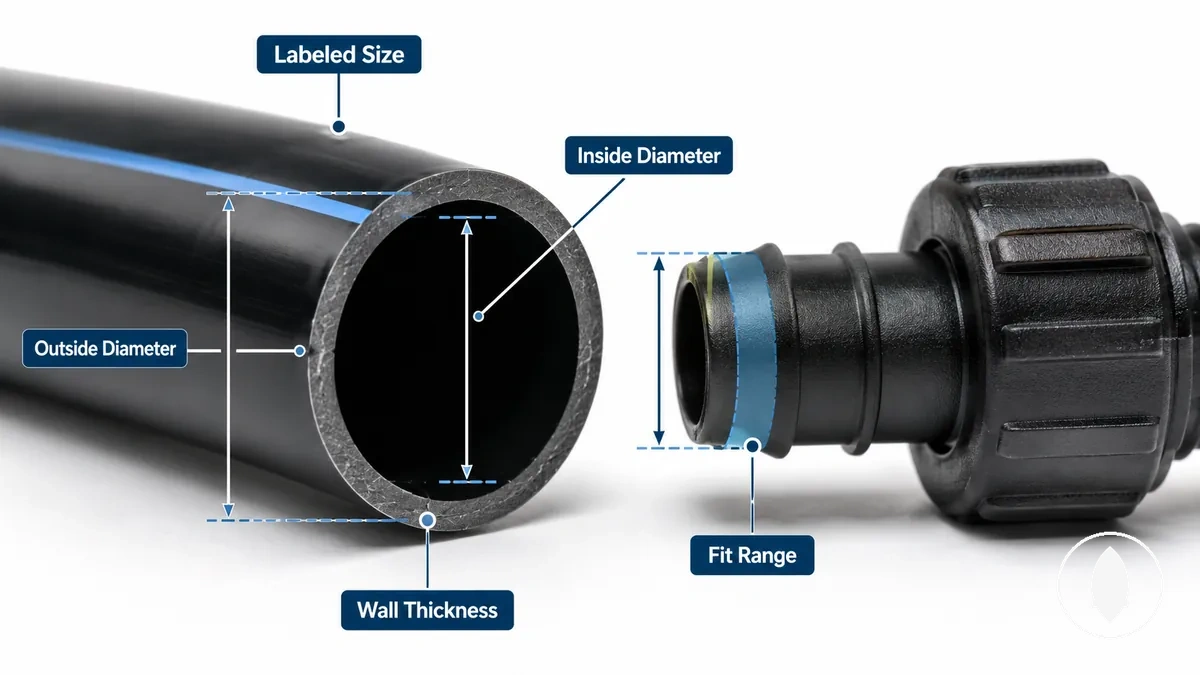
A tubing measurement describes the physical characteristics that influence connector fit. The inside diameter and outside diameter provide different measurement points, while wall thickness can influence how a fitting interacts with the tubing. These measurements help explain why a labeled size may require confirmation through actual dimensions before selecting a connector.
The tubing size label can act as a starting reference, but the measured diameter and fitting range provide a clearer compatibility check. The relationship between tubing dimensions and fitting style can influence grip, seal conditions, insertion behavior, or leak risk. The parts that affect fitting size can also influence how connection surfaces interact with tubing measurements.
| Measurement | What it describes | Why it affects fitting fit |
|---|---|---|
| Labeled size | The size description used to identify a tubing group | It can provide an initial reference but may need comparison with actual dimensions. |
| Inside diameter | The internal measurement of the tubing opening | It can influence insertion conditions and how a fitting interacts with the inside of the tubing. |
| Outside diameter | The external measurement of the tubing surface | It can influence grip and sealing conditions for fitting styles that connect around the outside of the tubing. |
| Wall thickness | The material depth between the inside and outside surfaces | It can influence fit behavior, insertion feel, and the risk of a poor connection. |
Nominal tubing size versus actual dimensions
Nominal size is a label used to describe tubing, while actual dimensions determine the physical fit conditions for drip irrigation fittings. A size label can identify a tubing category, but measured diameter is needed to understand how the tubing may interact with a fitting. Nominal size is not the final fit check because actual dimensions influence the connection outcome.
When a tubing label appears similar to another size label, the actual measurement may still create a different fit result. The measured diameter and fitting range help evaluate possible compatibility conditions before a connector is selected. For example, 1/2 inch, 16mm, and 17mm labels may require confirmation because the label alone may not show whether the tubing dimensions create a suitable connection or a mismatch risk.
- Size label: A starting description for a tubing size category.
- Measured dimension: The actual measurement used to assess fitting compatibility.
- Compatibility effect: Different dimensions under similar labels may create a different fit result.
Inside diameter and outside diameter
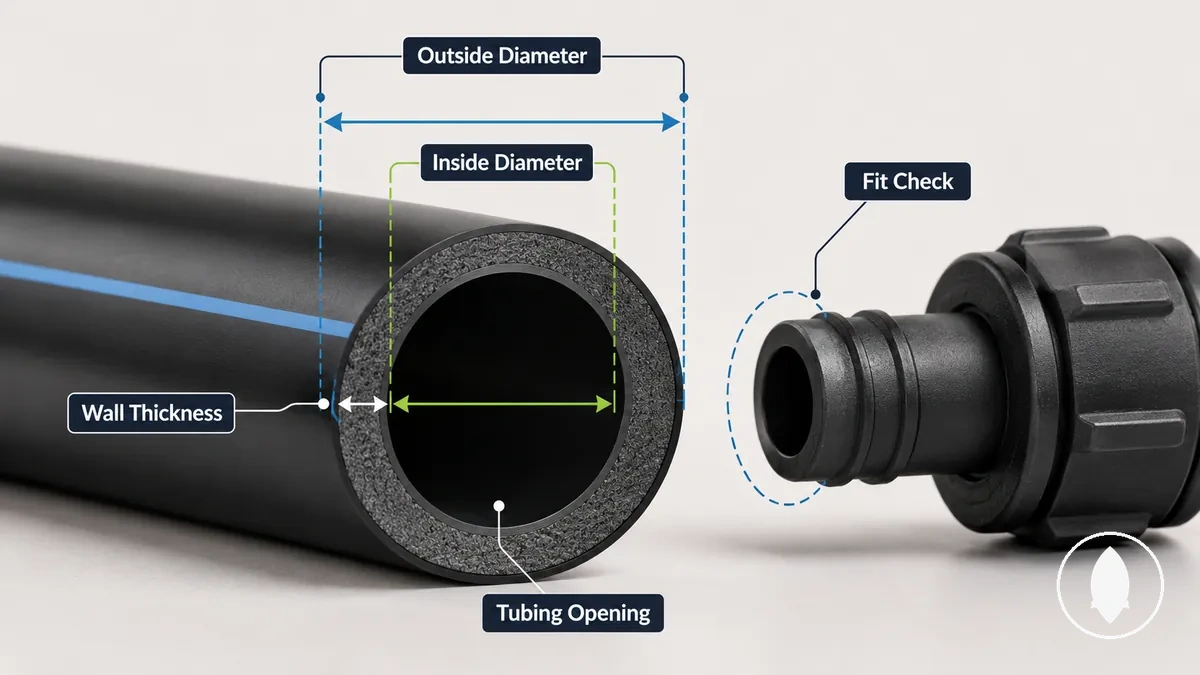
Inside diameter and outside diameter describe two different tubing measurements that affect drip irrigation fitting compatibility. The inside diameter relates to the tubing opening and flow path, while the outside diameter relates to the external tubing surface used by certain fitting styles.
ID and OD provide different compatibility signals because drip irrigation fittings interact with tubing in different ways. The inside diameter can influence insertion fit and the tubing opening, while the outside diameter can influence how a compression fitting or other connector style creates grip and seal conditions. Checking both measurements with wall thickness and fitting style can help identify possible fit risks.
| Measurement | Main compatibility relevance |
|---|---|
| Inside diameter (ID) | Relates to the tubing opening, flow path, and insertion fit conditions. |
| Outside diameter (OD) | Relates to the tubing surface where grip and sealing conditions may depend on fitting style. |
Mainline tubing and micro tubing size ranges
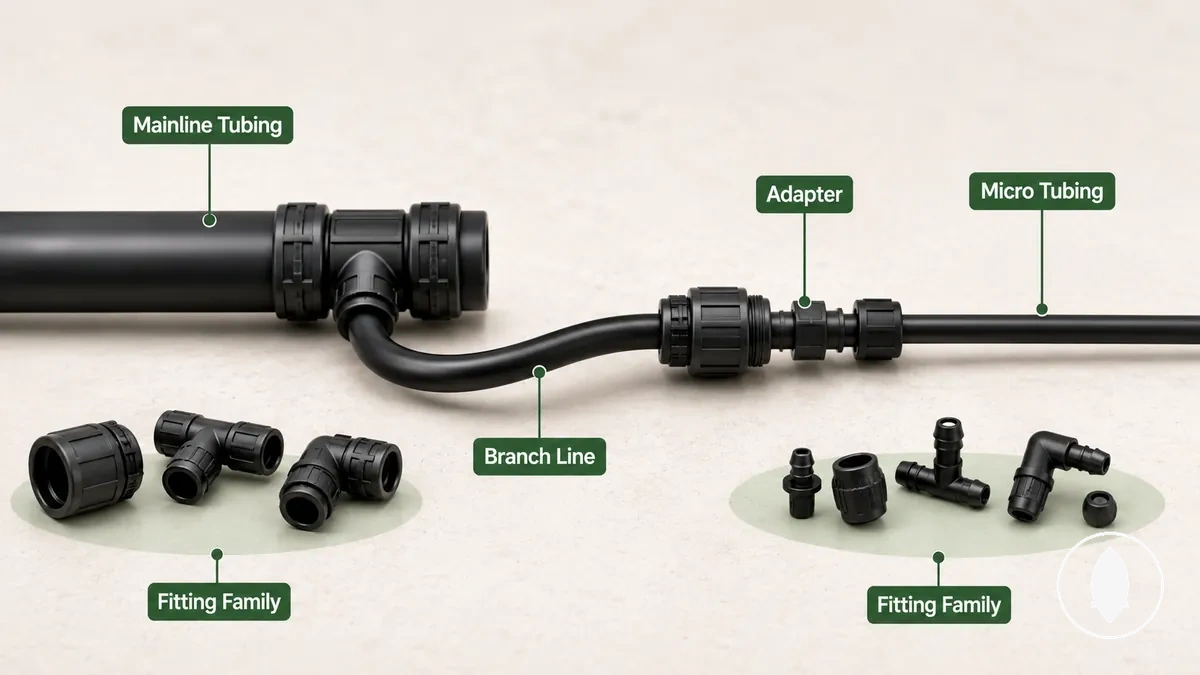
Mainline tubing and micro tubing are separate tubing groups that can require different fitting families. Mainline tubing refers to the larger line category, while micro tubing refers to smaller branch line connections that may use different connector size considerations.
The tubing group helps determine which fitting family may suit a connection. Mainline tubing may use mainline connectors, while micro tubing may use smaller connectors or adapters for transitions between tubing groups. Compatibility depends on tubing dimensions, connector size, and the connection purpose rather than the tubing label alone.
Mainline tubing and micro tubing size ranges can be compared by grouping tubing types with their typical fitting use and compatibility checks.
| Tubing group | Common fitting family | Compatibility check |
|---|---|---|
| Mainline tubing | Mainline connector | Check tubing dimensions and connector size before selecting a connection. |
| Micro tubing | Barbed micro connector | Check micro tubing dimensions and fitting range for the intended connection. |
| Transition connection | Adapter | Check both tubing groups when a transition between mainline tubing and micro tubing is needed. |
Common Drip Fitting Size Matches
Drip fitting size matches provide practical guidance for connecting fitting labels with the tubing groups they usually serve. A size match can help identify a possible connection path, but it should be treated as a starting point rather than a universal compatibility rule.
The table below organizes common fitting labels by tubing group and the compatibility check to consider. These rows compare labels such as 1/2 inch, 16mm, 17mm, 1/4 inch, and adapter transitions with their typical fitting use.
| Fitting label | Usually matched tubing group | Check before buying |
|---|---|---|
| 1/2 inch | Mainline tubing | Check the tubing dimensions and connector size before selecting a mainline fitting. |
| 16mm | Mainline tubing group | Confirm the measured dimensions and fitting range when the fit decision is uncertain. |
| 17mm | Mainline tubing group | Compare the size label with actual dimensions before making a connection. |
| 1/4 inch | Micro tubing | Check micro tubing dimensions and the connector type used for the branch connection. |
| Adapter | Mainline and micro tubing transition | Check both tubing groups when an adapter is used to connect different tubing sizes. |
Fitting labels can help narrow the selection process, but measurement confirmation remains the safer check when compatibility is uncertain. The final fit decision depends on the tubing dimensions, fitting range, and connection conditions.
1/2 inch, 16mm, and 17mm mainline fittings
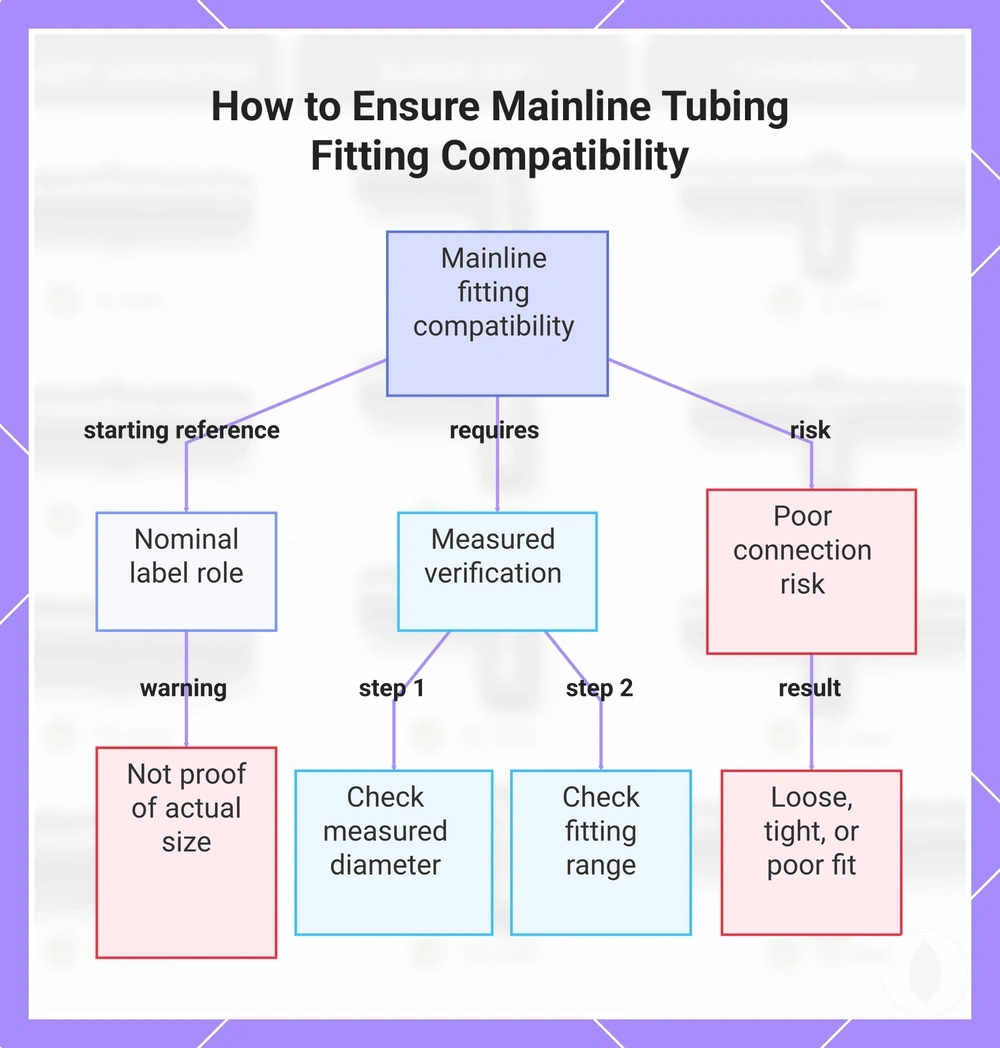
1/2 inch, 16mm, and 17mm labels describe common mainline tubing size categories, but these labels require measured confirmation before selecting a compatible fitting. Mainline tubing compatibility depends on the relationship between the nominal label, measured diameter, and fitting range.
A nominal label can help identify a possible mainline fitting category, but the label alone may not show the actual measurement of the tubing. The measured diameter and fitting range provide a clearer compatibility check for 1/2 inch, 16mm, and 17mm mainline tubing connections. If the fitting range does not suit the tubing dimensions, the result may be a loose fit, tight fit, or another poor connection condition.
Label confusion check:
- A 1/2 inch, 16mm, or 17mm nominal label should be treated as a starting reference rather than proof that the tubing dimensions match.
- Checking the measured diameter can help confirm whether the fitting range suits the mainline tubing connection.
This chart shows that nominal labels on mainline tubing fittings require measured confirmation to avoid poor connections.
1/4 inch micro tubing fittings
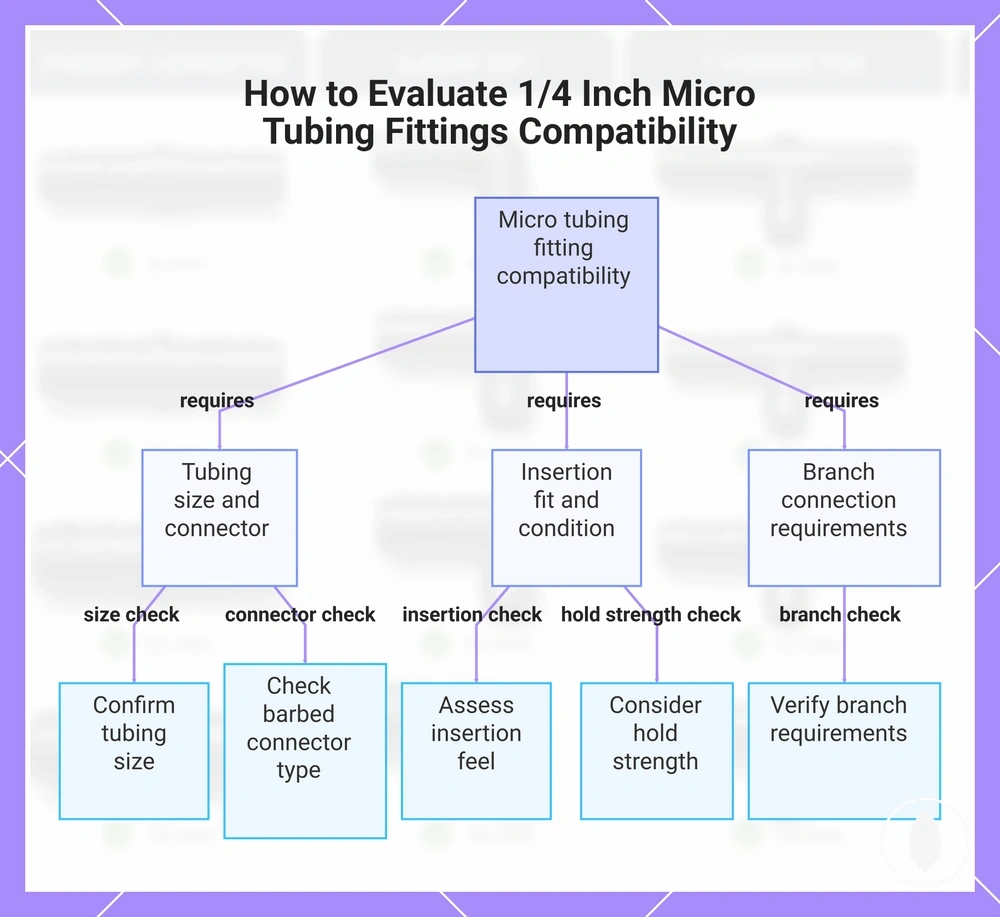
1/4 inch micro tubing fittings connect smaller branch connections where micro tubing compatibility depends on tubing size, connector type, and insertion fit. A 1/4 inch fitting connection should be evaluated with the micro tubing, barbed connector, and intended branch connection in mind.
Micro tubing and barbed connectors work together through a fitting range that can influence connection security. The connector type, insertion fit, and tubing condition can affect hold strength, while the branch connection requirements help determine whether the connection is suitable. A local fit check can help confirm the micro tubing size, connector type, and connection behavior.
Micro tubing fit check:
- Confirm the micro tubing size before selecting a 1/4 inch fitting connection.
- Check the barbed connector type and insertion feel during the connection assessment.
- Consider the expected hold strength after connection because tubing condition and connector style can vary.
- Verify the branch connection requirements before using a small tubing connector.
This chart shows the key factors and checks needed to evaluate the compatibility of 1/4 inch micro tubing fittings.
Adapters between mainline and micro tubing
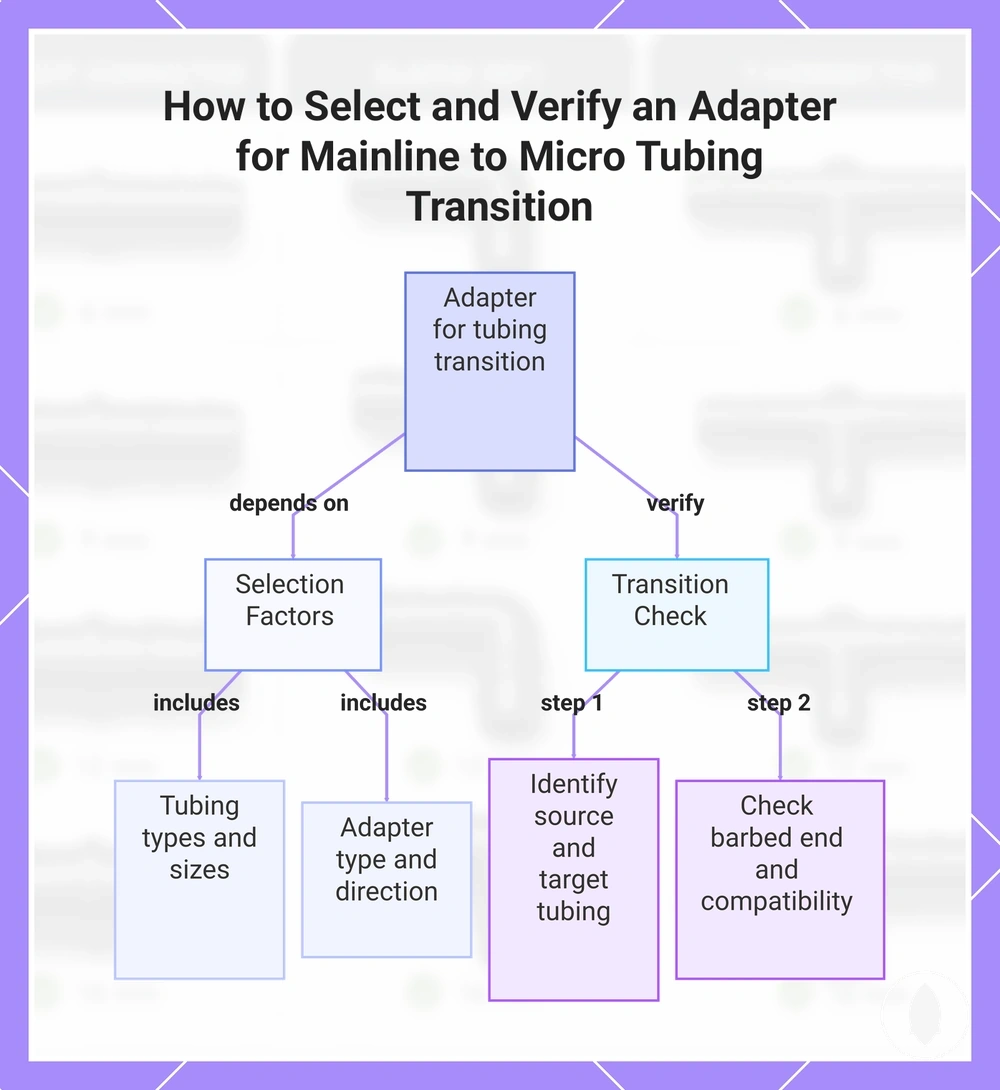
An adapter is needed when a connection requires a transition between mainline tubing and micro tubing. The adapter solves a size transition problem by connecting different tubing groups rather than replacing general fitting selection.
The correct adapter choice depends on the mainline tubing, micro tubing, adapter type, connection direction, and the resulting compatibility. The barbed end and tubing side should be checked separately because each side may connect to a different tubing group. A transition connector may require confirmation of the size change, fitting range, and fit result before use.
Adapter transition check:
- Source tubing: Identify whether the connection starts from mainline tubing or micro tubing.
- Target tubing: Confirm the tubing side that the adapter needs to connect with.
- Adapter end: Check the barbed end and connection direction for the intended transition.
- Compatibility check: Confirm the tubing dimensions and fitting range to assess the final fit result.
This chart shows the key selection factors and the transition check steps for choosing an adapter between mainline and micro tubing.
Fitting Styles and Their Compatibility Rules
Fitting style changes the compatibility rule even when the tubing size label appears correct. Barbed fitting, compression fitting, and threaded adapter connections check fit through different physical conditions, so different styles judge fit differently.
A barbed fitting uses a grip method that relates to tubing insertion and tubing grip conditions. A compression fitting relies on the sealing surface and outside diameter relationship for its connection conditions. A threaded adapter can create a transition where the connection direction and tubing side influence the compatibility check. The suitable fitting style can depend on the tubing size, fitting design, and connection requirements.
Different fitting styles apply different compatibility rules when tubing size is involved. The comparison below shows the size-related differences, while fitting types and fit differences provides broader context beyond this tubing-size compatibility focus.
| Fitting style | What it checks | Main compatibility risk |
|---|---|---|
| Barbed fitting | Grip method and insertion conditions with the tubing | Unsuitable tubing grip or insertion conditions may affect the connection. |
| Compression fitting | Sealing surface and outside diameter relationship | The seal conditions may not suit the tubing dimensions or fitting requirements. |
| Threaded adapter | Transition point, connection direction, and tubing side | A mismatch between the transition and tubing connection may affect compatibility. |
Barbed fittings and tubing grip
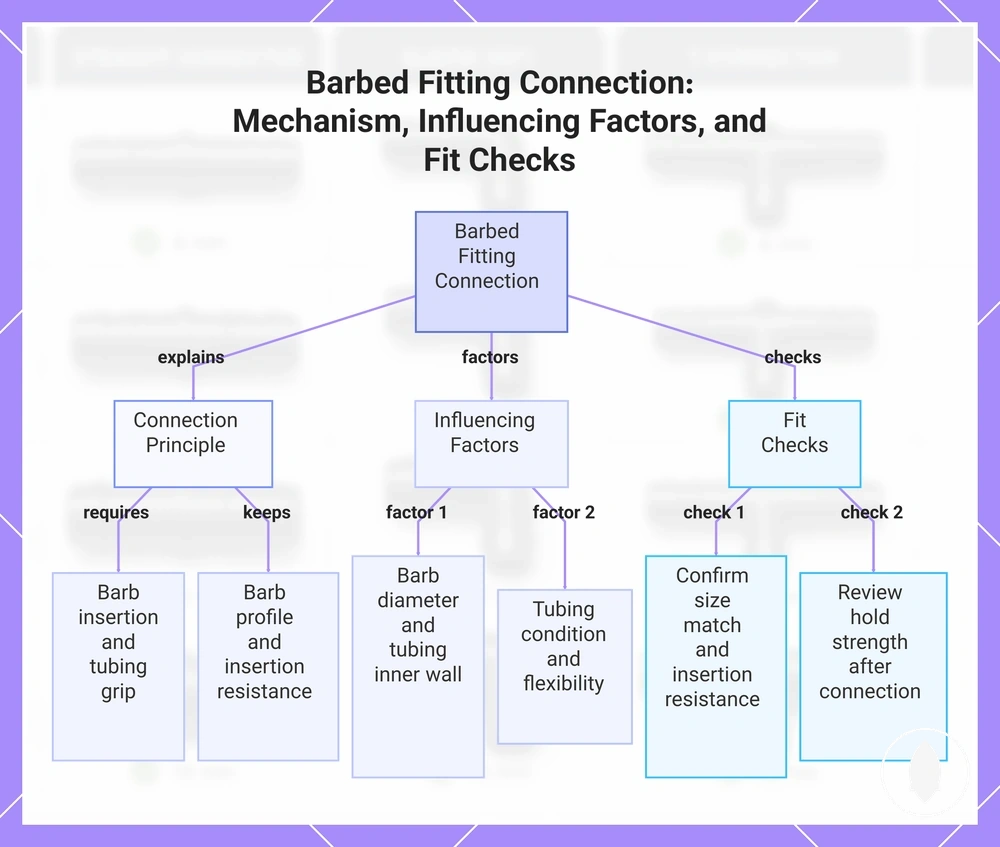
A barbed fitting relies on insertion and tubing grip to create a suitable connection with flexible tubing. The barb diameter, tubing inner wall, and tubing condition can influence how the barbed fitting interacts with the tubing. The barbed fitting connects through the relationship between the barb and the tubing grip.
A barbed fitting uses its barb profile and insertion resistance to maintain contact with the tubing. The inner wall of the tubing can affect grip fit, while tubing condition can influence the resulting hold strength. Checking the size match, insertion resistance, and connection condition can help assess compatibility. Hold strength should be evaluated based on the tubing and connector conditions rather than treated as a guaranteed result.
Barbed fitting fit check:
- Confirm the size match between the barbed fitting and tubing before making the connection.
- Consider insertion resistance and whether the tubing responds appropriately to the connector.
- Check tubing condition because flexibility and material condition can influence tubing grip.
- Review the hold after connection to assess whether the tubing grip remains suitable for the intended use.
This chart explains how barbed fittings create a grip on flexible tubing, the factors that affect hold strength, and the key checks to assess compatibility.
Compression fittings and outside diameter fit
A compression fitting depends on the tubing outside diameter and tubing shape to create a suitable connection. The OD is a main compatibility condition because the compression seal relies on how the fitting interacts with the tubing surface. Compression fitting compatibility depends on outside diameter rather than the tubing size label alone.
A compression fitting uses a sealing surface and compression seal conditions that can vary with tubing dimensions and condition. The outside diameter, roundness, and wall condition influence how the fitting range interacts with the tubing. An OD mismatch may increase leak risk or pop-off risk when the tubing and fitting conditions do not align. Checking the relevant conditions helps assess compatibility before selecting a connection.
Compression fit criteria:
- Outside diameter (OD): Confirm that the tubing outside diameter suits the compression fitting range.
- Roundness: Consider whether the tubing shape supports consistent contact with the sealing surface.
- Wall condition: Check whether tubing condition may influence the compression seal.
- Fit range: Verify that the fitting range matches the tubing dimensions and connection requirements.
Threaded adapters and size transitions
A threaded adapter manages a transition between threaded components and tubing connections by separating the threaded side from the tubing-facing side. The thread size identifies the threaded connection point, while the tubing side requires a separate compatibility check. Threaded adapters therefore require both thread and tubing considerations.
A threaded adapter connects through a threaded side and a tubing connector end that may serve different connection purposes. The thread size and tubing side should be checked independently because a thread label does not confirm tubing compatibility. The transition outcome depends on the adapter fit, connection direction, and the relationship between the threaded side and tubing side. A tubing-side size check helps confirm whether the connector end suits the intended tubing connection.
Threaded adapter distinction:
- Tubing-facing side: Check the tubing connector end and tubing requirements separately from the threaded connection.
- Threaded side: Check the thread size and threaded connection requirements independently from the tubing side.
Compatibility Checklist Before Buying Drip Irrigation Fittings
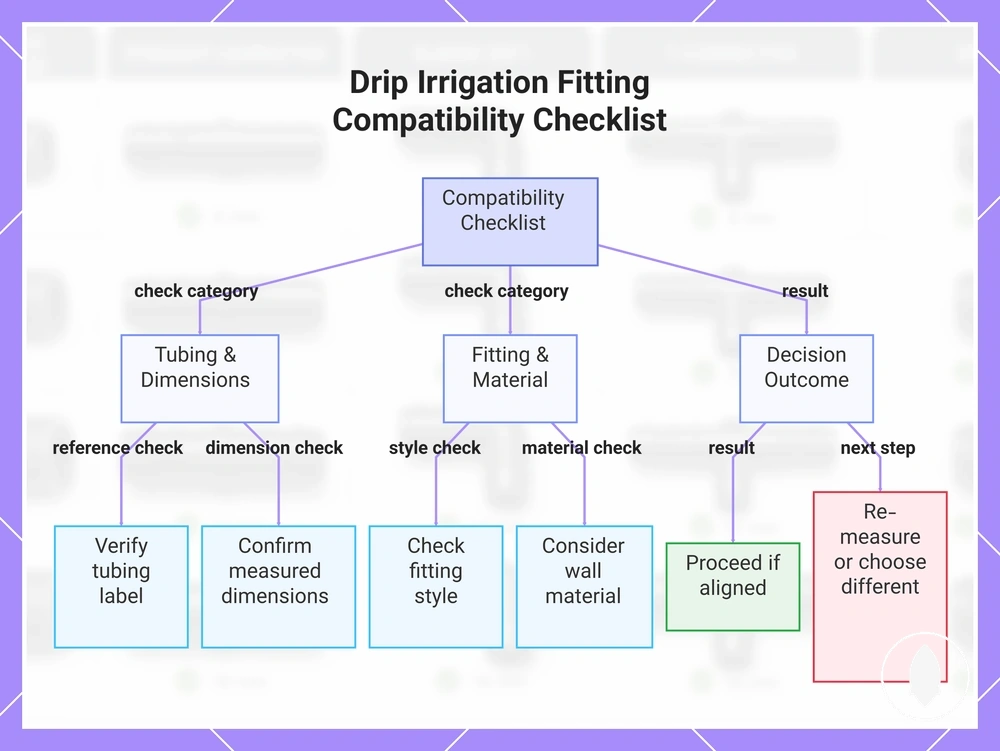
A compatibility checklist verifies tubing, fitting style, and connection purpose before price checking. The checklist job is to confirm whether the available information supports a decision to proceed, re-measure, or choose a different connector family.
The compatibility checklist uses several verification categories instead of relying on a single tubing label or fitting description. Tubing label, measured dimensions, fitting style, wall material, and connection purpose all contribute to the compatibility check before selecting a fitting.
Compatibility checklist verification:
- Tubing label: Verify the tubing label as a reference point before comparing it with other compatibility conditions.
- Measured dimensions: Confirm measured dimensions when the tubing size or fitting relationship is uncertain.
- Fitting style: Check whether the fitting style suits the intended connection method and tubing conditions.
- Wall material: Consider wall material because tubing construction can influence connection conditions.
- Branch or mainline use: Identify whether the fitting is intended for a branch or mainline connection.
- End connection: Check the connector end and connection purpose before deciding on compatibility.
When the checklist conditions align, the connection can move forward. If the information does not support a clear fit decision, re-measure or choose a different connector family. For broader selection rules after sizing, the next step is to review additional choice criteria.
This chart shows the key verification categories and the decision outcome for checking drip irrigation fitting compatibility.
Match the tubing label to measured dimensions
The tubing label is a starting cue, but compatibility depends on verifying the label against measured dimensions. A size label can identify the tubing group, while measured dimensions provide the compatibility check needed before selecting a fitting. The tubing label must be verified against dimensions before making a final decision.
The checklist below compares the tubing label with the measurements and fitting conditions that affect the connection. Use these checks to decide whether to proceed, avoid a mismatch, or re-measure before selecting a fitting.
- Tubing label: Verify the size label as a reference and compare it with the actual tubing information before proceeding.
- OD: Check the outside diameter measurement when the fitting range depends on the tubing surface.
- ID: Check the inside diameter measurement when the tubing opening is relevant to the connection.
- Fitting range: Confirm the fitting range matches the measured dimensions before selecting the connector.
Check fitting style against tubing wall and material
Tubing wall and material condition can affect fitting style compatibility and fit reliability. The relationship between tubing wall, tubing material, and fitting style helps determine how the connection may perform. Wall thickness and material condition are key factors when checking compatibility.
Different tubing conditions can influence flexibility, insertion resistance, and sealing behavior. The tubing wall and material condition can affect how a barbed fitting grips or how a compression seal forms. Checking these conditions helps qualify fit reliability before selecting a fitting style. The final fitting-style decision depends on the tubing characteristics and connection requirements.
Wall and material compatibility criteria:
- Flexibility: Check tubing flexibility because it can influence insertion resistance and the connection fit.
- Wall thickness: Review wall thickness because it can affect how the fitting interacts with the tubing wall.
- Material condition: Consider tubing material condition because it may influence compatibility and fit reliability.
- Compression seal: Check compression seal behavior when the fitting style depends on sealing contact.
Confirm branch, mainline, and end connection needs
Connection role helps determine the connector type and size transition needed before choosing a fitting. The same tubing size can require different connector choices depending on whether the connection is a mainline continuation, branch connection, micro tubing connection, or end closure. Connection role acts as a size filter before selecting a fitting.
The decision list below verifies the line role and connector need before making a size choice. Checking the connection purpose helps determine whether to proceed, verify the size transition, or choose a connector type that suits the connection role.
- Mainline continuation: Check whether the connection continues a mainline and confirm the required connector type for that line role.
- Branch transition: Verify whether the connection creates a branch connection and whether the connector supports the required size transition.
- Micro tubing connection: Confirm the micro tubing connection requirements before selecting a connector type or transition fitting.
- End closure: Check whether the connection is an end closure and confirm the required end fitting or connector need.
Poor-Fit Symptoms and Likely Sizing Causes
Poor fit can appear as a loose fitting, tight insertion, leak, or pop-off, but these symptoms may have different possible causes. A sizing cause can be related to an attribute mismatch between the fitting and tubing, but the symptom alone does not confirm the source. The next verification step is to check the connection conditions and likely sizing factors.
The table below connects common poor-fit symptoms with likely attribute issues and the checks that can help identify the cause. Poor-Fit Symptoms and Likely Sizing Causes should be viewed as a diagnostic check rather than a complete repair process.
| Symptom | Likely attribute issue | Check | What it means |
|---|---|---|---|
| Loose fitting | Possible size mismatch between fitting and tubing | Check fitting size and tubing dimensions | The connection may not have suitable grip conditions. |
| Tight insertion | Possible mismatch between fitting size and tubing opening | Check fitting range and tubing dimensions | The connection may need a different compatibility assessment. |
| Leak | Possible fit mismatch or connection condition issue | Verify fitting, tubing, and connection conditions | A leak may suggest a poor connection condition. leaks caused by poor fit may require additional diagnosis. |
| Pop-off | Possible fit mismatch or pressure condition | Check fitting compatibility and tubing connection | A pop-off may involve fit mismatch or other conditions. fittings popping off may require checking more than one possible cause. |
These symptoms can overlap with pressure conditions, installation factors, or worn tubing conditions, so sizing should be treated as one part of the verification process rather than the only diagnosis.
Fittings that are too loose
A loose fit can suggest a compatibility issue between the fitting and tubing, but it does not confirm a single cause. A loose fitting may relate to tubing OD, tubing ID, fitting range, or tubing condition. These possible sizing causes should be checked before making any connection decision.
A loose connection can occur when the fitting and tubing do not create the expected grip conditions. Checking tubing OD, tubing ID, wall condition, and fitting family can help identify whether an attribute mismatch may be contributing to the issue. Worn tubing may also affect grip conditions and increase leak risk or disconnection risk. The next verification step is to compare the fitting requirements with the tubing dimensions and condition.
Loose-fit cause check:
- OD mismatch: Verify whether the tubing OD matches the fitting range because an unsuitable outside dimension may contribute to a loose fit.
- ID mismatch: Check the tubing ID when the internal fit relationship may affect the connection condition.
- Worn tubing: Review wall condition and worn tubing signs because grip loss may affect the connection.
- Wrong fitting family: Confirm that the fitting family suits the tubing and connection purpose before selecting a different connector option.
Fittings that are too tight to insert
Too tight insertion can suggest a compatibility issue between the fitting and tubing, but the cause may vary. Excessive insertion resistance can relate to tubing size, tubing stiffness, barb size, or wrong fitting style. These conditions should be checked before making a connection judgment.
A tight fitting may indicate that the tubing opening and fitting diameter do not create a suitable connection condition. Checking the tubing size, material stiffness, and fitting requirements can help identify whether the insertion difficulty is linked to compatibility. The connection should be assessed with safe judgment rather than forceful methods that may increase damage risk. The next verification step is to compare the tubing and fitting conditions before deciding on the connection.
Tight-fit cause check:
- Tubing size: Verify that the tubing size suits the fitting range because a mismatch may contribute to excessive insertion resistance.
- Barb size: Check barb size because the fitting diameter may not suit the tubing opening.
- Material stiffness: Consider tubing stiffness and material condition because flexibility can influence insertion resistance.
- Damage risk: Use safe judgment when checking the connection because unsuitable fitting conditions may increase the risk of tubing or fitting damage.
Fittings that leak or pop off after connection
Leaks or pop offs after connection can indicate a poor size match, weak grip, or incompatible connection style, but the symptom does not confirm a single cause. A leak or pop off may suggest a fit mismatch between the fitting and tubing. The first diagnosis step is to check size match and grip conditions before assuming the cause.
The quick diagnostic list below separates common post-connection symptoms and the conditions that may contribute to them. A fitting, tubing condition, pressure condition, or connection style mismatch can influence the outcome. The diagnosis should identify the next check rather than assume one cause.
- Leak at joint: A leak may suggest poor size match or weak grip conditions, so check the fitting and tubing connection points.
- Slip-off under pressure: A pop off may indicate weak grip or a pressure condition that requires checking the fit mismatch and connection conditions.
- Repeated failure: Repeated failure after reconnection may suggest a recurring fit mismatch, so verify the fitting, tubing, and connection conditions.
- Non-sizing causes: If sizing conditions appear suitable, check whether pressure conditions or installation factors may also contribute to the diagnosis.
A leak or pop off should not automatically be treated as a sizing issue alone. Pressure conditions, installation factors, or tubing condition may also contribute and may require a separate diagnostic check.
Drip Irrigation Fitting Size Kits and Connector Assortments
A fitting size kit or connector assortment can be useful when tubing sizes and fitting styles have already been verified. These kits are most useful when the included sizes and connection options match the known compatibility requirements.
A fitting size kit should be judged by how its included sizes align with the verified tubing and fitting conditions. A connector assortment may suit different connection roles when mainline coverage, micro tubing coverage, and adapter presence match the intended requirements. The decision depends on whether the assortment supports the required size and connector needs rather than the number of options included. If the coverage does not match the verified requirements, it may be better to avoid the mismatch.
| Kit situation | Needed coverage | Compatibility risk | Decision |
|---|---|---|---|
| Starter assortment | Included sizes that match the verified connection needs | Included sizes may not suit the required tubing sizes or fitting styles | Consider when the required sizes and connector types are already known. |
| Repair kit | Coverage for a known fitting or connection requirement | Unused sizes may not address the actual compatibility condition | Use when the connection requirements have already been checked. |
| Mixed-size system | Connector coverage across different verified tubing requirements | Missing adapter presence or unsuitable size transitions may limit compatibility | Review tubing coverage and connector needs before selecting. |
A repair kit may be useful when a specific connection requirement is already identified, while a starter kit may suit situations where several verified sizes are needed. A mixed-size system may require additional checking because different tubing roles can involve different connector needs. A connector assortment should support the verified compatibility conditions before a price-check.
Selection should be based on included sizes, tubing coverage, fitting styles, and adapter presence rather than assortment size alone. Confirm the compatibility conditions before choosing a fitting size kit or connector assortment.
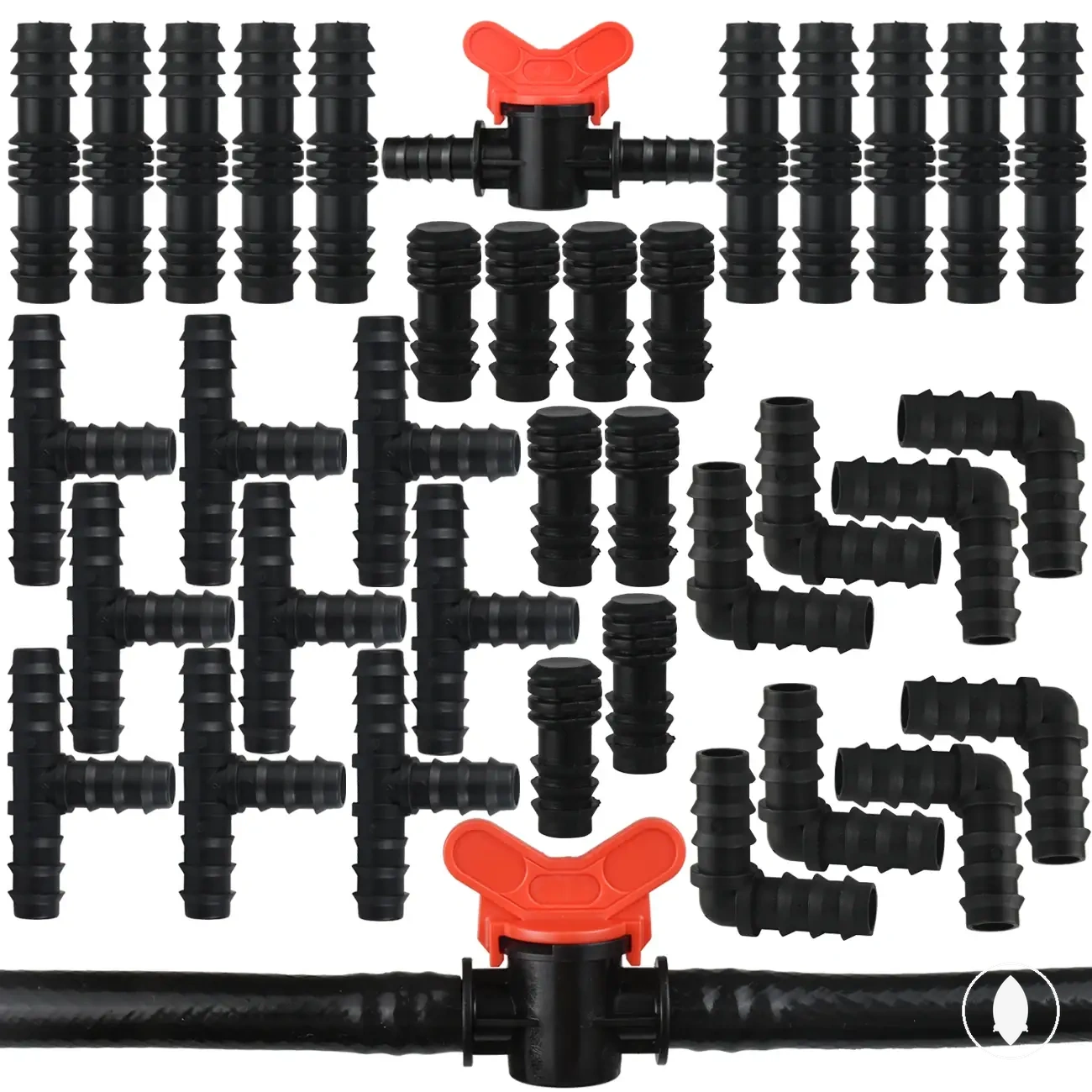
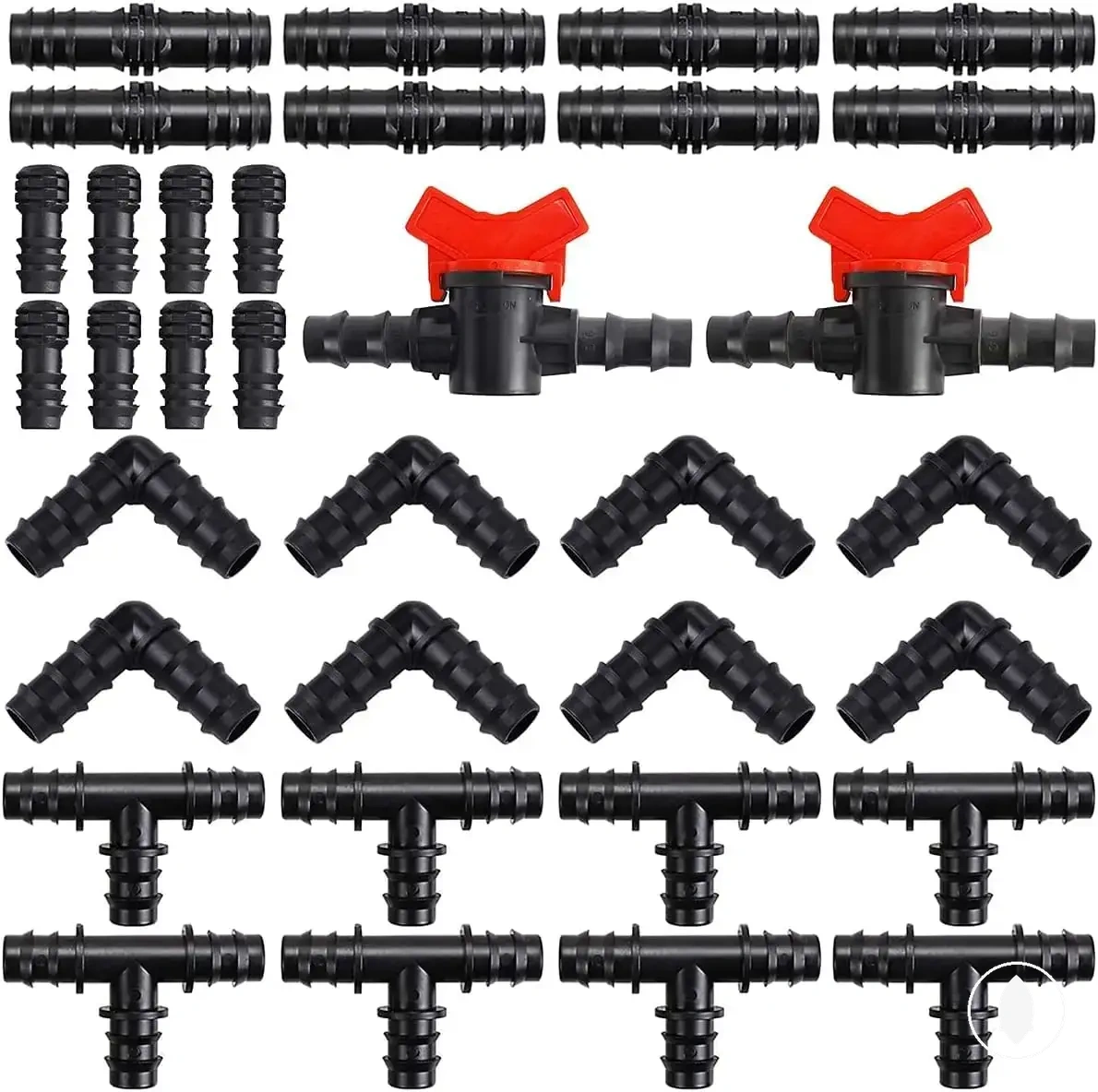
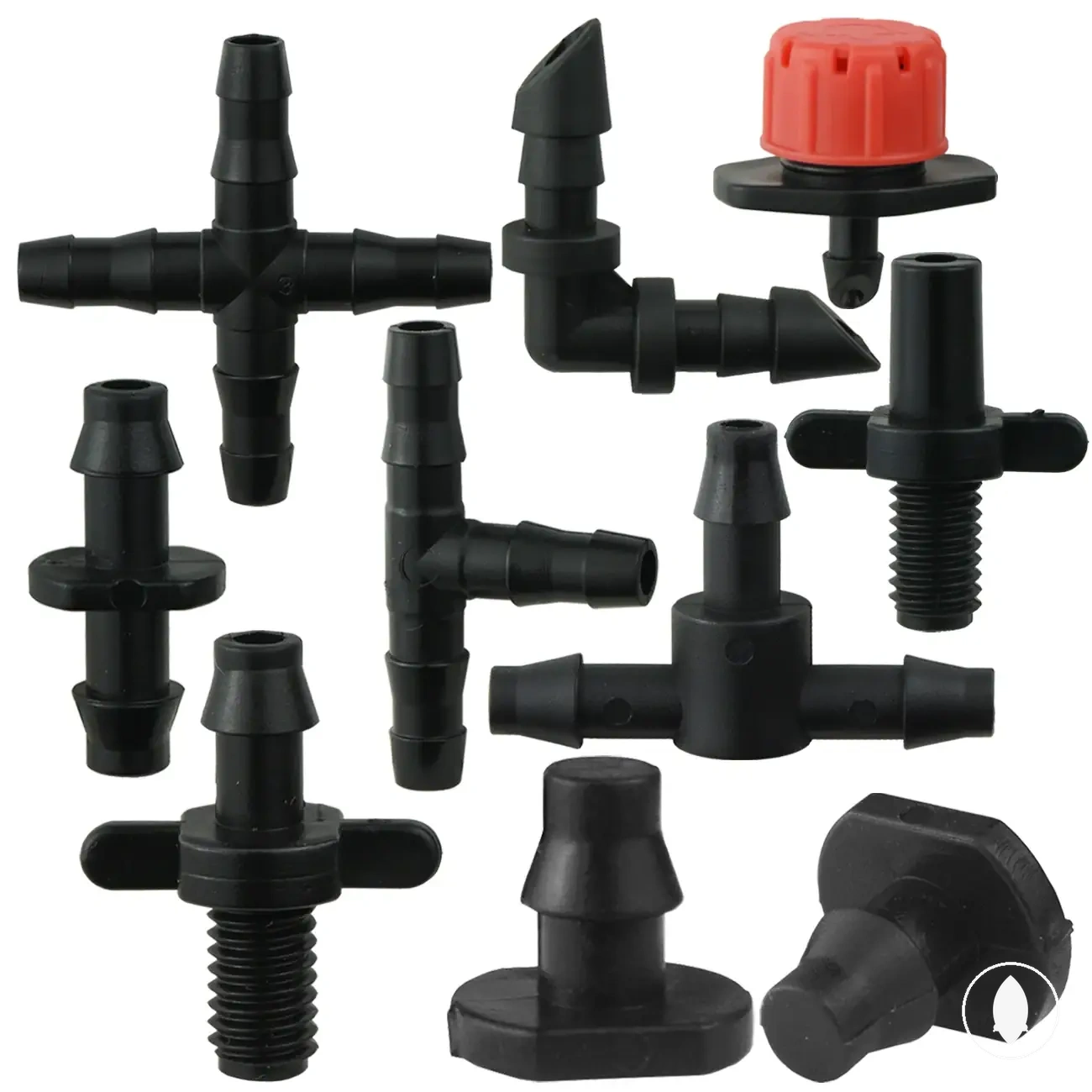
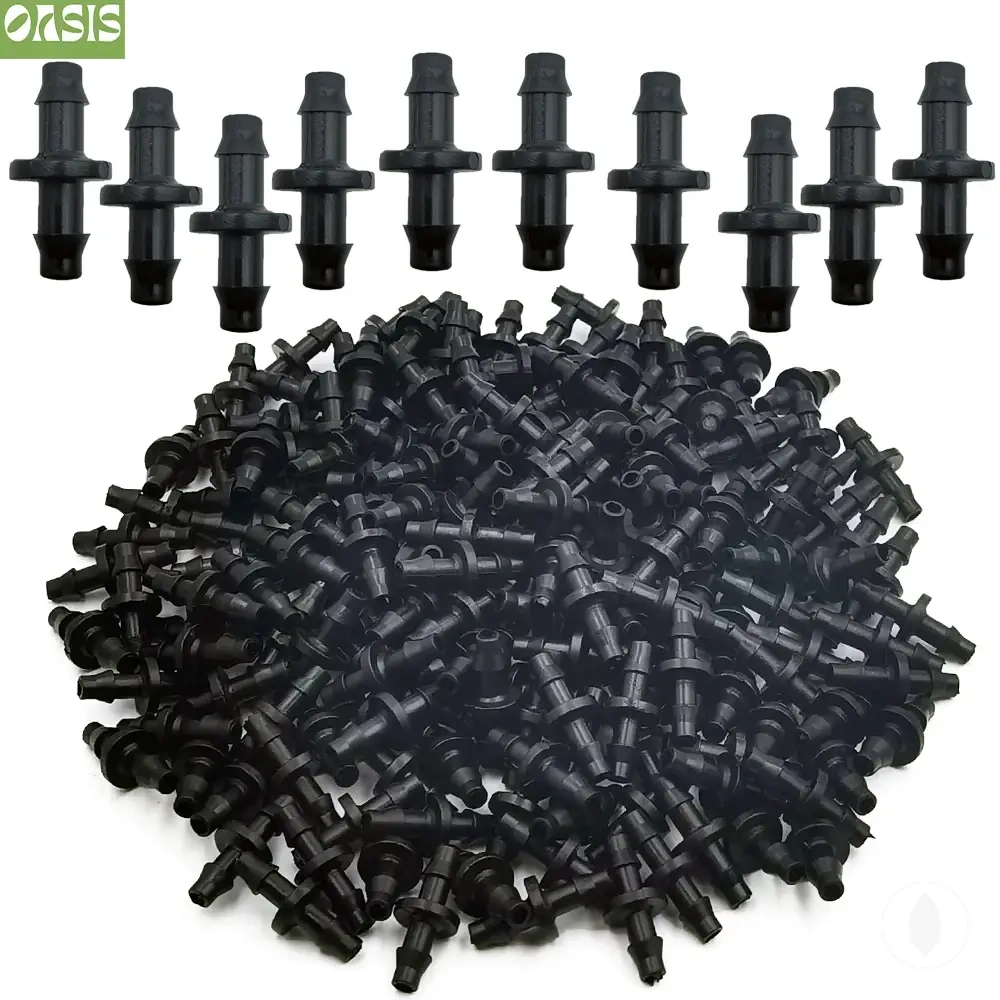
Here are product examples that may make comparison easier. Before buying, always review the compatibility criteria, essential features, and product details.