Drip irrigation fitting types by connection style and tubing fit
Drip irrigation fitting types depend on tubing format, connection style, and the position of the fitting within an irrigation layout. Barbed, compression, and threaded fittings are different connection options that may suit different tubing conditions, including drip tape, micro tubing, and mainline tubing.
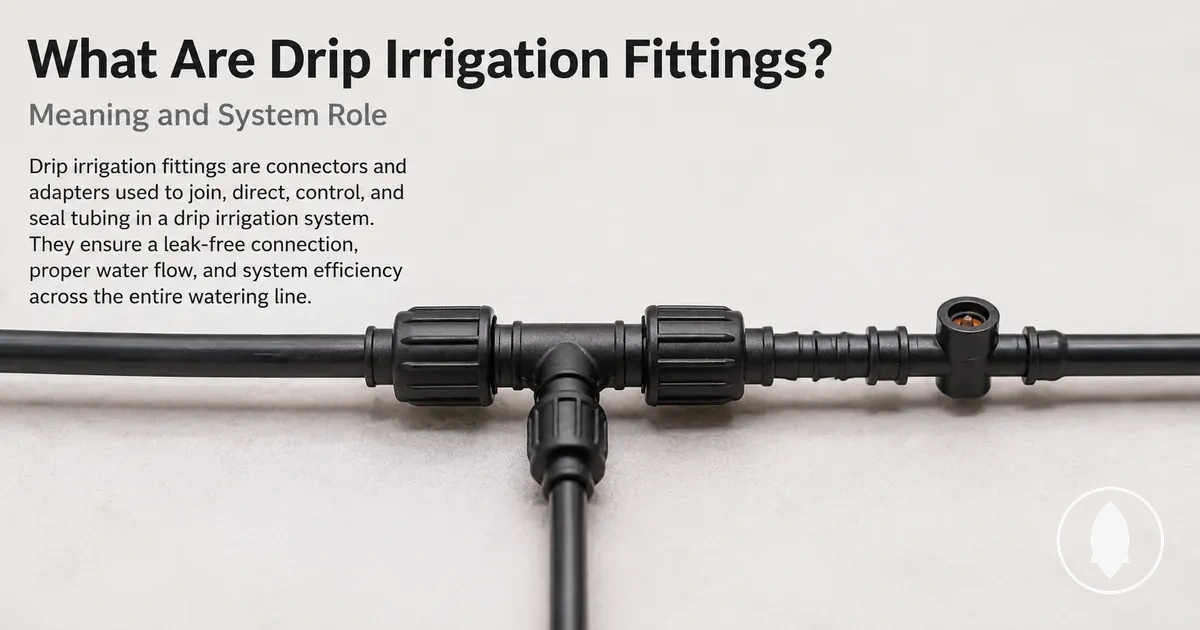
Drip irrigation fittings are connectors, couplers, and adapters that join irrigation components while matching a specific tubing fit and connection method. The fitting type is shaped by how the connection is made, how the tubing is supported, and where the fitting is used in the system. For the broader role of these components, see the drip irrigation fittings hub. This page focuses on fitting types and their connection characteristics rather than fitting parts or detailed tubing size checks.
When selecting a fitting category, the layout condition helps determine which connection style and tubing format need to be considered. A fitting used with flat tape may require a different seal approach from one used with round tubing, while micro tubing and mainline tubing can create different fit conditions. These differences provide the basis for understanding the main drip irrigation fitting types.
How drip irrigation fitting types differ
Drip irrigation fitting types differ through their connection attributes, tubing context, and the fit result they create within an irrigation layout. The main difference is how each fitting style manages grip, seal, and connection conditions for the tubing or system component it joins.
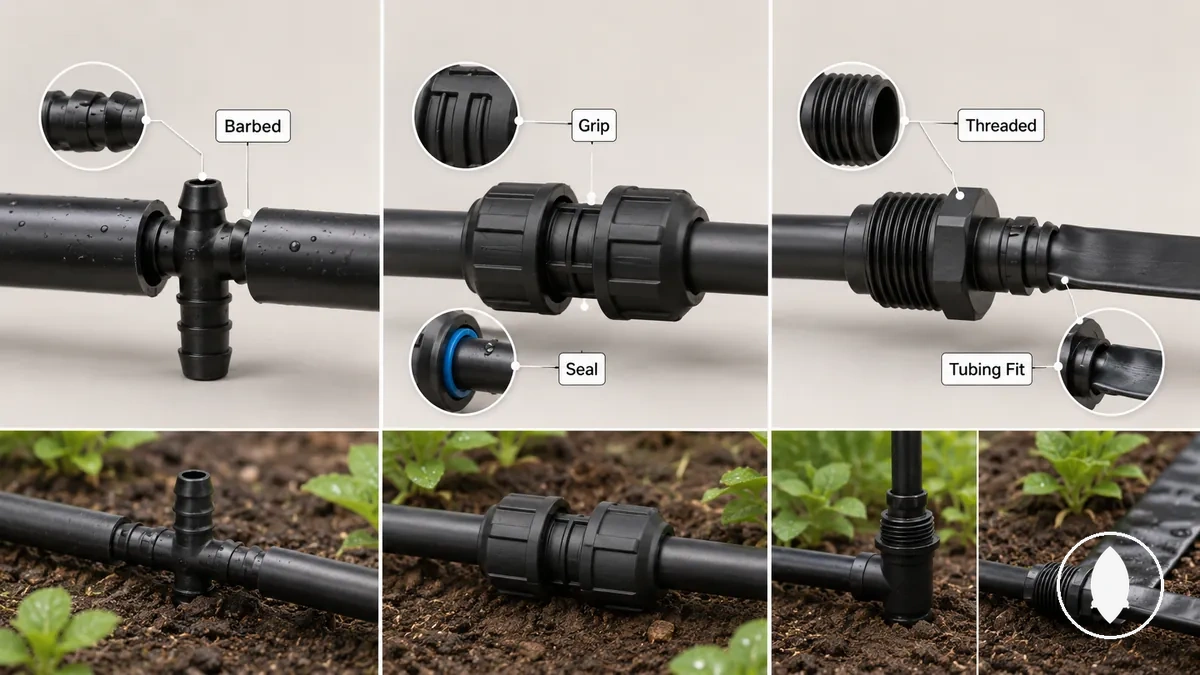
Each fitting type uses a different connection attribute to create a specific connection behavior. Factors such as grip method, seal design, tubing format, and reuse needs can influence how a connector, coupler, or line connector performs within a layout. The tubing context helps determine the connection conditions, while the fitting type should be considered separately from fitting part shape and tubing size.
Before comparing individual fitting styles, it helps to separate three related ideas: fitting type describes the connection method, fitting parts describe the shape or role of a component, and tubing size describes the dimensions that affect fit. The connection roles by fitting part page covers component roles in more detail. The comparison below organizes fitting types by connection style, tubing context, and fit result.
| Fitting type | Connection attribute | Tubing context | Fit result and considerations |
|---|---|---|---|
| Barbed fittings | Grip through an inserted connection point | Compatible drip tubing or micro tubing conditions | May provide a secure connection when the barb profile and tubing condition align |
| Compression fittings | Grip through outer tubing support and fitting tolerance | Tubing dimensions and fitting design need to align | Can provide a stable connection when sealing conditions are suitable |
| Threaded fittings | Connection through threaded interfaces and adapters | Fixed components or transition points | Fit depends on thread compatibility, sealing method, and connected components |
Connection-style fitting types
Connection-style fittings are grouped by how they grip, seal, or connect to tubing and system components. The main attributes that separate these fitting styles are the grip method, seal behavior, tubing context, reuse potential, and the connection conditions where each style is used.
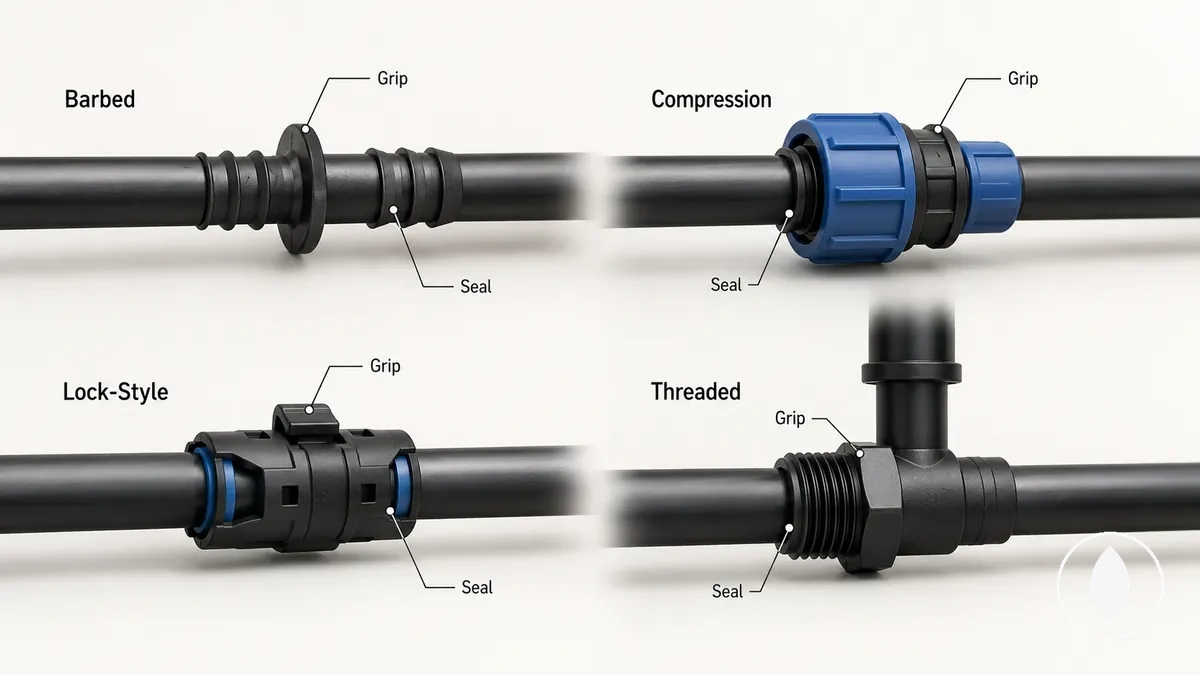
When a drip irrigation layout uses different connection points, the fitting style can influence how a connector or coupler interacts with the tubing. Barbed fittings use an inserted connection approach, compression fittings rely on outer tubing support, lock-style fittings focus on a hand-tight connection method, and threaded fittings create transitions between components through threaded interfaces. Each option may have different grip, seal, reuse, and limitation considerations depending on the tubing context.
Connection-style fittings should be considered separately from fitting shape and tubing size because each describes a different part of the connection process. The barbed versus compression fittings comparison explores the differences between two common connection approaches in more detail.
Barbed fittings for inserted tubing connections
Barbed fittings are inserted connectors that hold tubing through a friction fit created by the barb profile inside compatible drip tubing or micro tubing. The connection depends on the tubing condition, fitting design, and how the barb interacts with the tubing wall. A suitable fit may support a secure connection, while mismatched conditions can increase leak risk or make removal more difficult.
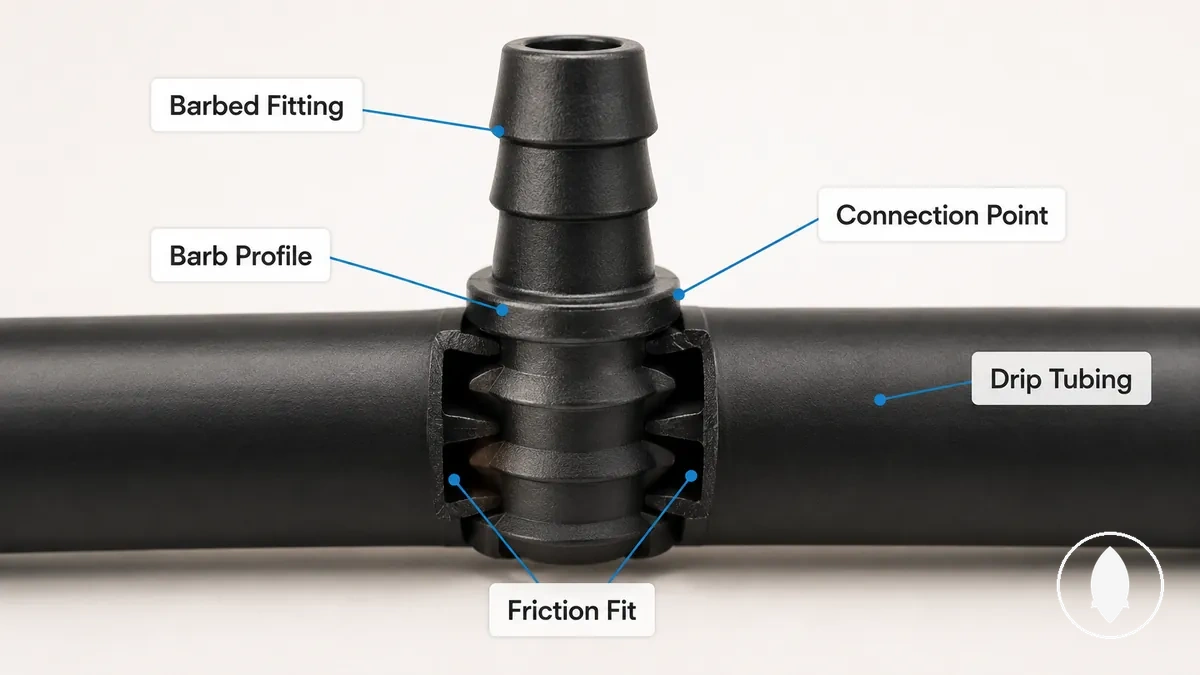
Barbed fittings are often used at tubing connection points where an inserted connector approach is suitable. The grip method can vary depending on tubing softness, diameter condition, and the relationship between the barb profile and the tubing interior. Warmer tubing or tighter connections may change insertion or removal difficulty, so the connection condition should be considered before selecting this fitting style.
Compression fittings for mainline tubing grip
Compression fittings are connectors that hold tubing through outer grip and fitting tolerance rather than an inserted barb. The connection depends on the fitting body, outside diameter match, and the way the fitting creates a seal around the tubing. A suitable fit condition can support connection stability, while mismatched dimensions may increase leak risk.
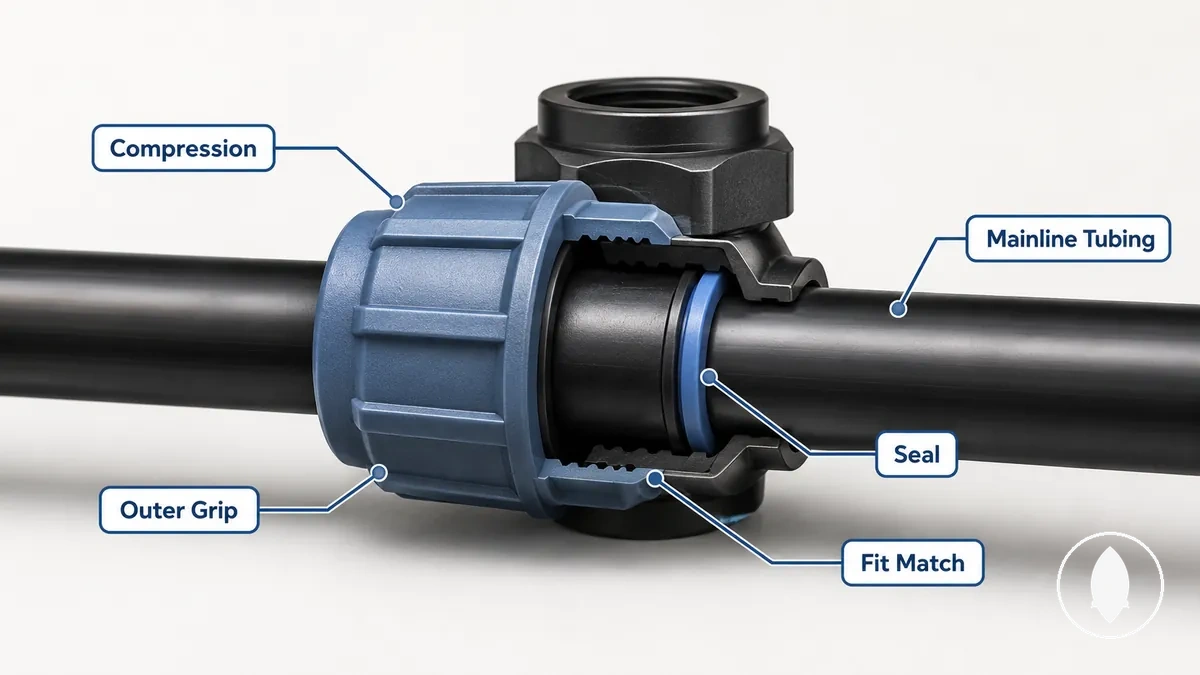
Compression fittings are often considered for mainline tubing connections where tubing dimensions and fitting design need to work together. The outer grip, seal, and tolerance between the fitting and tubing can influence connection behavior and reuse conditions. Compared with barbed fittings, compression fittings use a different grip method, so the connection choice depends on the tubing context and the required connection conditions.
Lock-style fittings for reusable hand-tight connections
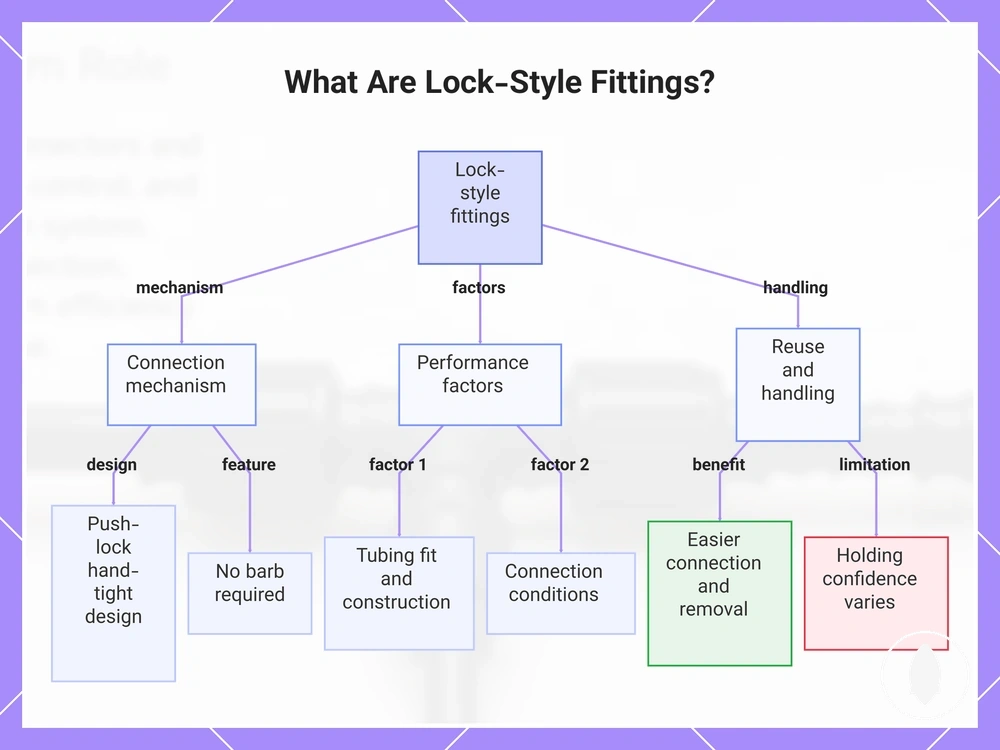
Lock-style fittings are push-lock connectors designed for hand-tight connections where attachment and reuse may be important. The lock mechanism holds the tubing through the fitting design rather than relying on an inserted barb. Connection performance depends on the tubing fit, fitting construction, and the conditions where the connection is used.
Lock-style fittings may suit layouts where easier connection and removal are useful during adjustments or maintenance. The holding confidence and reuse potential can vary based on the tubing condition, fitting material, and repeated handling. A suitable hand-tight connection depends on matching the fitting design with the tubing characteristics rather than assuming every lock-style fitting works across all conditions.
This chart explains the design, performance factors, and handling considerations of lock-style push-lock fittings for hand-tight connections.
Threaded fittings for adapters, risers, valves, and fixed points
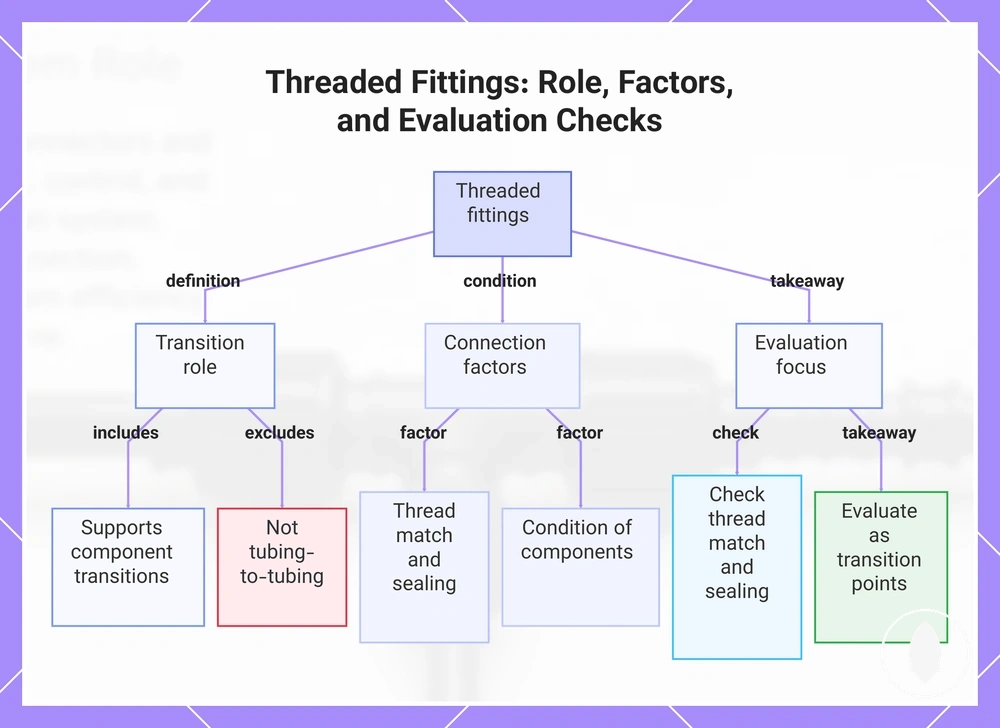
Threaded fittings are connector interfaces used where drip tubing meets adapters, risers, valves, filters, or fixed points. The connection depends on the thread match, sealing method, and the condition of the connected components. Threaded fittings usually support transitions between components rather than replacing direct tubing-to-tubing connectors.
At a fixed point in a drip irrigation layout, the adapter role and connection design influence how the seal and connection stability are achieved. Checking the thread match and sealing method can help identify possible mismatch risks, while the connected component remains the focus. Threaded fittings should be evaluated as transition points within the fitting system rather than as a replacement for other connector styles.
This chart illustrates the role of threaded fittings as transition connectors, the key factors affecting their connection, and the evaluation checks recommended.
Line-format fitting types for tape, micro tubing, and mainline tubing
Line-format fitting types are classified by the line format they connect rather than by connector mechanism alone. The main distinctions come from how fitting behavior changes with drip tape, micro tubing, and mainline tubing conditions, including fit risk, seal interaction, and connection outcome.
When a fitting is selected for a specific layout, the tubing context helps determine how the connector, coupler, or line connector interacts with the irrigation line. Drip tape, micro tubing, and mainline tubing each create different connection conditions, so the fitting style and line format need to align for a suitable connection approach.
The table below organizes fitting types by line format, fitting behavior, and common fit considerations.
| Line format | Fitting type context | Fitting behavior | Common fit risk |
|---|---|---|---|
| Drip tape | Fittings designed for flat tape connections | Supports connection between the fitting and tape format | Fit can depend on tape condition and seal interaction |
| Micro tubing | Fittings designed for smaller tubing connections | Supports branch or localized tubing connections | Fit can vary with tubing condition and fitting design |
| Mainline tubing | Fittings designed for larger supply tubing connections | Supports connection points within larger tubing layouts | Fit can depend on tubing dimensions and connection conditions |
Drip tape fittings for flat tape runs
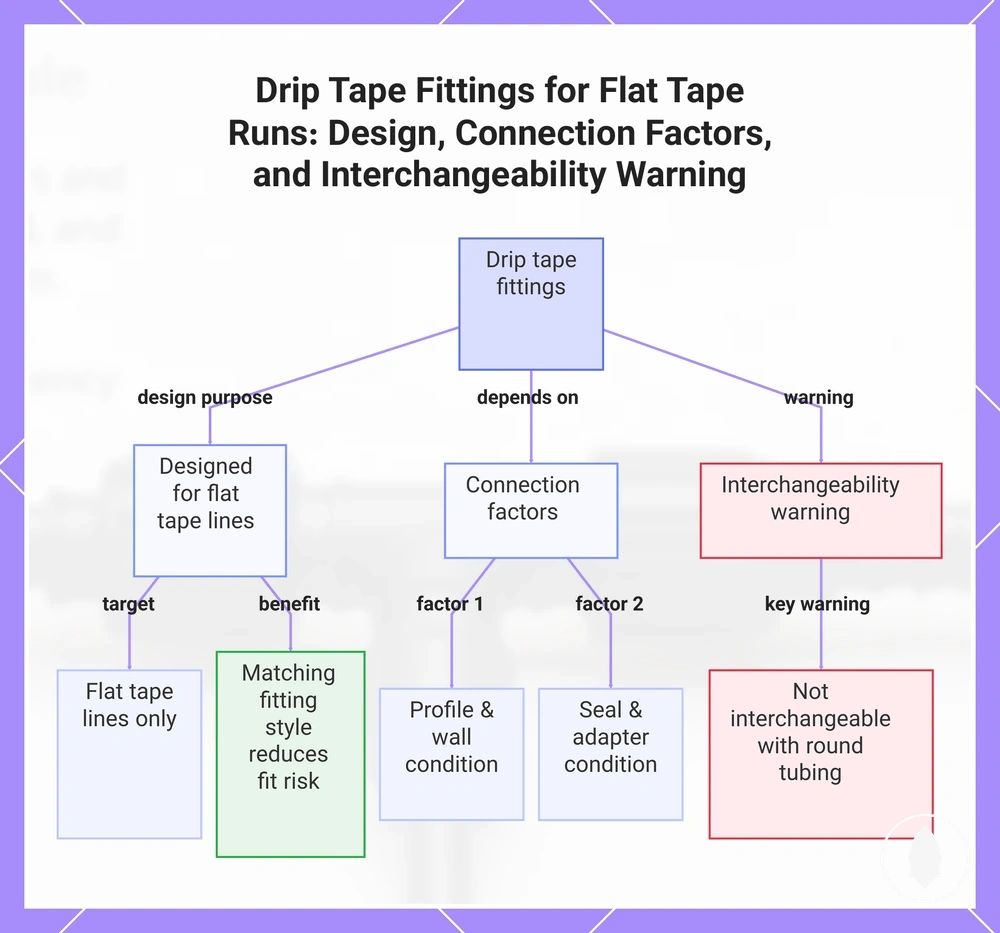
Drip tape fittings are designed for flat tape lines rather than round tubing connections. The connection depends on the flat tape profile, wall condition, seal method, and adapter condition at the connection point. Matching the fitting style to the tape run can help reduce fit risk and support a suitable connection.
For a flat tape run, the fitting needs to align with the tape format and the condition of the tape wall. A specific adapter condition may allow different components to connect, but drip tape fittings should not be treated as interchangeable with round tubing fittings without considering the required connection conditions and potential seal risks.
This chart explains the key design purpose of drip tape fittings for flat tape lines, the factors affecting the connection, and a critical warning about interchangeability with round tubing fittings.
Micro fittings for quarter-inch branch lines
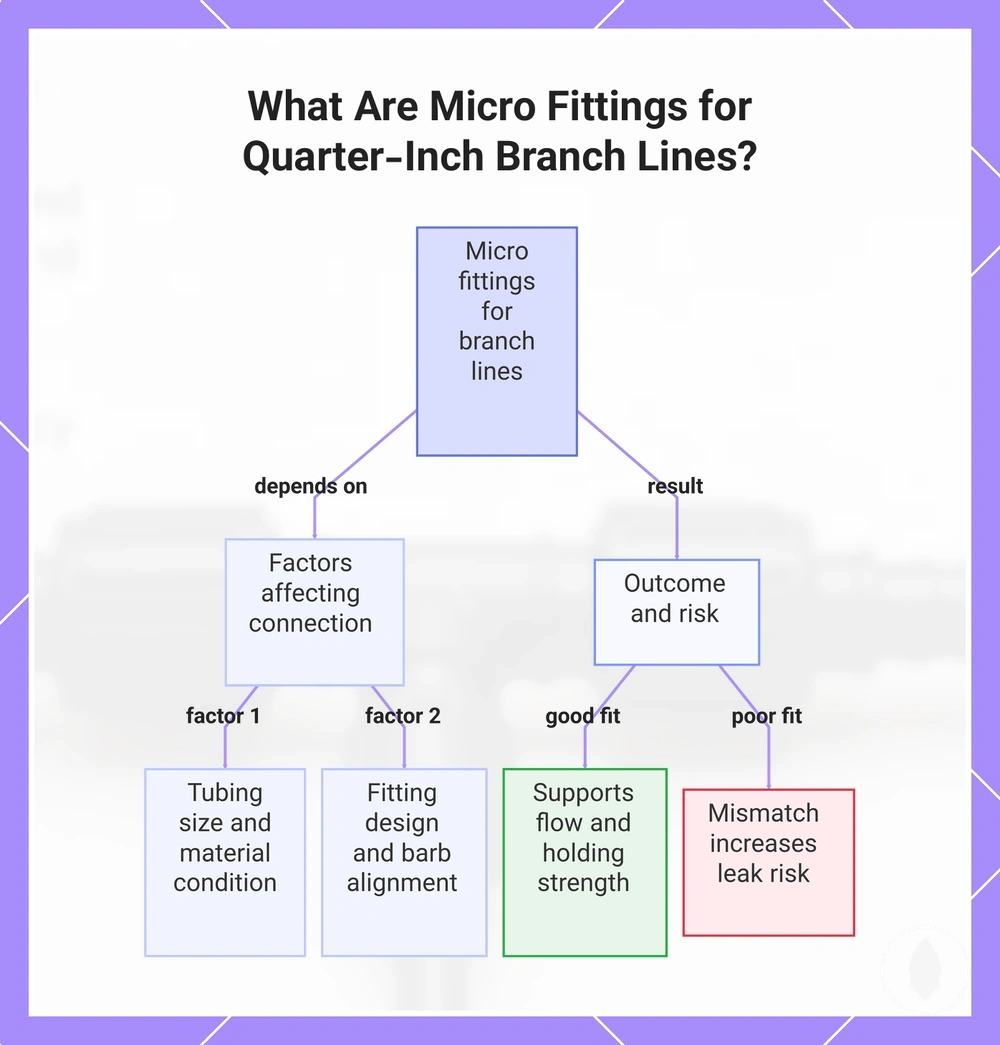
Micro fittings are small connectors used with quarter-inch tubing for branch lines, emitter lines, and localized plant irrigation connections. The connection depends on the tubing size, material condition, and fitting design. A suitable fit can support flow and holding strength, while mismatched conditions may increase leak risk.
In a branch line setup, micro fittings provide a connection point for smaller tubing sections where a compact fitting style is needed. A small barb may help secure the connection when the tubing fit and connector design align, but the outcome depends on the tubing condition and the specific branch-line requirements rather than applying to every configuration.
This chart shows the main factors that affect connection quality and the resulting outcomes for micro fittings used in quarter-inch branch line setups.
Mainline fittings for larger supply tubing
Mainline fittings are connectors used with larger supply tubing where stable grip and connection conditions are important. The fit depends on the tubing outside diameter, wall condition, fitting design, and how the connection creates a seal. A suitable match can support connection stability, while mismatched conditions may affect grip, seal performance, or pressure response.
For supply tubing transitions or branches, mainline fittings connect larger line sections within an irrigation layout. The connection outcome depends on the relationship between the fitting style and the tubing specification. Pressure response can vary by the tubing condition and fitting design, so it should be considered as part of the overall connection condition rather than a separate troubleshooting topic.
Tubing size and outside-diameter fit by fitting type
Compatibility depends on the fitting style, tubing format, and measured tubing dimensions, including tubing size and outside diameter. A connector or coupler may only create a suitable connection when the fitting design matches the tubing condition and required fit characteristics.
Matching a fitting type requires checking the tubing format, outside diameter attribute, and the tolerance between the tubing and fitting. These factors can influence whether the result is a secure connection, loose fit, tight fit, or increased mismatch risk.
The criteria below show how fitting type, tubing condition, and compatibility considerations relate. For more detailed criteria, see tubing compatibility by fitting type.
| Fitting type | Required tubing condition | Matching attribute | Potential mismatch risk |
|---|---|---|---|
| Barbed fittings | Tubing condition should allow the inserted connector to engage correctly | Tubing size and internal fit condition | Loose grip or difficult insertion may occur when conditions do not align |
| Compression fittings | Tubing dimensions should suit the compression connection design | Outside diameter and fitting tolerance | Seal or grip issues may occur when dimensions do not match |
| Threaded fittings | Connected components should match the fitting interface | Thread and adapter condition | Connection issues may occur from incompatible components |
Drip tape fittings versus tubing fittings
Drip tape fittings and tubing fittings differ mainly because flat tape and round tubing require different connection behavior. The suitable fitting category depends on the line shape, wall condition, seal method, and the layout condition where the connection is used.
Flat tape and round tubing create different fitting conditions because their shapes and connection surfaces are not the same. Drip tape fittings are designed around flat tape characteristics, while tubing fittings are designed around round tubing formats. Using the wrong fitting category may increase mismatch risk or affect the connection outcome.
The comparison below shows how fitting category, line format, and seal conditions influence suitability.
| Fitting category | Line shape | Seal method and condition | Suitability and mismatch considerations |
|---|---|---|---|
| Drip tape fittings | Flat tape | Based on flat tape profile and wall condition | May suit a tape run when the fitting matches the tape format and connection requirements |
| Tubing fittings | Round tubing | Based on tubing shape and connection fit | May suit round tubing when the fitting style aligns with the tubing format and connection conditions |
| Adapters between formats | Transition between flat tape and round tubing | Depends on adapter condition and connected components | Requires matching connection conditions to reduce mismatch risk |
When each fitting type fits the layout
The right fitting type depends on the layout point, connection style, and line format being connected. A branch, mainline, adapter, row, or fixed point can require a different connector approach depending on the tubing or tape condition and the intended connection outcome.
The main decision variables include the fitting type, access requirements, reuse needs, repair access, and mismatch risk. Matching the connection style to the layout point helps determine whether the fitting condition aligns with the tubing format and connection requirements.
The decision matrix below compares common layout points with fitting types, line formats, and connection considerations.
| Layout point | Fitting type | Line format and condition | Decision outcome |
|---|---|---|---|
| Branch | Barbed or micro fitting style | Branch tubing or localized lines with matching fit conditions | May suit connections where tubing fit and holding conditions align |
| Mainline | Mainline or compression fitting style | Supply tubing with suitable outside diameter and connection design | May support stable connections when grip and seal conditions match |
| Adapter | Threaded or transition fitting style | Component interfaces requiring a matching connection point | Depends on adapter condition, connection match, and connected components |
| Row | Drip tape or tubing fitting style | Flat tape or round tubing format | Depends on line format, seal method, and connection requirements |
| Fixed point | Threaded fitting style | Adapters, valves, or fixed components | Requires compatible connection conditions and suitable sealing approach |
For a more detailed selection process, see choosing the right fitting type. The suitable fitting choice depends on the layout point, connection style, line format, and compatibility factors rather than a single fitting category.
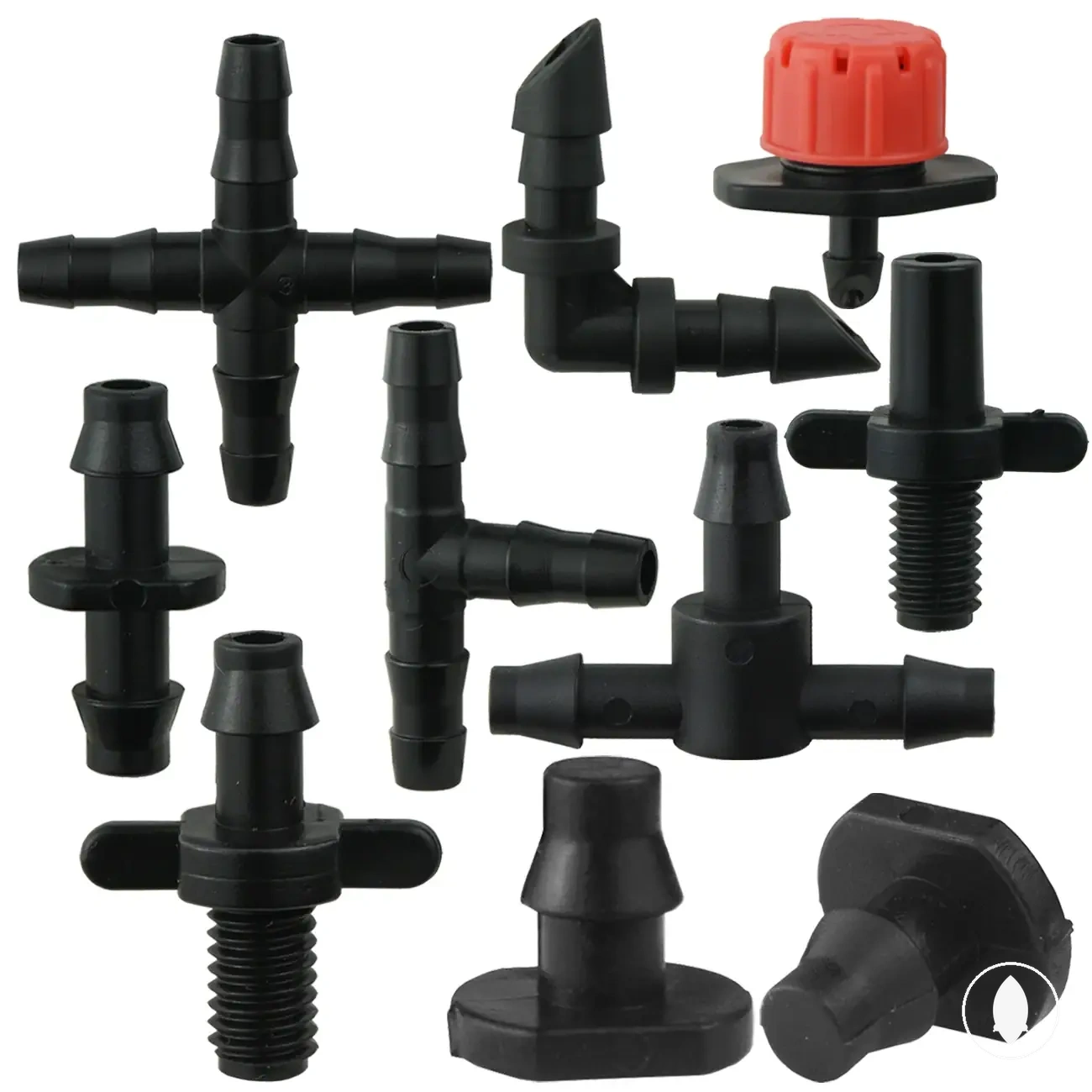
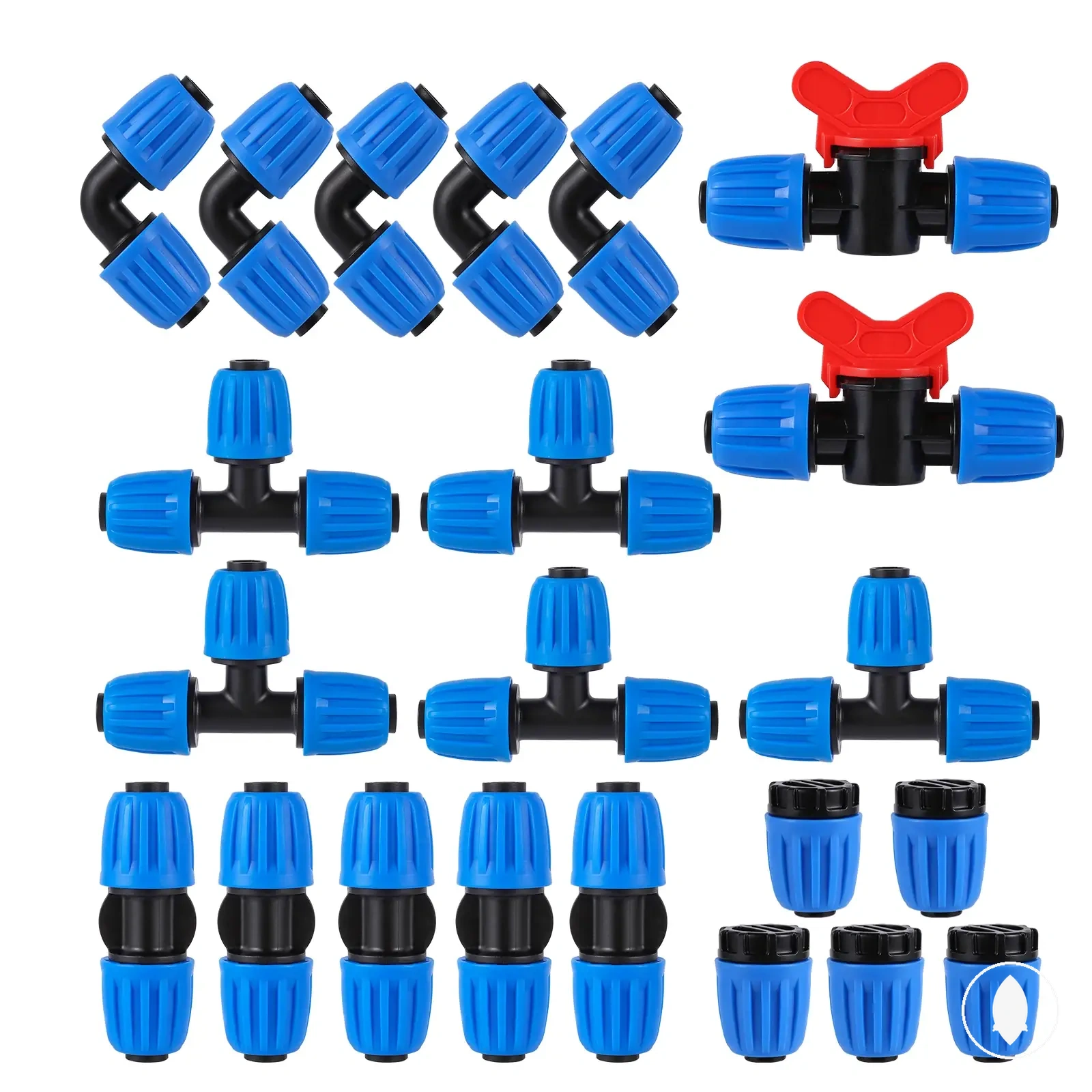
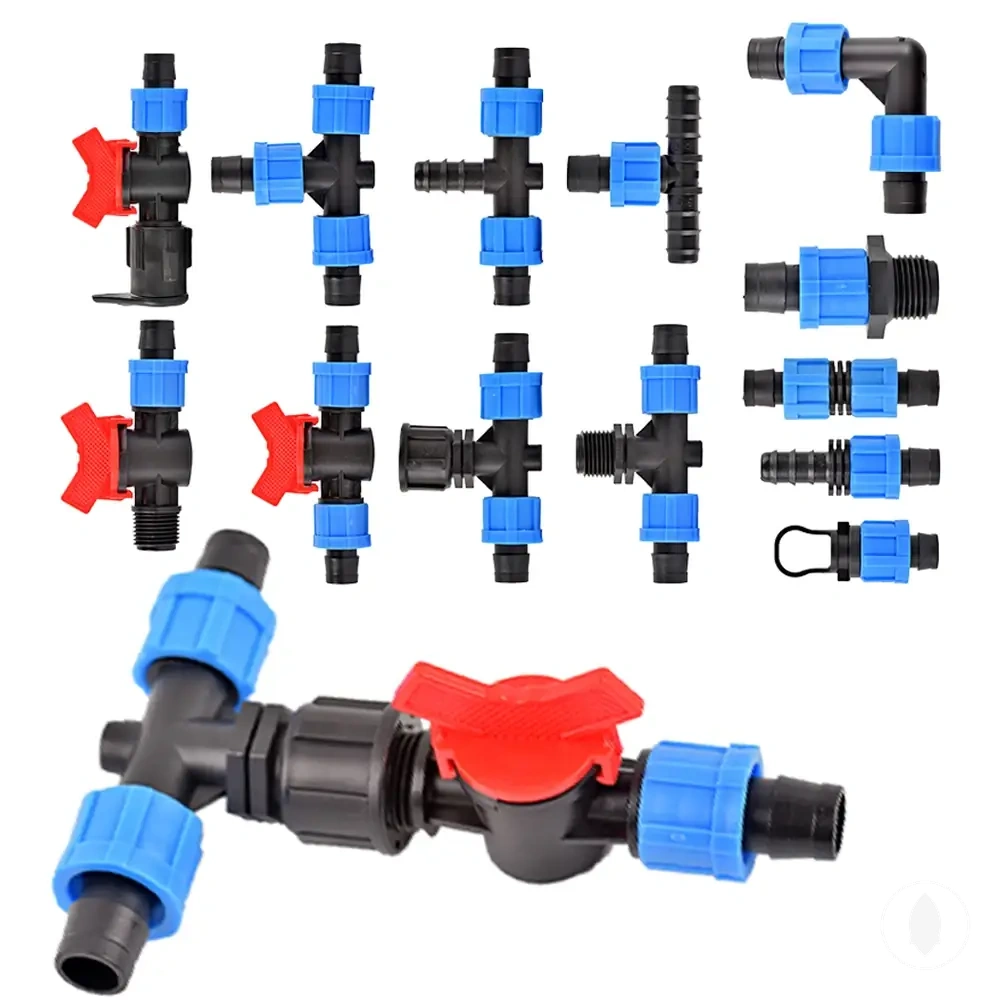
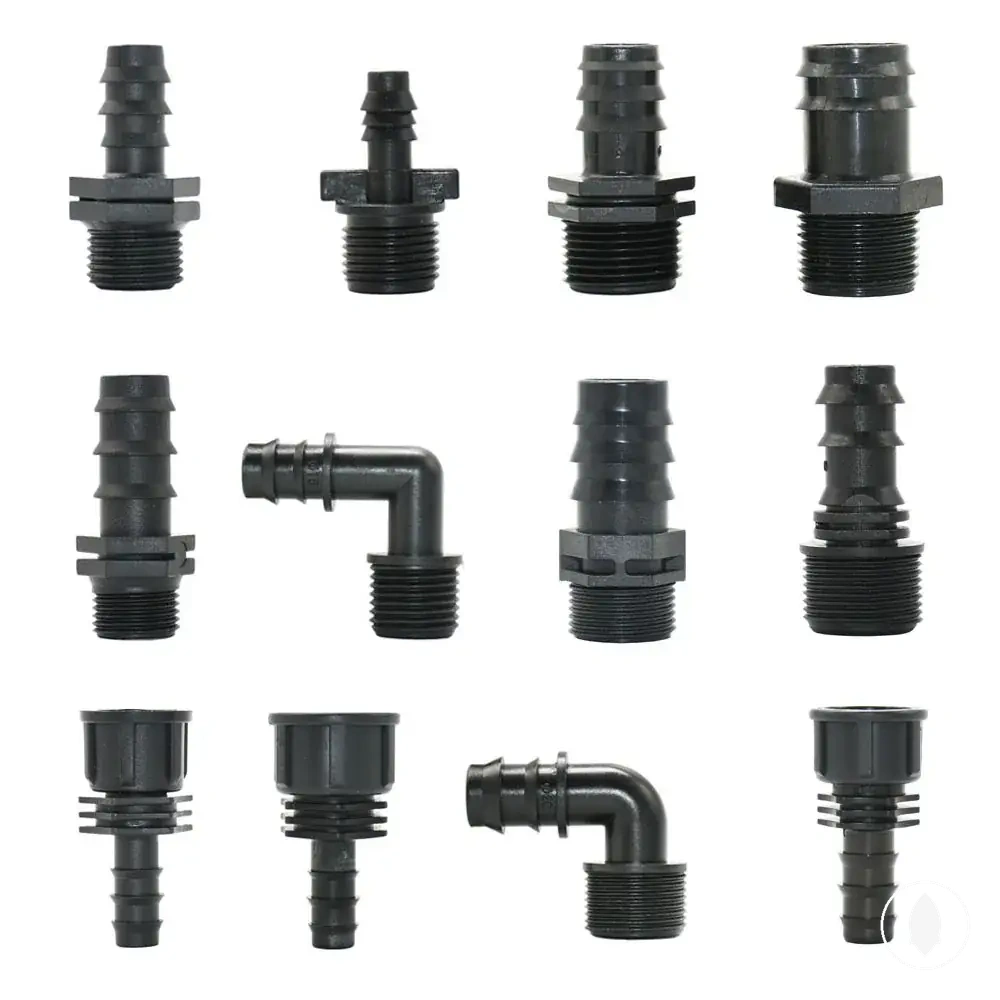
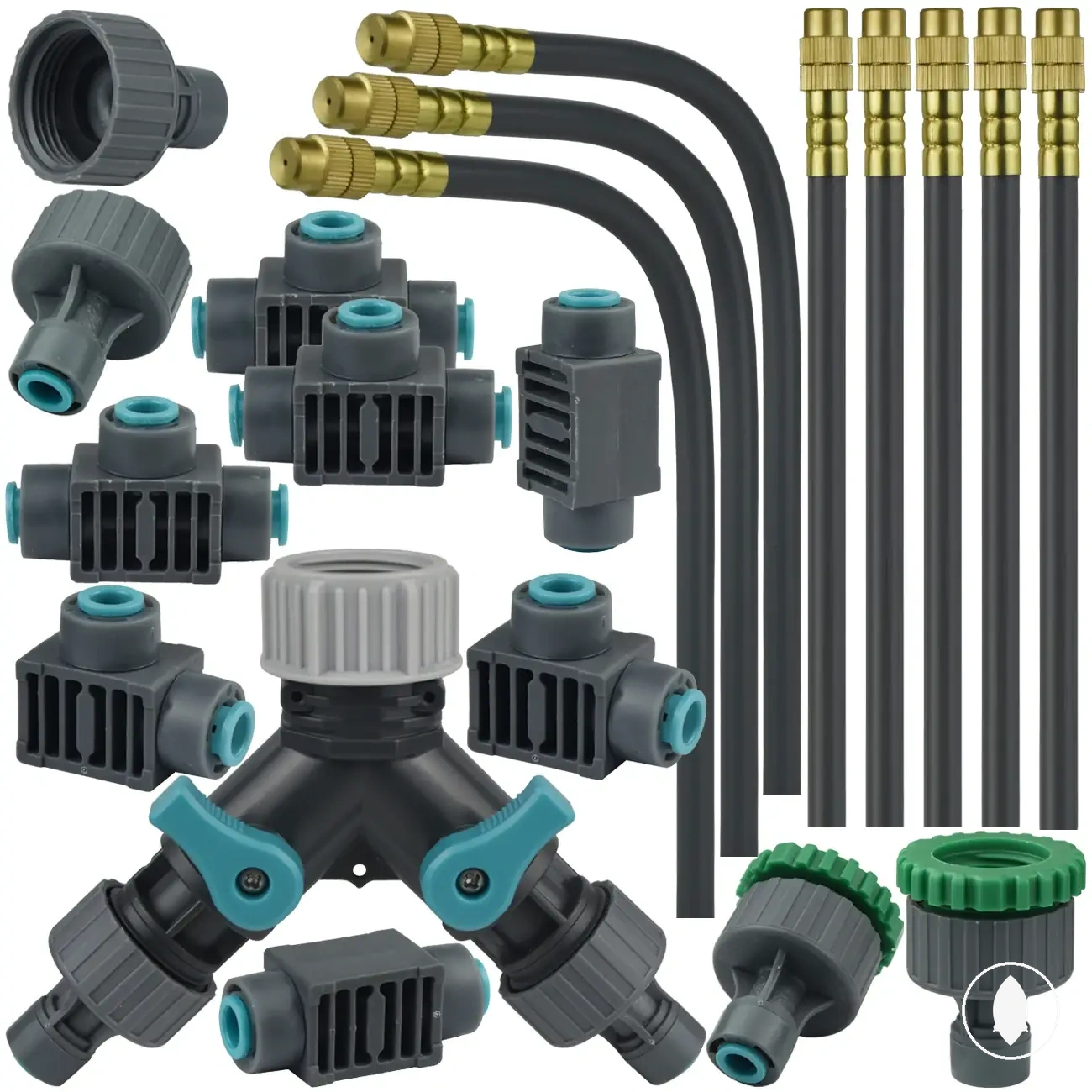
The products below are useful examples for comparing available options. Before buying, check that the compatibility criteria, key features, and product details match your needs.
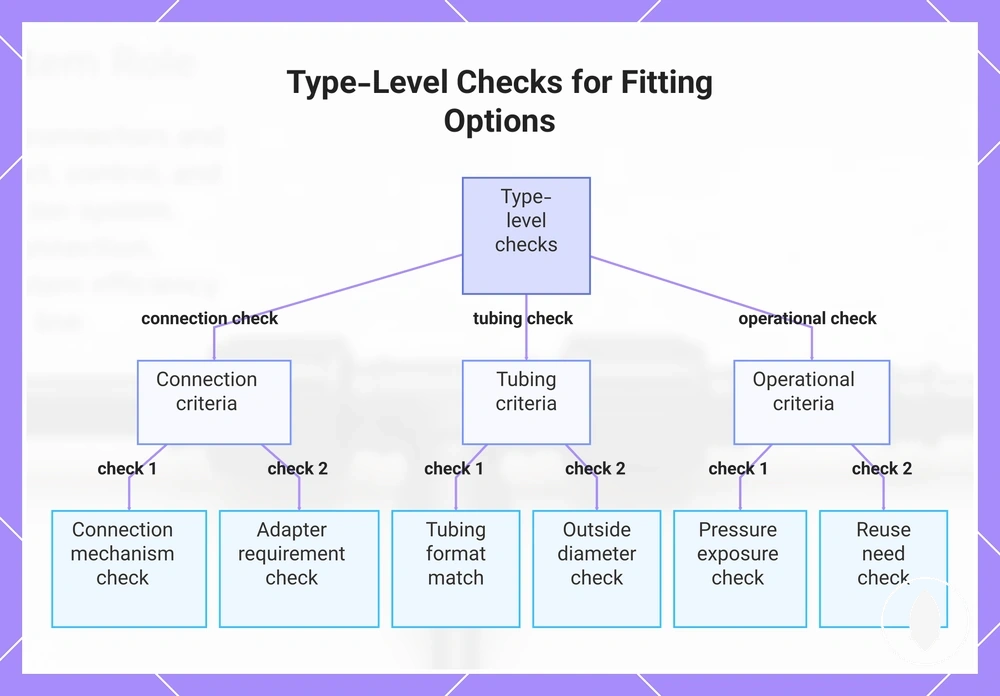
Type-level checks before comparing fitting options
Type-level checks help evaluate fitting options before comparing individual products or offers by confirming the connection mechanism, tubing format, and fitting conditions. A fitting type should be assessed against the layout requirements, tubing characteristics, and connection needs before it is shortlisted or rejected.
The main criteria include the connection mechanism, tubing format, outside diameter, pressure exposure, reuse need, and adapter requirement. These checks help identify whether a fitting style may align with the intended connection condition and reduce mismatch risk during comparison.
Use this checklist as a final type-level review before comparing fitting options.
- Connection mechanism: Check whether the fitting type uses the required connection mechanism for the layout condition, as the connection approach can influence fit and suitability decisions.
- Tubing format: Confirm that the fitting style matches the tubing format, because differences between line formats may create fit or seal concerns.
- Outside diameter: Compare the tubing outside diameter with the fitting requirements to determine whether the connection condition is suitable.
- Pressure exposure: Consider the pressure exposure at the connection point and whether the fitting design is appropriate for that condition.
- Reuse need: Review whether the connection requires reuse or access and whether the fitting style supports that requirement under the expected conditions.
- Adapter requirement: Check whether an adapter is needed and whether the adapter condition matches the connected components.
These type-level checks help create a shortlist of fitting options or reject choices that do not align with the layout condition. The final comparison should focus on fitting attributes, connection requirements, and compatibility factors rather than assuming one fitting style suits every situation.
The products below are useful examples for comparing available options. Before buying, check that the compatibility criteria, key features, and product details match your needs.
This chart shows the type-level checklist of connection, tubing, and operational criteria to evaluate fitting options before comparing individual products.