
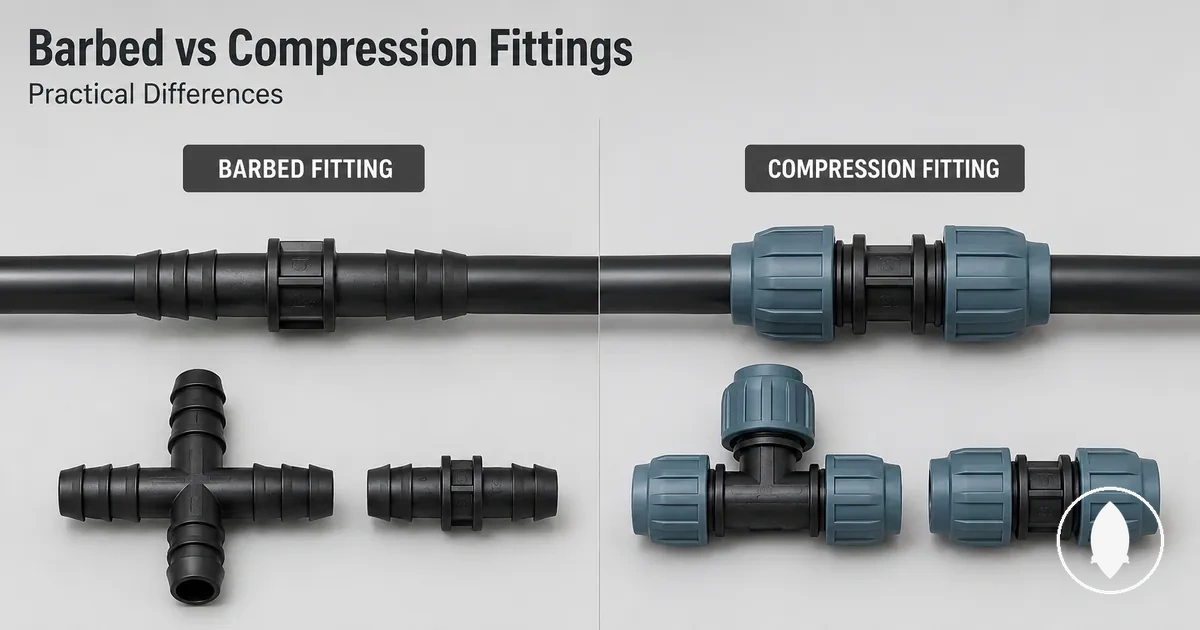
Barbed vs Compression Drip Fittings for Drip Tubing
Barbed vs Compression Drip Fittings for Drip Tubing are two connector styles used to connect drip tubing with different methods of holding and securing the line. They differ in how they engage the tubing and how that affects installation effort, reuse potential, and value tradeoffs, which shapes how they are evaluated in system design.
The two connector styles vary mainly through their grip method, tubing connection approach, and compatibility conditions with drip tubing. Barbed drip fittings typically rely on an internal grip against the tubing wall, while compression drip fittings apply an external holding force around the tubing. These differences influence installation effort, reuse potential, and overall value tradeoffs depending on the use case and maintenance needs.
In practice, barbed fittings connect by pushing into the drip tubing, creating an internal grip that holds the line through contact pressure inside the tube. Compression fittings instead secure the tubing from the outside by tightening around it, creating a different type of tubing connection that can change how firmly the line is held and how it behaves under adjustment or reuse conditions.
Compatibility, tubing size, and seal behavior are not fixed outcomes of either connector style and are typically evaluated in more detailed sections. These factors can vary depending on tubing condition, system design, and fitting match, and they are considered separately from the core comparison of connector style and connection method.
How Barbed and Compression Drip Fittings Connect to Tubing
Barbed fitting and compression fitting connect to drip tubing through different physical engagement methods that determine how the tubing contact point is held. A barbed fitting typically engages inside the drip tubing, where the barb creates an internal grip against the inner wall. A compression fitting instead surrounds the tubing and applies external pressure to form a controlled hold at the contact point.
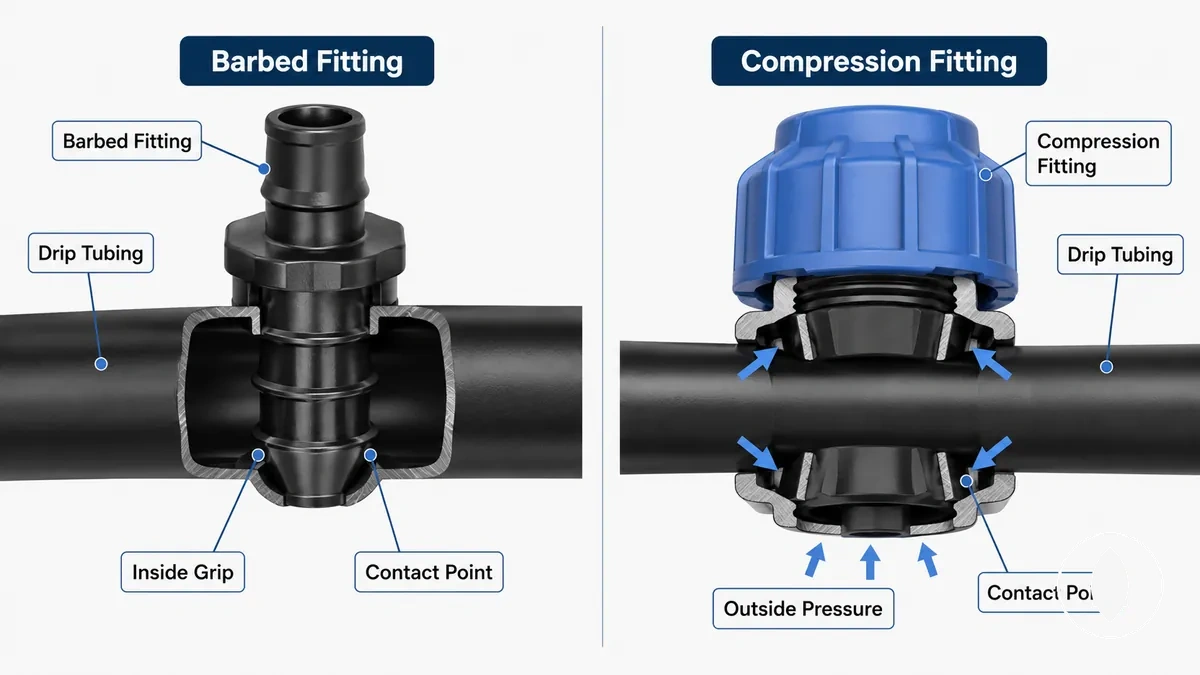
These connection mechanisms can be organized by where the tubing contact point is engaged and how the grip or seal result is formed.
| Fitting style | Tubing contact point | How it holds | Practical implication |
|---|---|---|---|
| Barbed fitting | Inside drip tubing | Internal grip through barb contact | Grip depends on tubing condition and fit tightness |
| Compression fitting | Outside drip tubing | External compression around tubing | Seal result depends on tubing size match and compression fit |
This connection model also sits within all fitting types where different connector type designs are grouped by how they physically interact with drip tubing rather than by usage context alone.
Core Differences Between Barbed and Compression Fittings
The core differences between barbed fittings and compression fittings are defined by grip method, seal behavior, installation effort, removal difficulty, reuse potential, and tubing dependency, all of which can influence which is the better option depending on the application conditions.
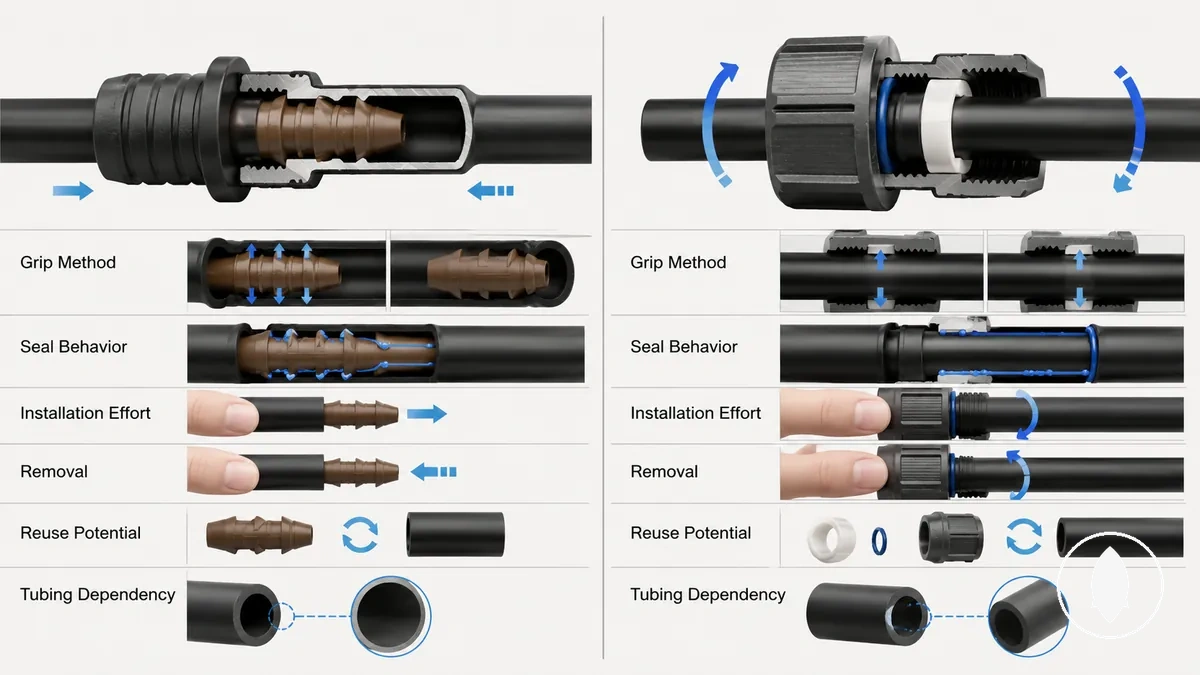
These core differences determine how each connector style performs under different tubing conditions and usage requirements. The comparison below organizes each criterion side by side to clarify how grip method, seal behavior, installation effort, removal difficulty, reuse potential, and tubing dependency affect selection.
| Criterion | Barbed fittings | Compression fittings | Selection implication |
|---|---|---|---|
| Grip method | Internal barb engages inside tubing | External pressure holds tubing | Changes how connection force is applied |
| Seal behavior | Relies on internal tubing contact | Relies on external compression fit | Seal outcome depends on tubing condition |
| Installation effort | Requires pushing into tubing | Requires external tightening action | Effort varies by connector style |
| Removal difficulty | May require higher pull force | Often released by loosening compression | Removal behavior depends on fitting type |
| Reuse potential | May reduce after repeated use | Often supports repeated adjustments | Reuse depends on wear and fit condition |
| Tubing dependency | Highly dependent on tubing inner condition | Dependent on tubing size and compression match | Fit sensitivity affects selection choice |
Grip Method and Seal Behavior
The grip method and seal behavior describe how a barb grips inside tubing and how a compression fitting holds tubing through an outer fit, creating different contact conditions at the tubing surface. A barb uses internal insertion to create grip against the inside tubing wall, while a compression fitting applies an outer fit that stabilizes the tubing through external pressure, changing how the connection is held at the tubing contact point.
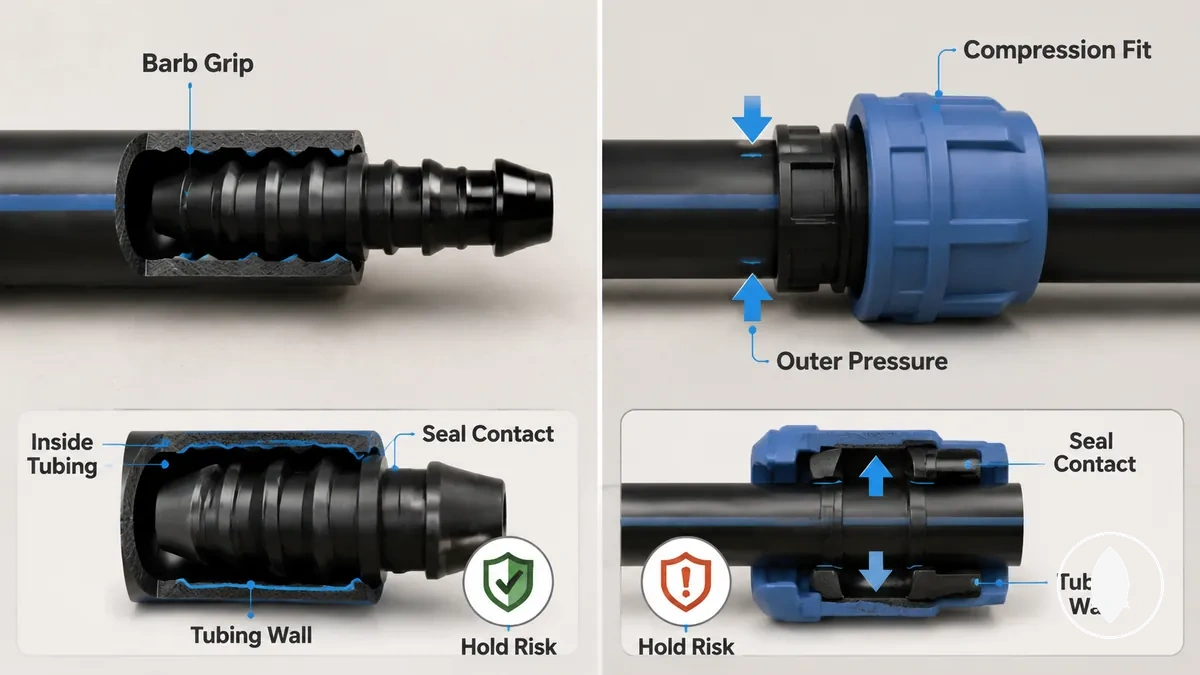
Seal behavior depends on how the contact surface interacts with the tubing material, which can influence hold risk under different fit conditions. In a barbed fitting, sealing relies on internal tubing contact and the grip formed by the barb inside tubing, while a compression fitting relies on external compression around the tubing, where the outer fit defines the seal behavior. In both cases, the stability of the connection can vary with tubing condition and fit tolerance, which affects overall hold risk without implying a permanent or guaranteed outcome.
Tubing Stretch and Compression Fit
Tubing stretch and compression fit influence how tubing deformation and fit tolerance affect barbed connection and compression connection in different ways depending on the contact condition between tubing and fitting. Tubing stretch is more directly related to how a barbed connection engages the inside tubing surface, while compression fit is shaped by how the outer diameter of the tubing aligns with the compression fitting’s outer fit and sealing contact.
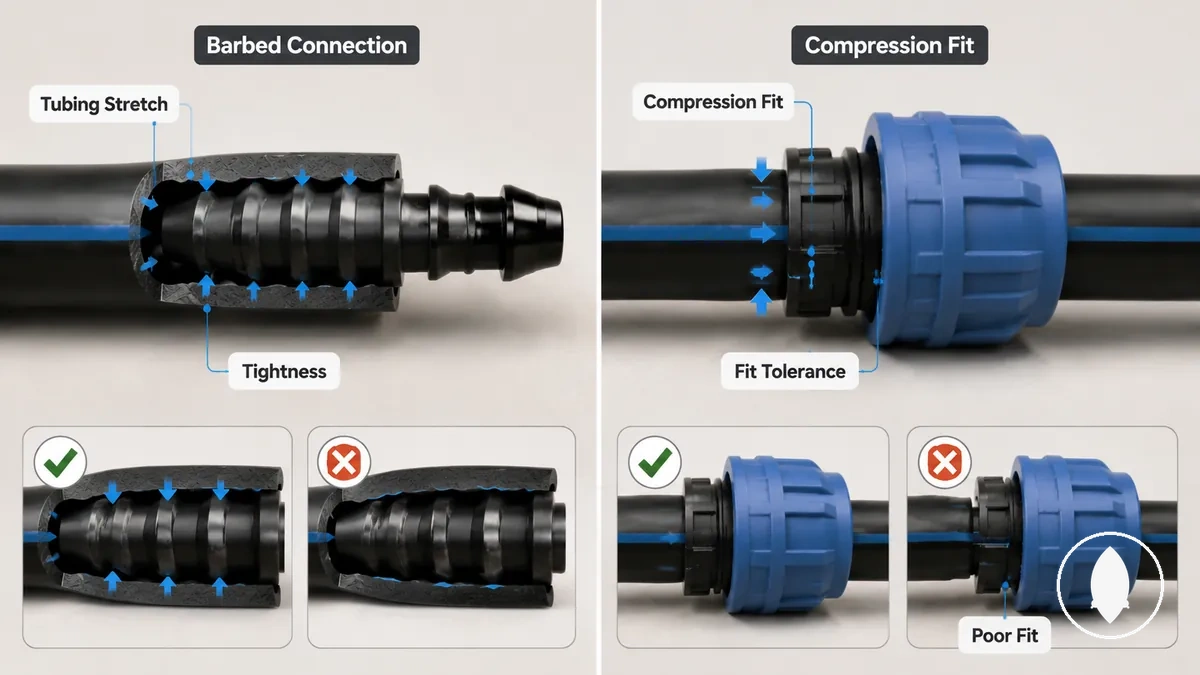
Tube deformation from tubing stretch can increase tightness in a barbed connection, which may also influence removal difficulty depending on tubing condition and material response. Compression fit depends on fit tolerance between tubing and the outer fit of the compression connection, where inconsistent tolerance can lead to a poor-fit condition affecting connection reliability. In both cases, outcomes are not fixed and vary based on tubing condition, deformation level, and overall fit tolerance.
Installation Effort and Removal Difficulty
Installation effort and removal difficulty vary by fitting style, connection method, and tubing condition. A barbed fitting typically involves an insertion force and hand pressure to create the connection, while a compression fitting uses a compression action that changes the type of user effort required during connection.
Removal difficulty depends on how the fitting interacts with the tubing after connection. A barbed fitting may require more removal effort when the grip on the tubing is tight, while a compression fitting may involve different removal considerations based on tool need, tubing condition, and reuse limitation. These factors help explain the installation differences without expanding into a complete installation process.
Tubing Size and Compatibility Conditions
Tubing size and compatibility conditions determine whether a fitting requirement matches the part of the tubing that the connector is designed to hold. Compatibility depends on fit conditions rather than appearance alone, because a secure connection can vary based on tubing contact, fitting style, and the relationship between the tubing and connector.
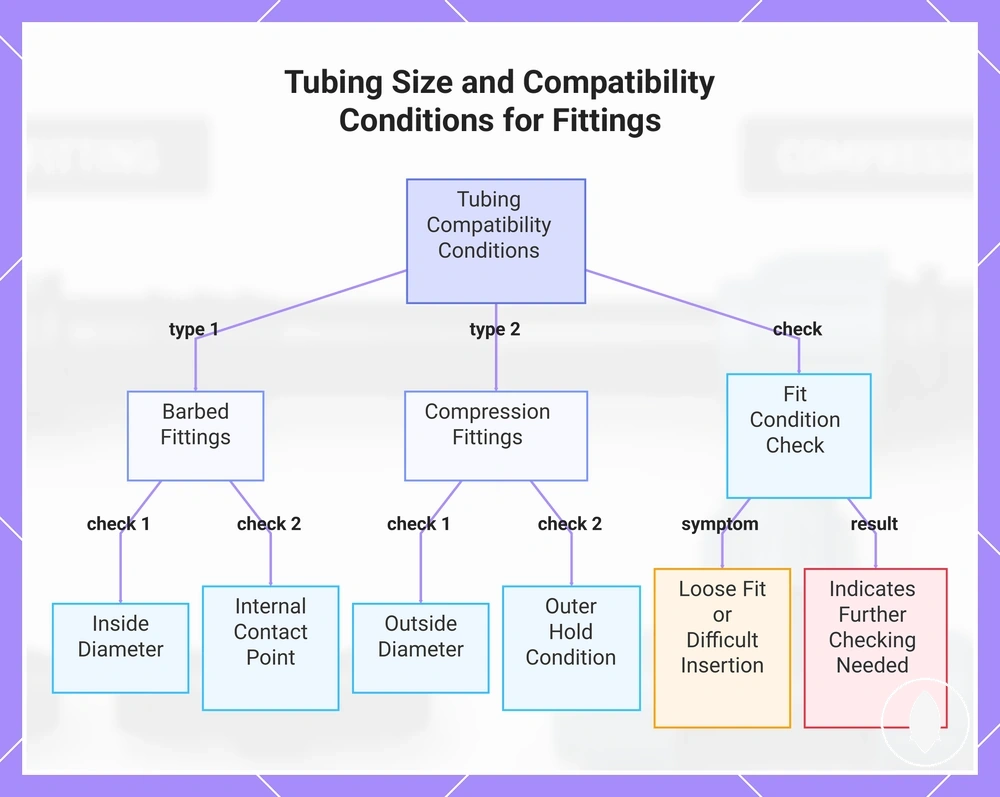
Barbed fittings and compression fittings evaluate tubing compatibility through different contact areas. A barbed fitting depends on the inside diameter and internal contact point, while a compression fitting depends on the outside diameter and outer hold condition. A visual match may not confirm suitability, so compatibility by tubing size should be considered before comparing other selection factors.
The following checklist separates key size and fit checks:
- Tubing size: Check that the tubing size aligns with the fitting requirement before evaluating the connection.
- Inside diameter: Consider the internal contact point and fit condition when using a barbed fitting.
- Outside diameter: Consider the outer hold condition when using a compression fitting.
- Fit condition: A loose fit or difficult insertion may indicate that the connector and tubing relationship needs further checking.
This chart shows the key compatibility checks for barbed fittings, compression fittings, and general fit conditions based on tubing size.
Inside Diameter and Outside Diameter Fit
Inside diameter and outside diameter describe the different tubing measurement relationships used by barbed-style engagement and compression-style holding. A barbed fitting relies on the inside diameter as the fitting contact point for internal fit, while a compression fitting relies on the outside diameter for external fit around the tubing.
- Inside diameter: Barbed-style engagement depends on the internal tubing contact point and how the barb interacts with the tubing condition for a secure hold.
- Outside diameter: Compression-style holding depends on the external tubing measurement and fit tolerance, where a mismatch may create a no-fit risk.
The naming of inside diameter and outside diameter can vary between product lines, so fit success depends on the specific fitting requirement and tubing condition rather than a guaranteed match based only on terminology.
Mainline, Micro Tubing, and Common Drip Line Sizes
Tubing category can change which connector style is appropriate because mainline tubing, micro tubing, and common drip line sizes may have different wall behavior and fitting suitability conditions. The connection outcome depends on how the tubing type interacts with the connector style and the specific fitting requirement.
- Mainline tubing: Mainline tubing categories may have different wall behavior, so connector suitability depends on the tubing condition and the fitting style being considered.
- Micro tubing: Micro tubing categories may require a fitting relationship that matches the tubing characteristics and supports the intended connection outcome.
- Common drip line sizes: Common drip line sizes should be evaluated as a tubing category with its own fit condition rather than assumed compatible based only on appearance.
Advantages and Limitations of Barbed Drip Fittings
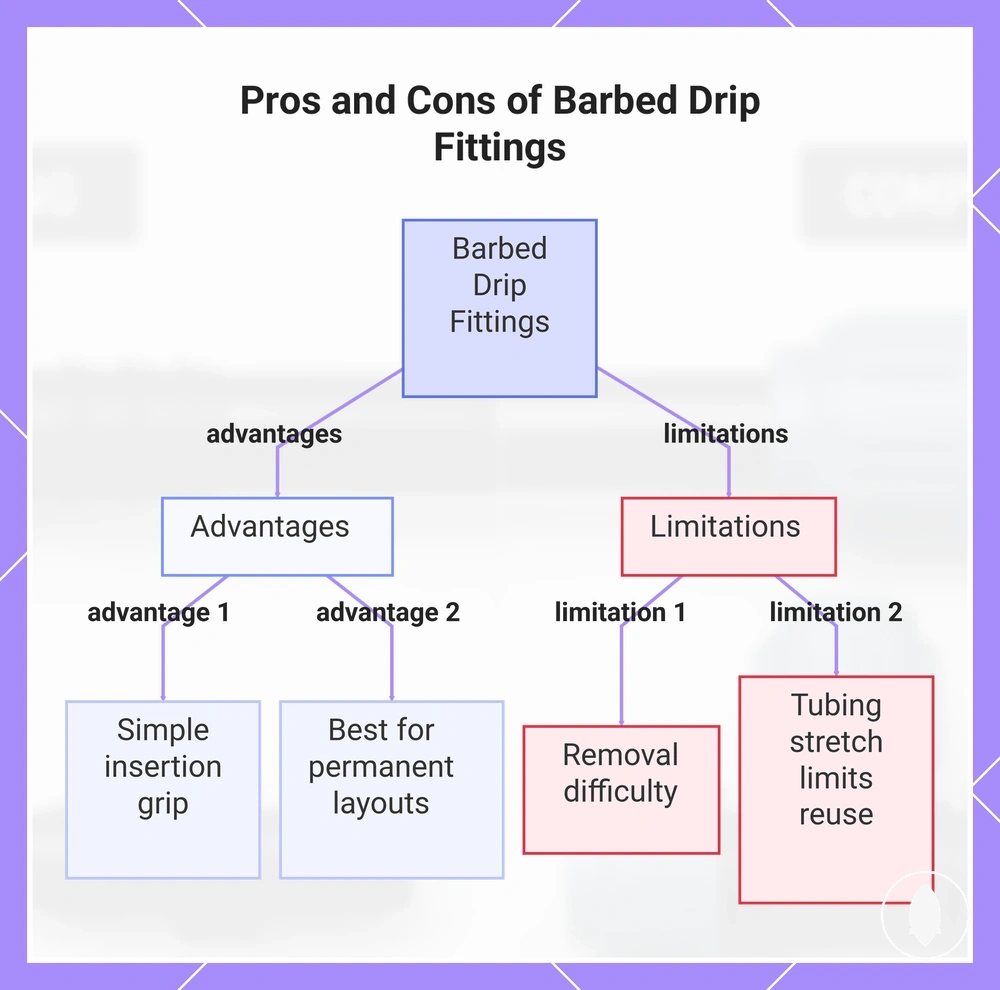
Barbed drip fittings have advantages and limitations that affect their suitability depending on connection needs, adjustment frequency, and tubing conditions. Their insertion grip and low-profile connection can support certain fixed connection scenarios, while removal difficulty, tubing stretch, and reuse limitation may affect other situations.
The following groups separate the practical advantages and limitations of barbed drip fittings for comparison and selection:
Advantages:
- Insertion grip: Barbed drip fittings use internal grip to create a simple connection when the fitting and tubing conditions are suitable.
- Low-profile connection: Barbed connectors can provide a compact connection style that may suit fixed layouts where frequent adjustment is not expected.
- Fixed connection: A barbed fitting can be considered for scenarios where the connection is intended to remain in place for longer periods.
Limitations:
- Removal difficulty: The insertion grip of barbed fittings may increase removal effort when the tubing holds the fitting tightly.
- Tubing stretch: Tubing stretch during connection can affect the fitting relationship and may influence later adjustments depending on tubing condition.
- Reuse limitation: Repeated removal and reconnection may be limited by tubing condition and the specific use case.
This chart compares the key advantages and limitations of barbed drip fittings for selection and use.
Advantages and Limitations of Compression Drip Fittings
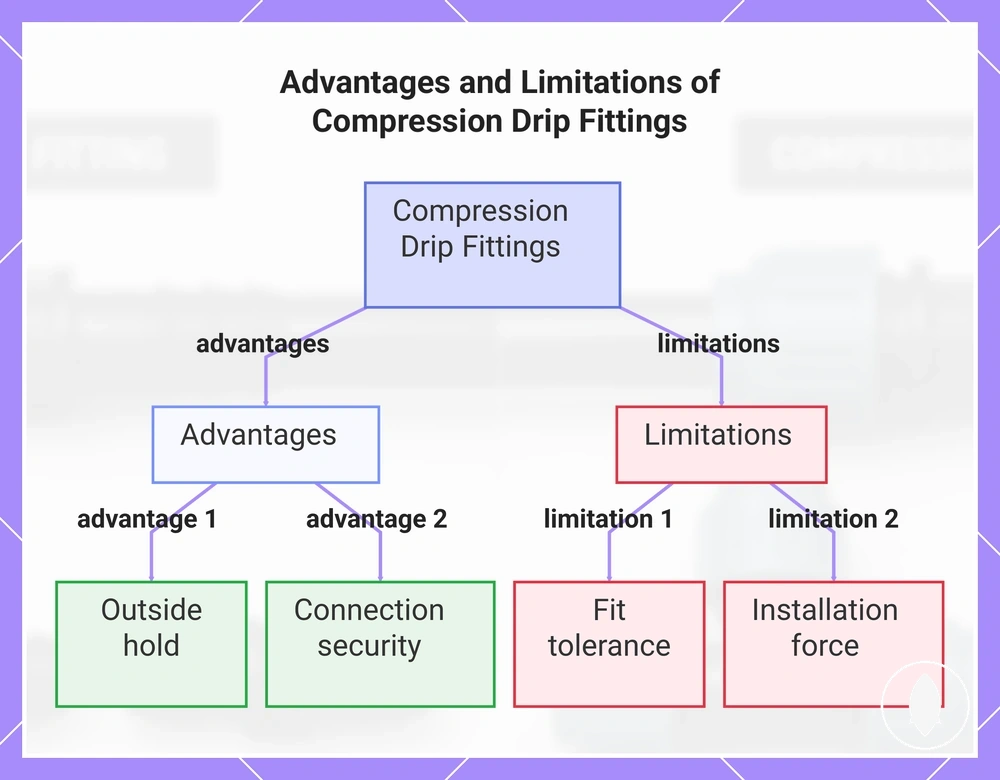
Compression drip fittings have advantages and limitations that depend on tubing conditions, adjustment needs, and connection requirements. Their outside hold and compression-style fit can support certain connection situations, while fit tolerance, installation force, and tubing-size dependency can affect suitability in other conditions.
The following groups separate the practical advantages and limitations of compression drip fittings for comparison:
Advantages:
- Outside hold: Compression drip fittings use an external hold around the tubing, which can support a stable connection when tubing size and fitting conditions align.
- Adjustment needs: Compression fittings may suit situations where adjustments are needed, depending on the connection setup and tubing condition.
- Connection security: A compression-style fit can provide a structured holding method when the fitting requirement and tubing relationship are suitable.
Limitations:
- Fit tolerance: Compression drip fittings depend on fit tolerance and tubing-size dependency, so suitability can vary between tubing conditions.
- Installation force: Compression action may require different user effort depending on the fitting style and connection conditions.
- Reuse potential: Removal and reuse considerations can vary based on tubing condition, adjustment needs, and the way the connection is maintained.
This chart compares the key advantages and limitations of compression drip fittings based on tubing conditions and connection requirements.
Reuse, Adjustment, and Long-Term Maintenance Differences
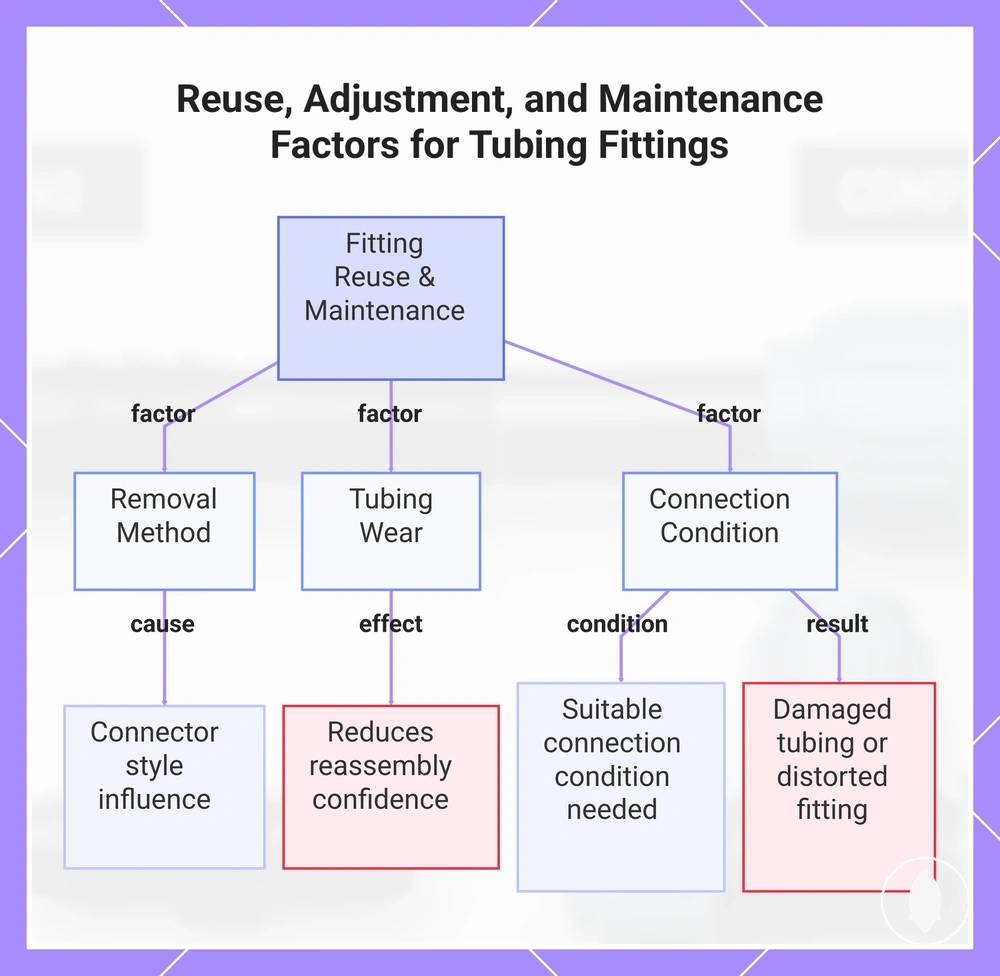
Reuse and adjustment depend on connector style, tubing condition, and the way the connection is handled over time. A fitting’s removal method, reassembly tolerance, and replacement likelihood can affect long-term maintenance decisions when a system needs changes or inspection.
The following factors separate reuse and maintenance considerations:
- Removal method: Connector style influences the removal method, with tubing wear and connection condition affecting whether adjustment is practical.
- Tubing wear: Tubing condition can influence reuse because worn or deformed tubing may reduce confidence in later reassembly.
- Reassembly tolerance: Reuse depends on whether the fitting and tubing maintain a suitable connection condition after adjustment.
- Replacement likelihood: Damaged tubing or distorted fittings may require replacement rather than reuse when the connection condition is no longer suitable.
This chart shows the three main factors—removal method, tubing wear, and connection condition—that determine whether a fitting connection can be reused or requires adjustment or replacement.
Cost and Value Tradeoffs Between Connector Styles
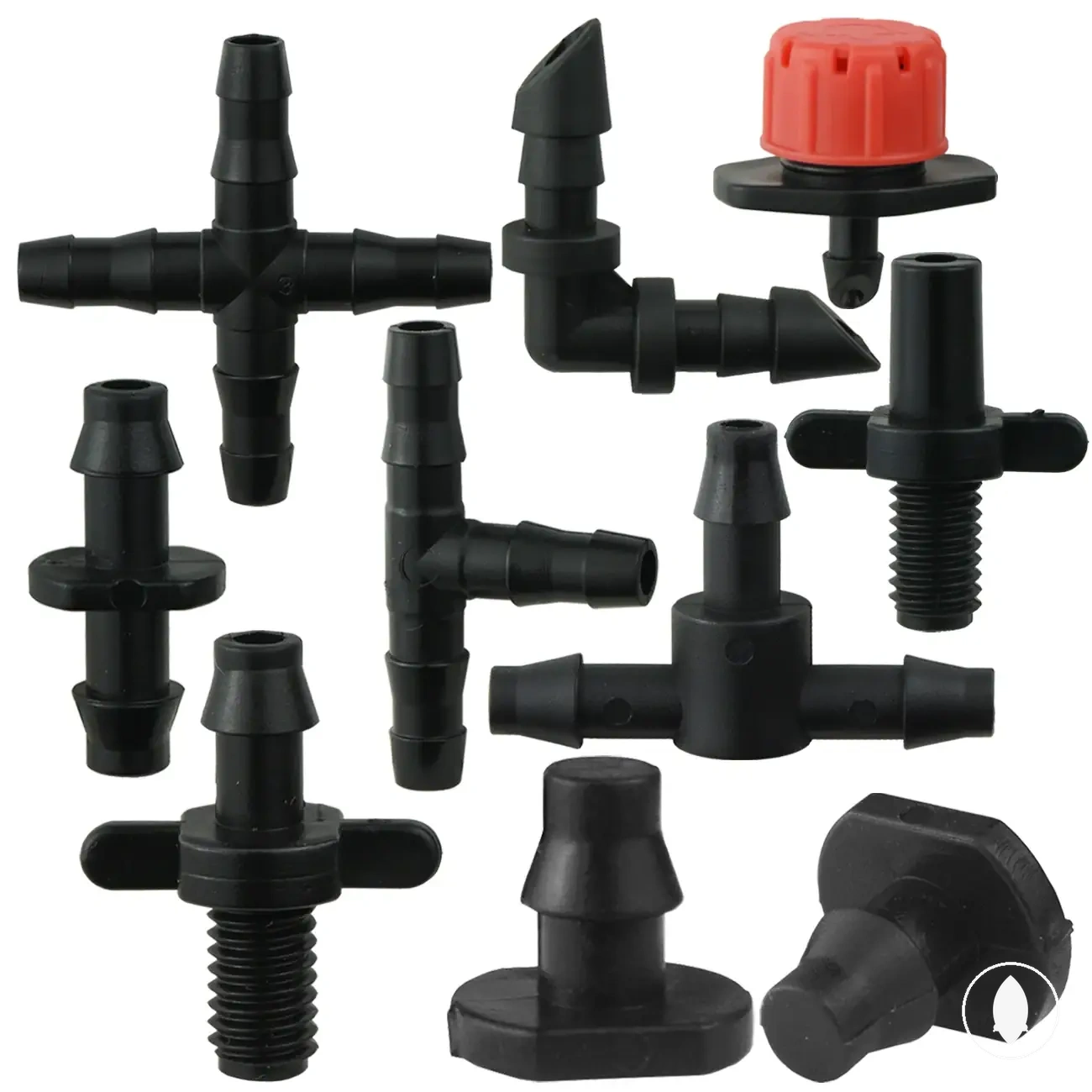
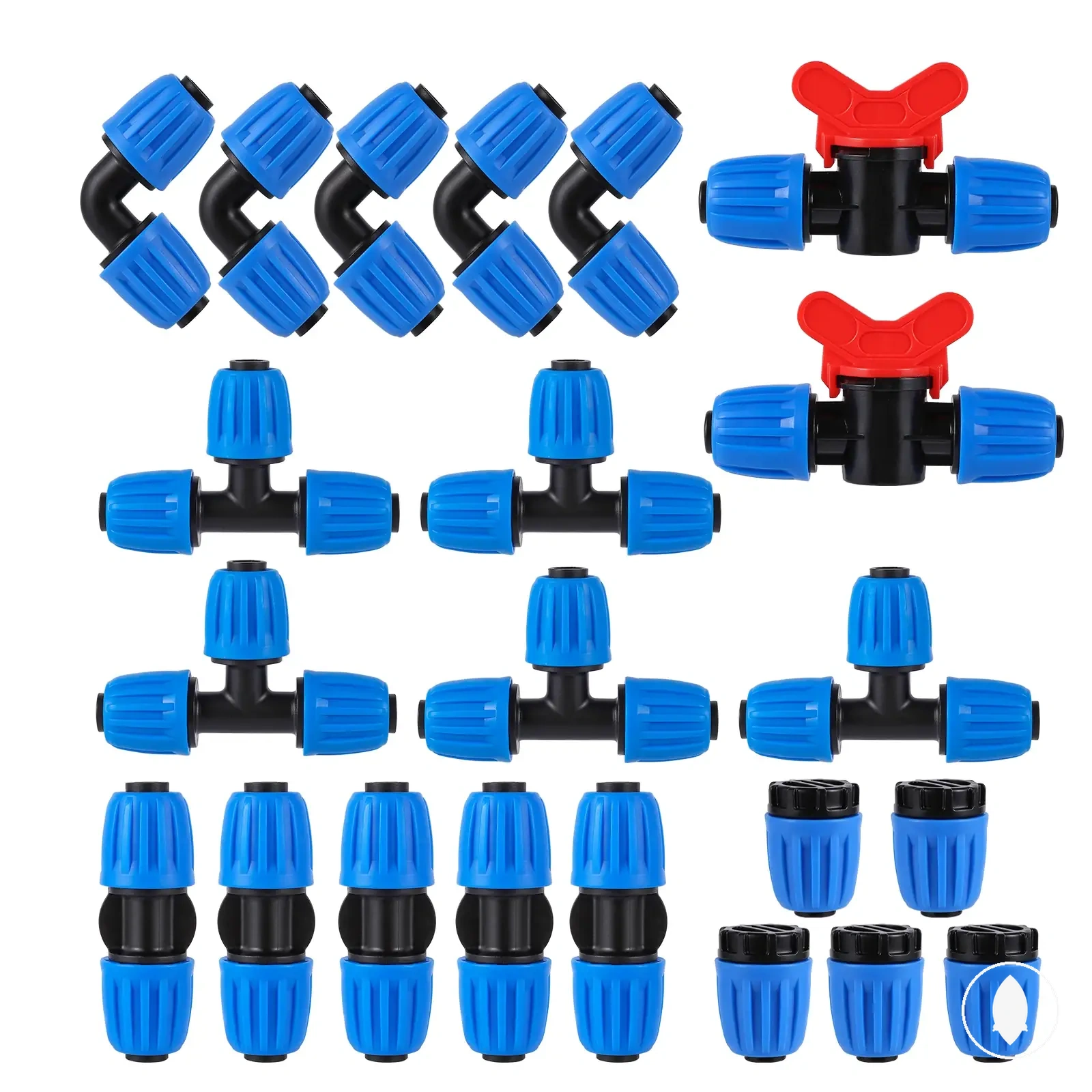
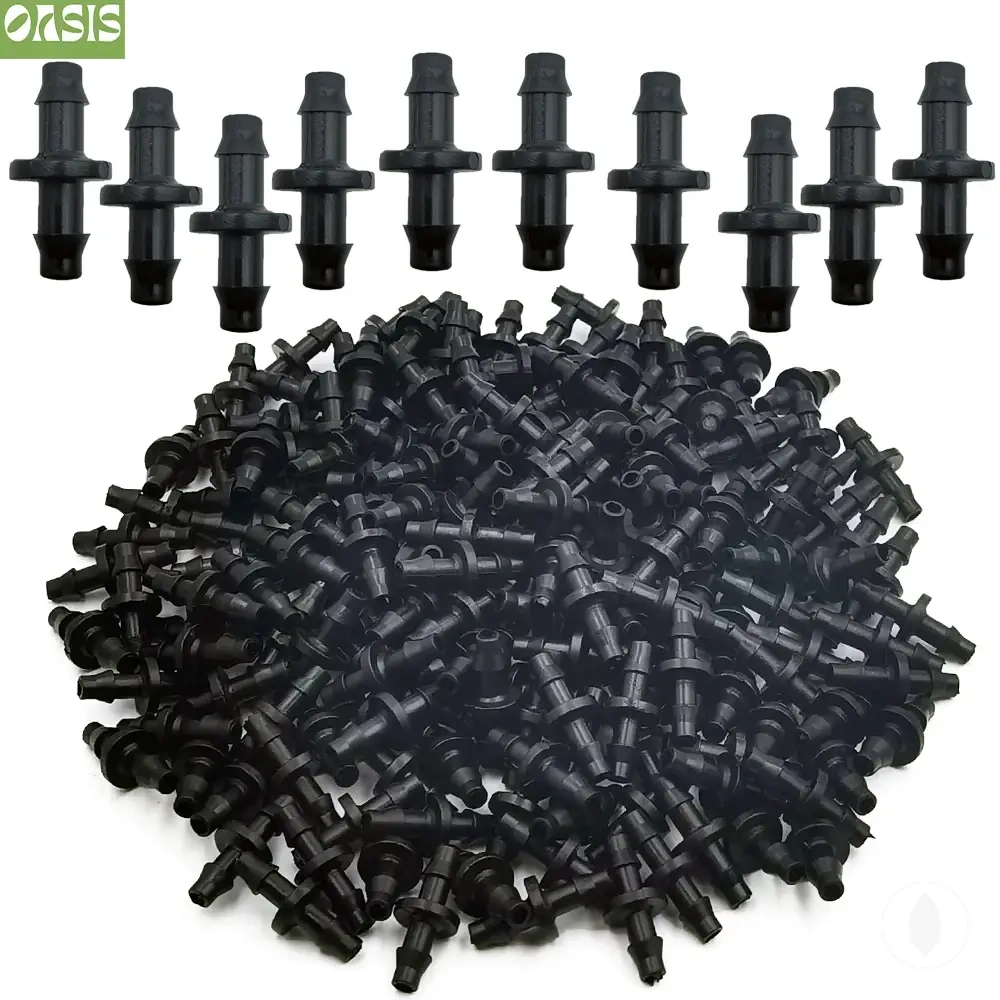
Cost and value tradeoffs between connector styles depend on more than upfront fitting cost alone. The value decision can vary based on quantity needs, durability expectations, reuse potential, and the risk of wasted parts caused by poor fit conditions.
The following comparison highlights how connector style and use-case conditions influence cost-value decisions. These value tradeoffs help separate initial cost considerations from longer-term replacement risk.
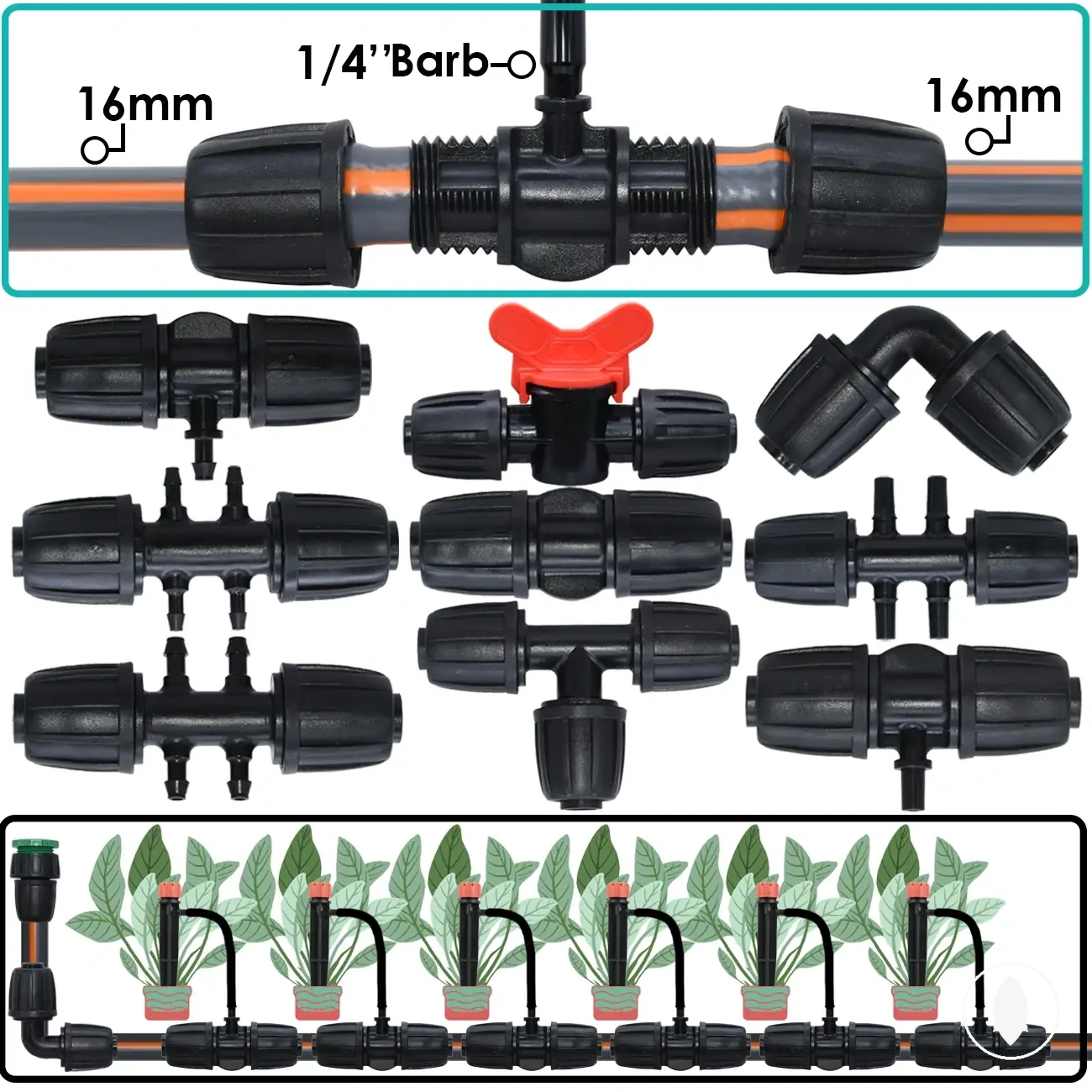
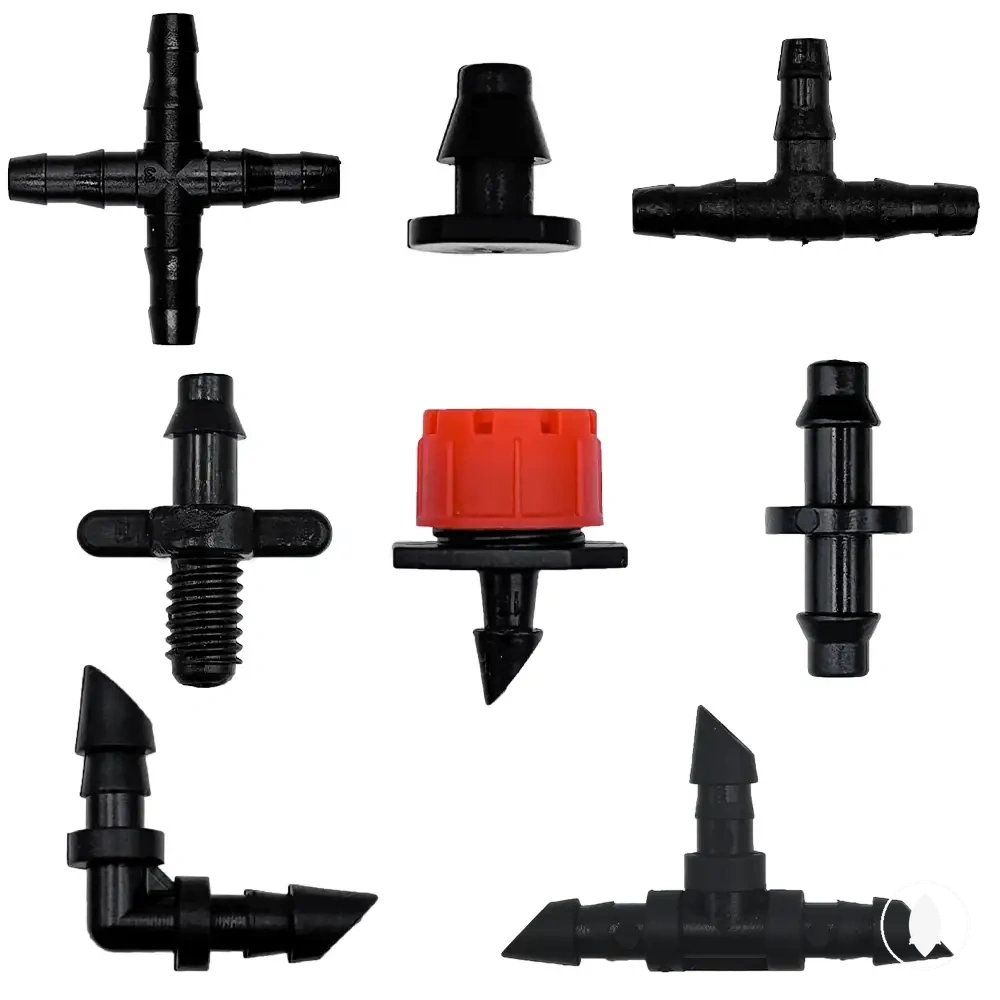
Here are product examples that may make comparison easier. Before buying, always review the compatibility criteria, essential features, and product details.
| Value factor | Barbed fittings | Compression fittings | What to check |
|---|---|---|---|
| Upfront fitting cost | Upfront fitting cost may vary depending on the connector style and connection requirements. | Upfront fitting cost may vary depending on the connector style and fitting requirements. | Consider the use-case condition rather than cost alone. |
| Quantity needs | Quantity needs can influence overall value when multiple connections are required. | Quantity needs can influence the cost-value decision depending on the connection setup. | Evaluate the number of fittings needed for the intended use. |
| Reuse potential | Reuse potential depends on tubing condition and whether the connection can be adjusted without affecting fit. | Reuse potential depends on adjustment needs and connection condition. | Consider whether future changes are expected. |
| Wasted parts | Poor fit can create wasted parts when the fitting requirement does not match the tubing condition. | Poor fit can increase replacement risk when the connection conditions do not align. | Check fit conditions before selecting a connector style. |
| Durability expectation | Durability expectations can vary based on fitting condition and the application. | Durability expectations can vary based on fit tolerance and use-case conditions. | Compare long-term requirements rather than only initial cost. |
When Barbed Fittings Are the Better Choice
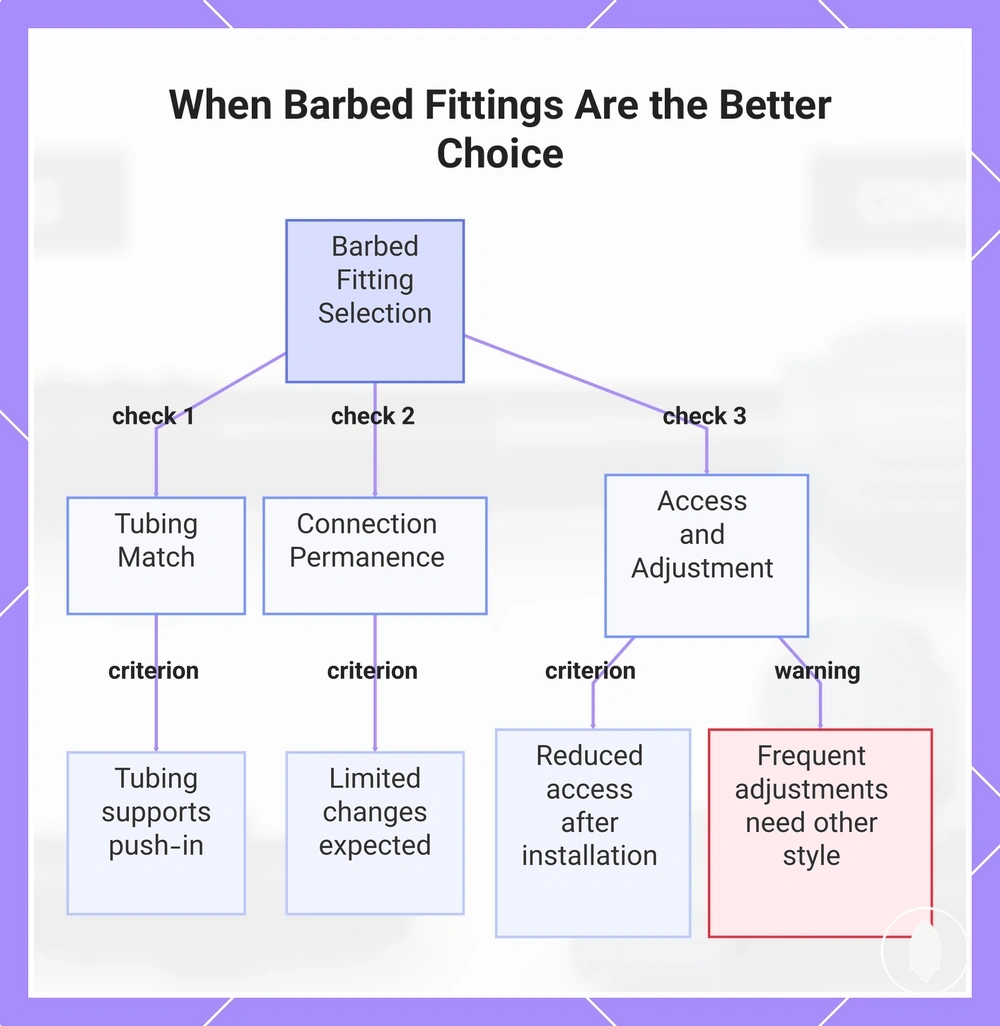
Barbed fittings are usually the better choice when tubing match and layout conditions support a fixed push-in connection. This selection depends on whether the connection permanence, access needs, and adjustment frequency align with the intended use case rather than on the connector style alone.
A barbed fitting may suit a fixed layout where future adjustments are limited and the tubing conditions support the push-in fitting design. The following checklist separates conditions that can support or weaken the selection decision:
- Tubing match: Barbed fittings can be a suitable choice when the tubing condition supports the fixed push-in connection requirements.
- Connection permanence: A fixed push-in connection may fit situations where the connection is expected to remain in place with limited changes.
- Access needs: Reduced access after installation can influence whether a barbed fitting suits the intended setup.
- Adjustment frequency: Frequent system adjustments may make another connector style more suitable depending on the use case.
This chart shows the key conditions that support or weaken the selection of barbed fittings for fixed push-in connections.
When Compression Fittings Are the Better Choice
Compression fittings are usually the better choice when the tubing and layout conditions favor a firm outside hold or later adjustment. This selection depends on tubing outside fit, connection security needs, adjustment needs, and whether the compression-style fitting suits the intended use case.
A compression fitting may suit situations where the outside grip and adjustment need are important factors, while suitability still depends on tubing conditions, tubing-size dependency, and fitting requirements. The following checklist separates conditions that can support or weaken compression fitting selection:
- Tubing outside fit: Compression fittings can be a suitable choice when the tubing outside fit aligns with the fitting requirements and connection conditions.
- Connection security: A firm outside hold may support the selection decision when a compression-style fit matches the intended connection needs.
- Adjustment need: Compression fittings may suit setups where future adjustments are expected as part of the use case.
- Reuse expectation: Reuse potential depends on tubing condition, fitting condition, and whether the connection remains suitable after adjustment.
Choosing Between Barbed and Compression Drip Fittings
Choosing between barbed and compression drip fittings depends on tubing fit, layout, reuse, installation effort, and value rather than a single universal winner. The supported choice depends on how the fitting style matches the connection conditions and the expected use case.
Choosing between fitting styles requires comparing the criteria that influence the connector choice, including tubing fit, layout requirements, reuse expectations, installation effort, and value factors. The choosing between fitting styles process helps organize these conditions before making a selection.
The following decision checklist organizes the main selection criteria:
Here are product examples that may make comparison easier. Before buying, always review the compatibility criteria, essential features, and product details.
- Tubing fit: Barbed fittings may suit tubing conditions that support a fixed push-in connection, while compression fittings may suit conditions where outside fit is a key requirement.
- Layout: A fixed layout may support one fitting style, while layouts requiring more adjustments may favor a different connector approach.
- Reuse: Reuse expectations can influence the supported choice because tubing and fitting conditions affect future changes.
- Installation effort: Installation effort can vary by fitting style and the connection conditions involved.
- Value: Value depends on the balance between fitting choice, expected use, and possible replacement risk rather than a single factor.