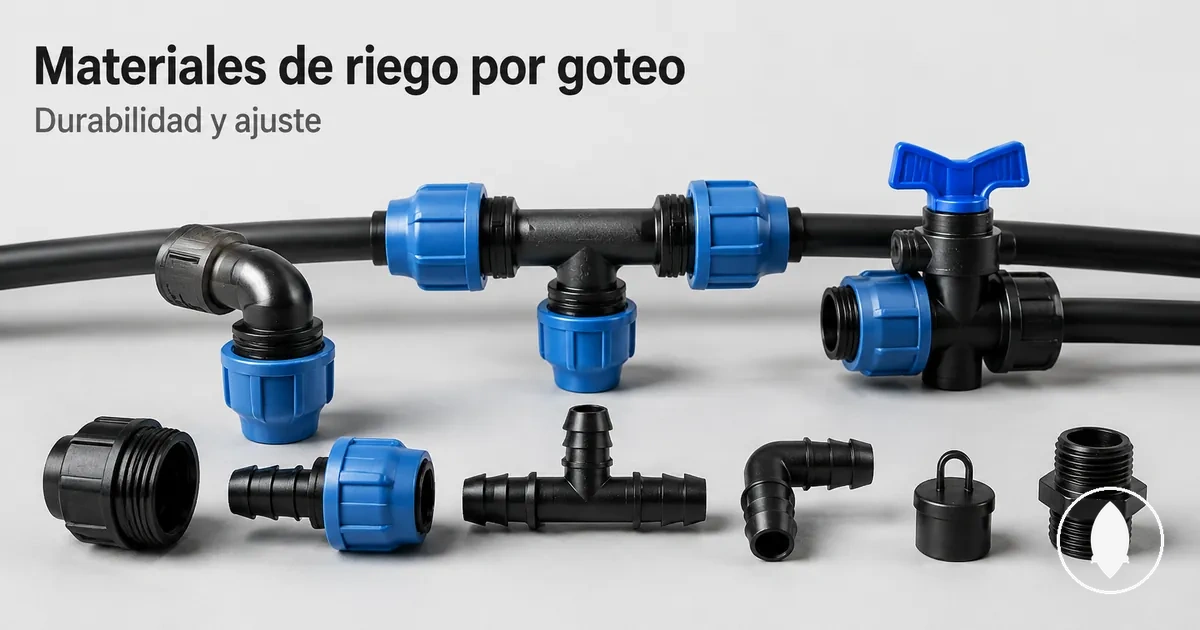
Drip Irrigation Fittings Buying Checklist for Selecting the Right Kit
A suitable drip irrigation fittings kit depends on matching the tubing size, layout, connector style, durability needs, and the risk of missing pieces. A buying checklist helps verify whether a connector set covers the intended connection needs before moving to a price check. The focus is on evaluating usable fittings rather than individual products or offers.

A connector assortment can appear suitable while still requiring closer review of fit and coverage. Checking compatibility before a price check helps identify whether the included pieces match the planned layout, connection points, and possible repair or expansion needs. Tubing dimensions, connector type, and the way the layout is arranged can influence which fittings are useful for a specific setup.
Before comparing available options, review the main selection criteria: fit, quantity, durability, and value. These checks create a clearer basis for assessing a fitting assortment before considering partner availability or price information.
Fitting Jobs the Kit Must Cover
A drip irrigation fittings kit must cover the actual connection jobs required by the layout before the set can be assessed for suitability. The important checks are whether the kit includes the fitting roles needed for joining tubing, creating branches, changing direction, closing line ends, adapting connections, and handling repair needs.
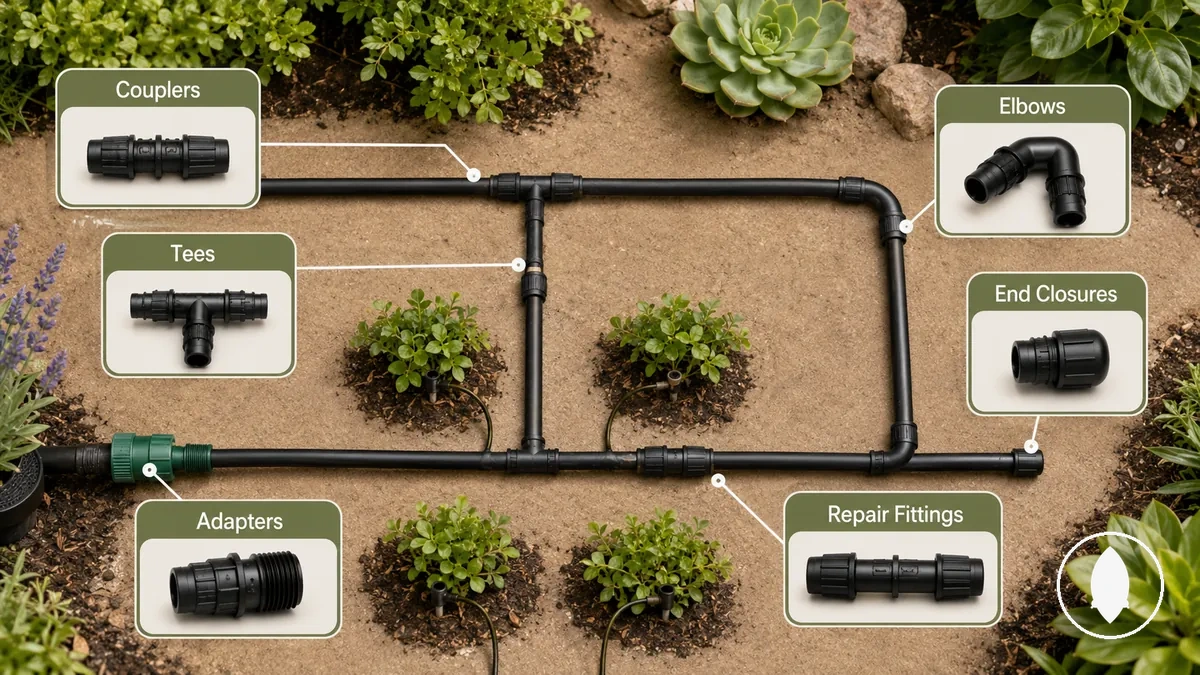
The drip irrigation fittings hub provides the broader fitting context, while this checklist focuses on the connection jobs a kit may need to support. Organizing fittings by function rather than by product name helps identify included pieces and possible missing pieces before comparing options.
A simple bed, branching rows, or a repair-focused setup can require different connector roles. Reviewing the layout point for each connection helps clarify whether the fitting roles match the intended use.
- Joining: Couplers can support straight runs where tubing sections need a connection point for continuation.
- Branching: Tees can support split lines and branches where the layout requires multiple tubing directions.
- Turning: Elbows can support corners and direction changes where tubing does not continue in a straight run.
- Closing: End closures, including end caps or plugs, can support line ends where tubing requires a closing point.
- Adapting: Adapters can support connection changes where thread or diameter differences need to be considered.
- Repairing: Repair fittings can support situations where a damaged section or replacement connection requires an additional fitting role.
Connectors for Straight Runs, Branches, Corners, and Ends
Connector shape depends on the layout point where a drip irrigation fitting is needed. A straight run may need a coupler for tubing continuation, while branches, corners, and ends may require different connector roles.
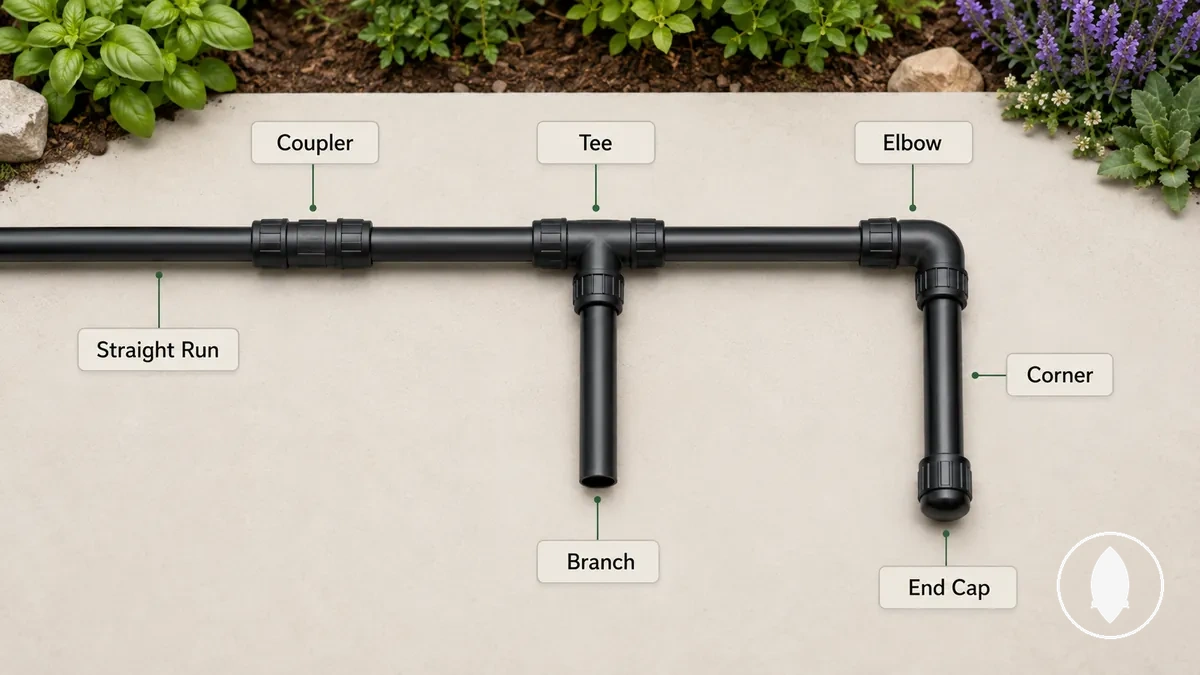
The how to choose fittings guidance connects connector roles with broader selection criteria. Shape describes the physical connector form, while the connector role describes the connection job it supports.
- Straight runs: A coupler can support a line run where tubing sections need a join for continuation.
- Branches: A tee can support a split line where a branch connection is needed.
- Corners: An elbow can support a turn where tubing requires a direction change.
- Ends: An end cap or plug can support a closure point where a tubing endpoint needs to be closed.
- Connector shape: Matching the fitting shape to the layout point can help identify the connector roles and buying quantity needed for the intended setup.
Adapters and Repair Pieces for Common Layout Changes
Adapters and repair pieces can support kit selection when a drip irrigation system needs to handle a layout change, connection change, or small fitting need. These pieces may become relevant when a kit needs to connect different diameters, threads, existing lines, or a damaged section.
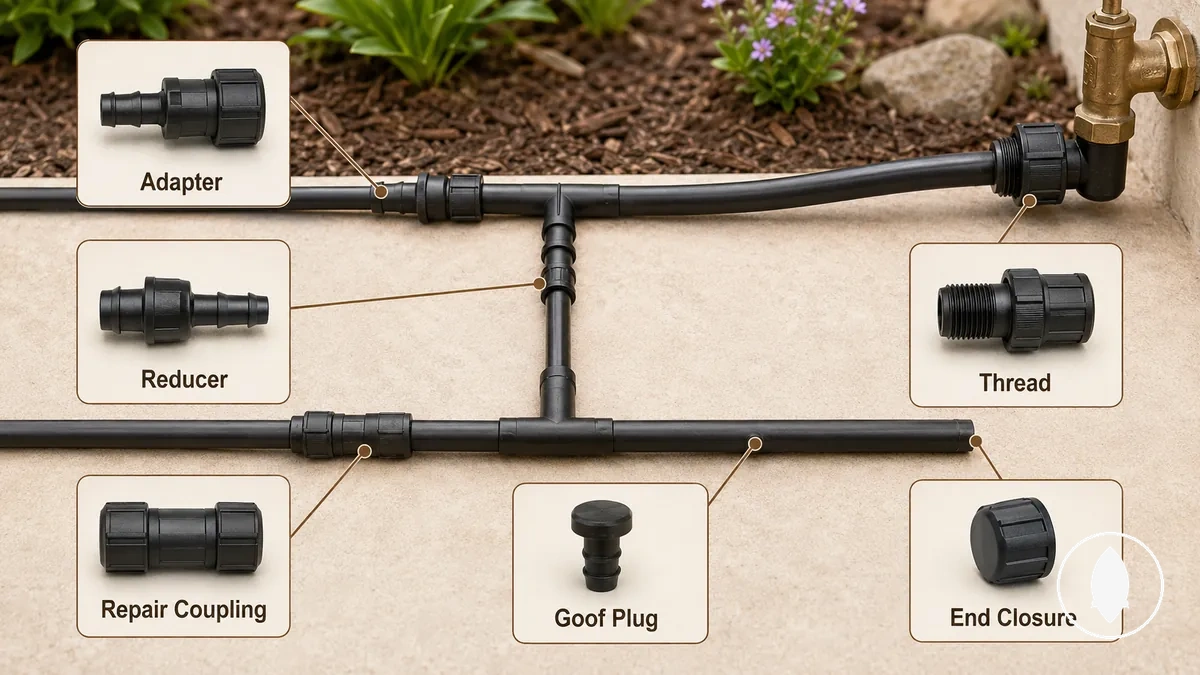
The selection criteria can be divided into connection-change pieces and repair-safeguard pieces. Adapters, reducers, and threaded connectors focus on changing connection conditions, while repair couplings, goof plugs, and spare end closures focus on preparing for specific layout needs. Reviewing mistakes before buying can help identify missing fitting roles before selecting a kit.
- Adapters: Consider when a tubing connection, thread, or existing connection point requires a different fitting approach.
- Reducers: Consider when a diameter change creates a need to connect different tubing sizes or fitting conditions.
- Threaded connectors: Consider when a threaded connection point needs to match the surrounding tubing connection.
- Goof plugs: Consider when a mistaken opening or unused connection point requires a spare fitting.
- Repair couplings: Consider when a damaged section may require a fitting piece for joining tubing sections.
- Spare end closures: Consider when additional closure fittings may support future layout changes or connection needs.
Tubing Size and Fitting Compatibility Checks
Fitting compatibility depends on tubing size, inner diameter, outer diameter, connector style, and manufacturer tolerance. Checking these factors helps determine whether drip irrigation fittings may match the tubing before comparing kits or prices. A size match depends on the relationship between tubing dimensions and the fitting conditions rather than the label alone.
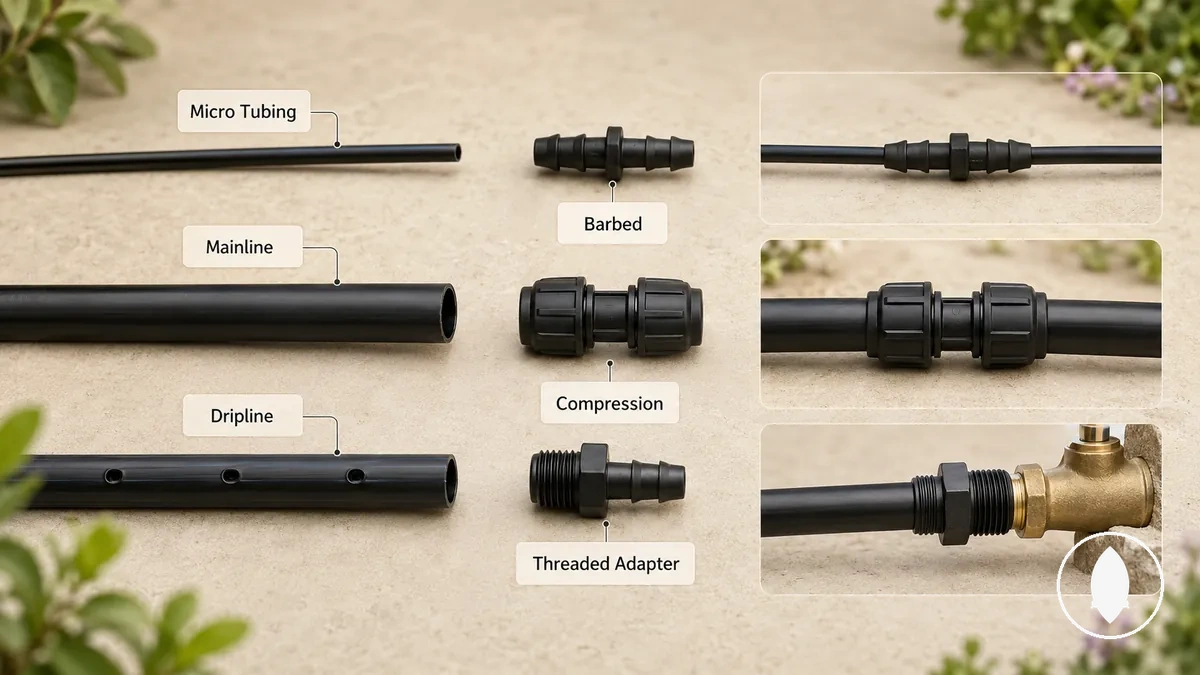
The size and compatibility checks
| Tubing type | Size signal | Fitting style | Possible mismatch risk |
|---|---|---|---|
| Micro tubing | 1/4 inch labels, inner diameter, and outer diameter | Barbed connector | Fit risk when tubing dimensions and connector conditions differ |
| Mainline | 1/2 inch or 17 mm labels and diameter measurements | Compression connector | Mismatch risk when size signals do not align with fitting requirements |
| Dripline | Tubing dimensions and connector requirements | Barbed connector or compression connector | Connection conditions may vary by tubing type and fitting design |
| Threaded connections | Thread type and connection condition | Threaded adapter | Fit conditions may vary when thread specifications differ |
Size labels can provide an initial guide, but the final fit may depend on the tubing dimensions, connector design, and manufacturer range. Checking these conditions helps reduce mismatch risk before selecting a fitting kit.
Mainline, Dripline, and Micro Tubing Fit
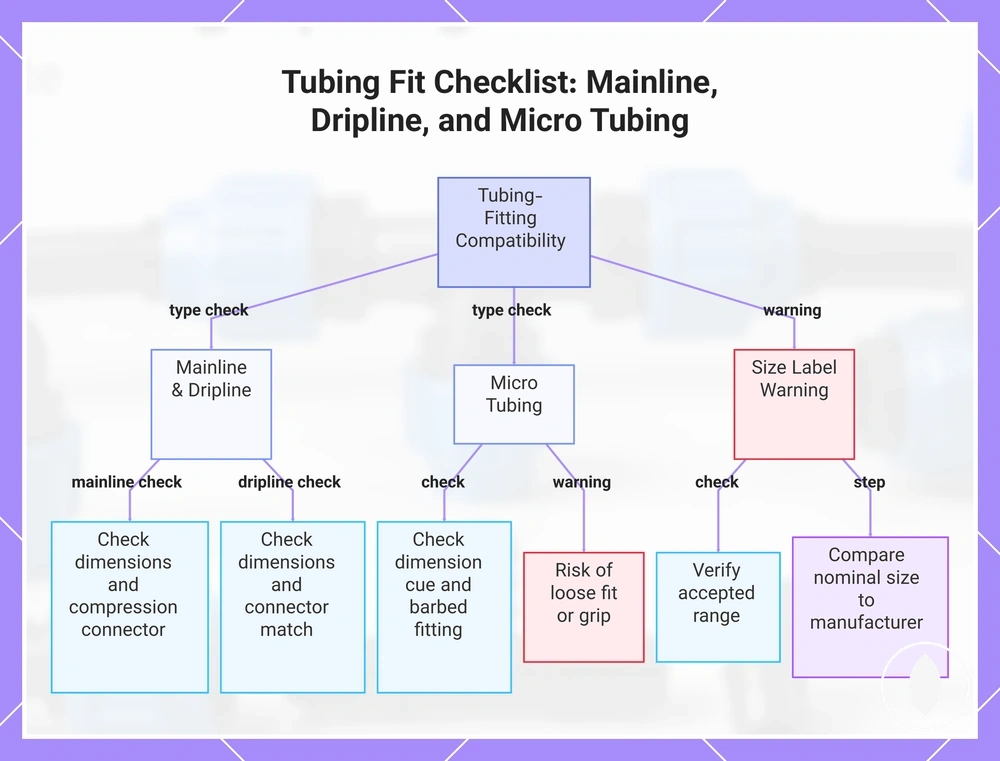
Tubing category and diameter cues must match the fitting conditions to reduce fit risks. Mainline, dripline, and micro tubing can use different size labels and connector requirements, so the tubing dimensions should be checked before selecting a fitting.
Size labels can provide an initial indication, but the dimension cue and accepted range may vary by tubing type and fitting design. The checklist below focuses on local fit differences and keeps the size-label review separate from broader compatibility checks.
- Mainline: 1/2 inch or 17 mm size labels may need to be checked against the dimension cue, outer diameter, and compression connector conditions to reduce loose fit risk.
- Dripline: Tubing dimensions and connector match conditions may need review because dripline requirements can vary by tubing type and fitting design.
- Micro tubing: 1/4 inch size labels should be checked with the dimension cue and barbed fitting conditions to reduce risks such as loose fit or incompatible grip.
- Size label: A size label may not describe the complete tubing condition, so the accepted range should be checked before choosing a fitting.
Nominal size wording should be checked against the fitting manufacturer’s accepted range because tubing dimensions and labels can vary. A size label can guide selection, but the tubing fit depends on the measured conditions and connector style.
This chart shows the key checks and warnings for verifying tubing fit across mainline, dripline, and micro tubing, including the limitation of size labels.
Barbed, Compression, and Threaded Connector Match
Connector style changes which tubing dimension and connection condition should be checked before selecting a fitting. A barbed connector, compression connector, or threaded connector may rely on different fit cues, including tubing dimension, grip, seal, and thread match conditions.
The comparison below focuses on how each connector style approaches tubing connection needs. The safer kit choice can depend on the tubing condition, required connection point, reuse needs, and possible mismatch risk.
| Connector style | Fit cue | Holding method | Safer when |
|---|---|---|---|
| Barbed connector | Inner grip, tubing wall, and tubing dimension | Grip through the tubing connection | When tubing conditions and connector requirements align |
| Compression connector | Outer diameter and tubing dimension | Compression fit and seal condition | When the tubing dimensions support the connector design |
| Threaded connector | Thread match and connection point | Threaded connection through a suitable adapter or fitting style | When thread conditions and the surrounding connection match |
Layout Quantity and Assortment Coverage
Layout quantity depends on the number of connection points in the drip irrigation layout rather than a fixed connector count. Beds, rows, branches, corners, and end closures can change the connector count needed, so assortment coverage should be reviewed against the intended layout.
The count method below organizes fitting needs by layout point and connector role. It helps identify whether a connector assortment has useful coverage or whether missing pieces may affect the selection decision.
| Layout point | Connector count factor | Fitting role | Selection consideration |
|---|---|---|---|
| Beds | Number of tubing areas and connection points | Connector assortment for joining and routing | Consider whether the kit covers the required layout points |
| Rows | Number of straight runs and continuation points | Couplers for tubing joins | Consider the continuation needs within the layout |
| Branches | Number of split lines | Tees for branch connections | Consider whether the assortment supports branching needs |
| Corners | Number of direction changes | Elbows for turns | Consider the connector shapes required for turns |
| End closures | Number of line endpoints | End caps or plugs | Consider closure needs and possible spare pieces |
Small garden kits may suit layouts with fewer connection points, while larger assortment kits may provide more flexibility when future expansion or spare pieces are considered. The how to choose fittings guidance can help connect assortment coverage with broader selection criteria.
Connector Counts for Beds, Rows, Branches, and End Closures
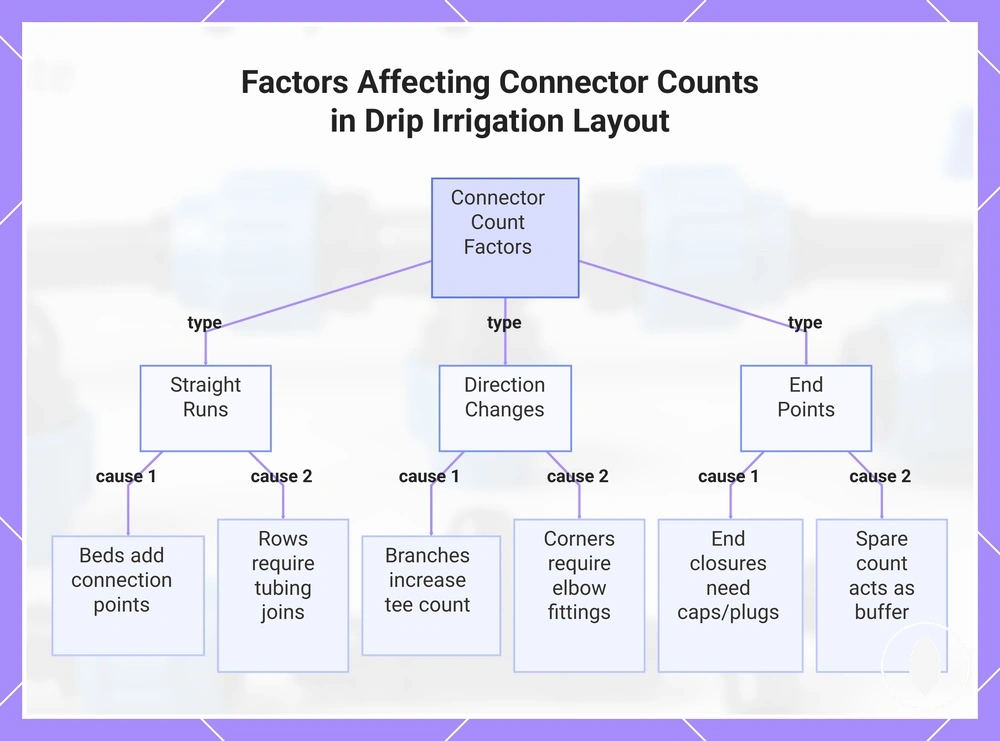
Each new line, split, corner, or endpoint can change the connector counts needed for a drip irrigation layout. A change in the tubing path, such as adding a branch or extending a row, can create a new connector need.
The local counting checklist below connects each layout point with its fitting implication. Connector counts should remain conditional because the layout arrangement and tubing path can vary. Spare count may be considered when repairs or expansion create a need for additional fitting coverage.
- Beds: Changes in bed layout can affect connector counts when additional connection points create new fitting needs.
- Rows: Added rows can change the fitting mix when more straight runs require tubing joins or continuation points.
- Branches: Additional branches can change tee count because split lines create new connector points.
- Corners: More corners can change elbow needs because each turn may require a direction-change fitting.
- End closures: More endpoints can affect end cap or plug needs because each closure point may require a closing fitting.
- Spare count: Spare pieces may be considered as a buffer when repair needs or future expansion are possible.
This chart shows how different layout changes and components influence connector needs in a drip irrigation system.
Small Connector Sets Versus Larger Assortment Kits
A small connector set can suit a known layout with specific fitting needs, while a larger assortment kit can suit uncertain or expanding layouts where connector variety and spare needs are more important. The suitable buying path depends on layout certainty, expansion flexibility, and the risk of unused pieces.
The comparison below separates smaller and larger assortment paths by selection conditions rather than product ranking. The decision can depend on connector variety, per-piece usefulness, repair likelihood, and whether future layout changes are expected.
| Buying path | Better when | Watch for | Decision signal |
|---|---|---|---|
| Small connector set | When the known layout requires a limited range of fitting roles | Missing pieces may require additional selection if the layout changes | A focused set may suit a precise need with fewer unused pieces |
| Larger assortment kit | When expansion, repairs, or uncertain layout changes are possible | Unused-piece risk may increase if the connector variety exceeds current needs | A broader assortment may provide flexibility when future fitting needs are unclear |
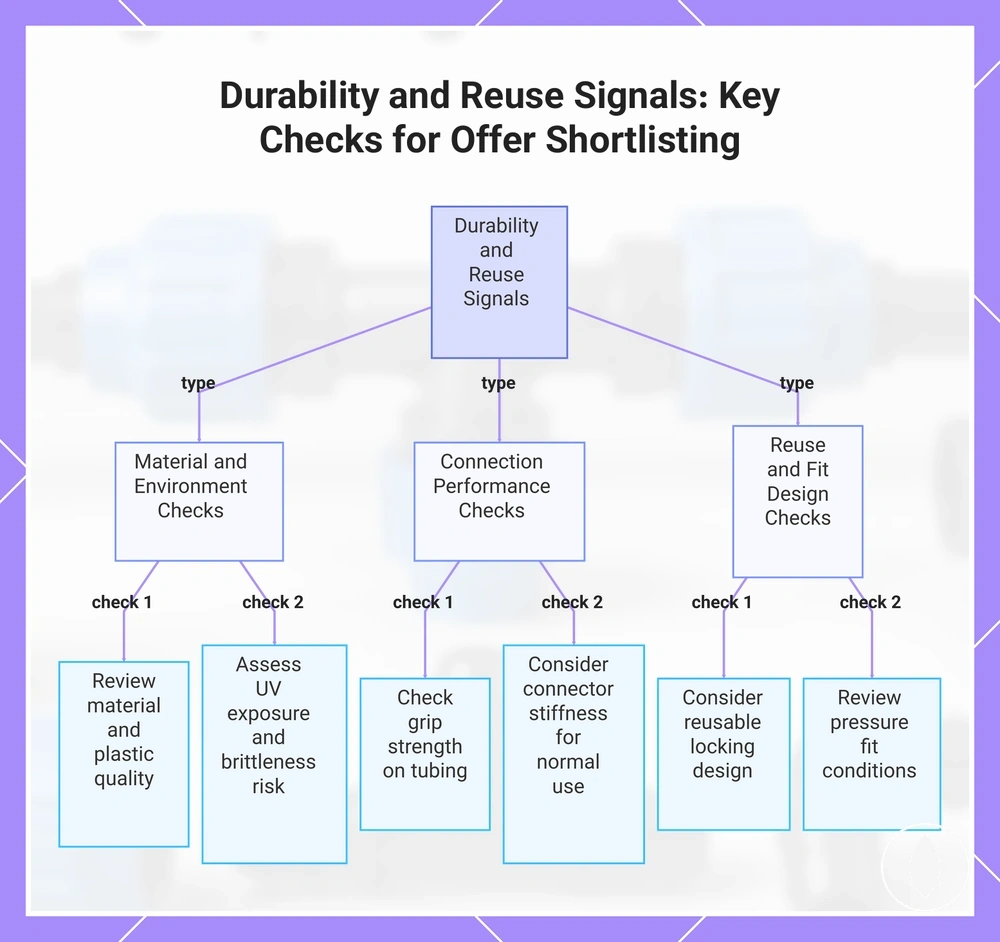
Durability and Reuse Signals Before Shortlisting Offers
Durability should be checked through material signals, grip strength, UV exposure considerations, connector stiffness, reusable locking design, and pressure fit conditions. These signals can help evaluate fitting options before shortlisting offers, while the suitability of a kit depends on the expected outdoor use and connection requirements.
The criteria checklist below focuses on practical durability and reuse signals that can support an initial selection. The durability signals to compare provide a deeper context for detailed material evaluation.
- Material: Review the material signal and plastic quality because outdoor use conditions may influence durability expectations.
- UV exposure: Consider UV exposure and outdoor use conditions when assessing potential brittleness risk.
- Grip strength: Check the holding condition between the connector and tubing because grip strength can affect connection suitability.
- Connector stiffness: Consider connector stiffness as a signal related to how the fitting handles normal connection conditions.
- Reusable locking design: Consider reusable locking designs when removal and reinstallation may be part of the intended use.
- Pressure fit: Review pressure fit conditions to assess whether the connector design aligns with the expected connection requirements.
These checks support offer shortlisting but do not replace detailed material evaluation. Deeper durability assessment may require reviewing material properties and conditions specific to the fitting type and intended use.
This chart groups the six key durability and reuse signals into three check categories for evaluating fitting options before shortlisting.
Outdoor Exposure, Grip Strength, and Reusable Fit
Outdoor exposure and repeated changes can affect fitting choices, so visible durability signals should be reviewed before shortlisting offers. Material condition, grip strength, reusable fit, and pressure-related holding can provide selection cues when evaluating connectors for expected use.
The checklist below focuses on practical signals that can be assessed before purchase. These signals help compare options, but connection outcomes can depend on fit, tubing condition, pressure conditions, and installation.
- UV exposure: Check the plastic quality and material signal when outdoor exposure involves regular sunlight. This can help identify potential brittleness concerns based on expected use conditions.
- Tubing grip: Review grip strength and the connection between tubing and fitting because holding strength can vary with tubing condition and fit.
- Reusable fit: Consider whether a reusable connector supports seasonal removal and reinstallation needs when repeated changes are expected.
- Reusable collars: Check reusable collars or locking features when removal convenience is important, while considering the intended connection conditions.
- Pressure-related holding: Review pressure-related holding signals because fit, tubing condition, and connector design can influence connection performance.
- Connector design: Compare reusable convenience with simpler connector designs when choosing between easier changes and a simpler fitting approach.
Kit Completeness Before Checking Prices
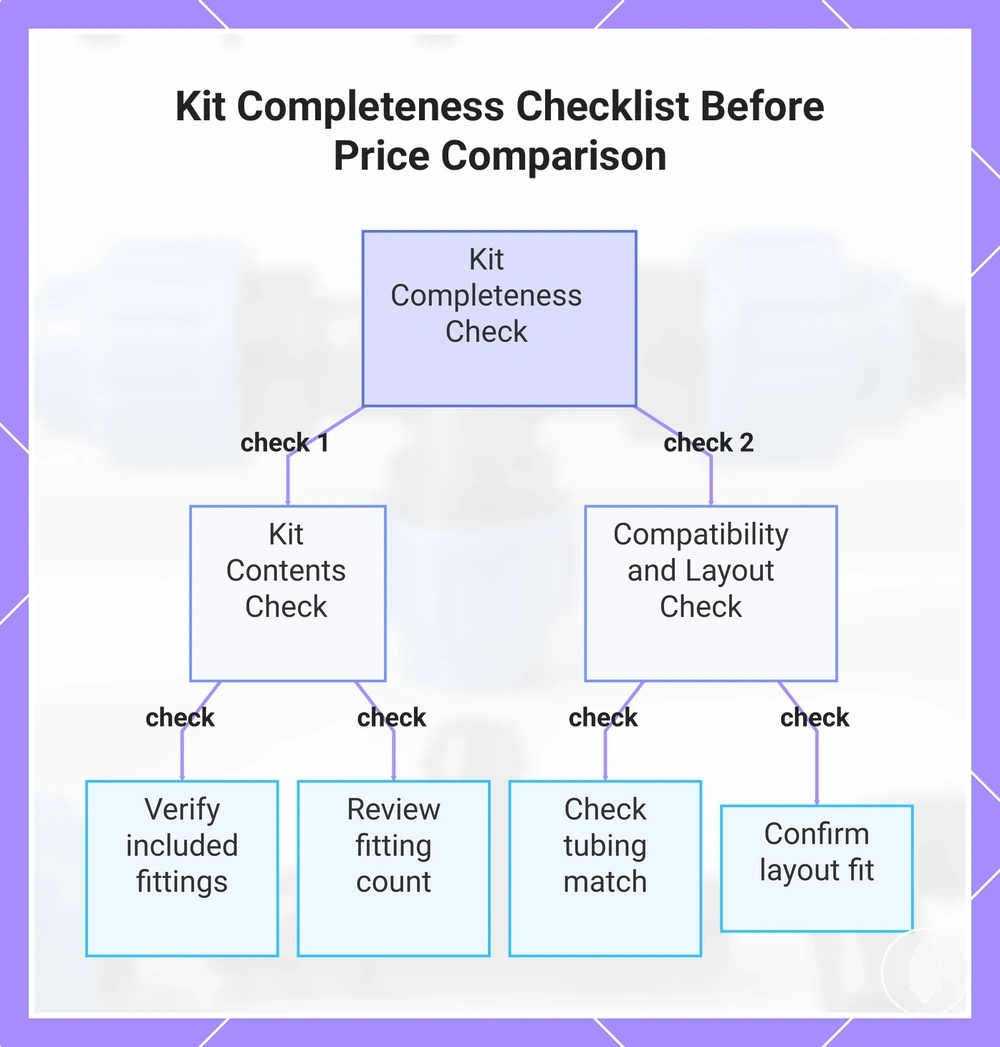
A kit is worth checking prices only after fit, count, and missing-piece checks show that the included pieces may support the intended layout. Kit completeness depends on the fitting type, included pieces, count, tubing match, and whether important missing items remain.
The final checklist below verifies readiness before checking prices. It focuses on kit contents, compatibility cues, spare pieces, and layout fit rather than final product ranking.
- Included pieces: Check the fitting type and included fittings to confirm that the connector roles match the intended layout needs.
- Count: Review the fitting count because missing items or unsuitable quantities can affect whether the kit is complete enough for the intended use.
- Tubing match: Check tubing match and compatibility cues to reduce fit risk before comparing available options.
- Adapter presence: Review adapter presence when connection changes may require additional fitting roles.
- Repair coverage: Consider repair coverage and spare pieces when future changes or repairs may require additional components.
- Layout fit: Confirm that the kit contents align with the required layout points, including beds, rows, branches, and end closures.
Missing items can affect readiness for checking prices, so a final review of fitting roles and layout requirements can help identify gaps. This checklist verifies whether a kit is prepared for comparison, but it does not replace final evaluation of individual offers.
This chart shows the main checklist to verify kit completeness before checking prices, grouped into contents and compatibility checks.
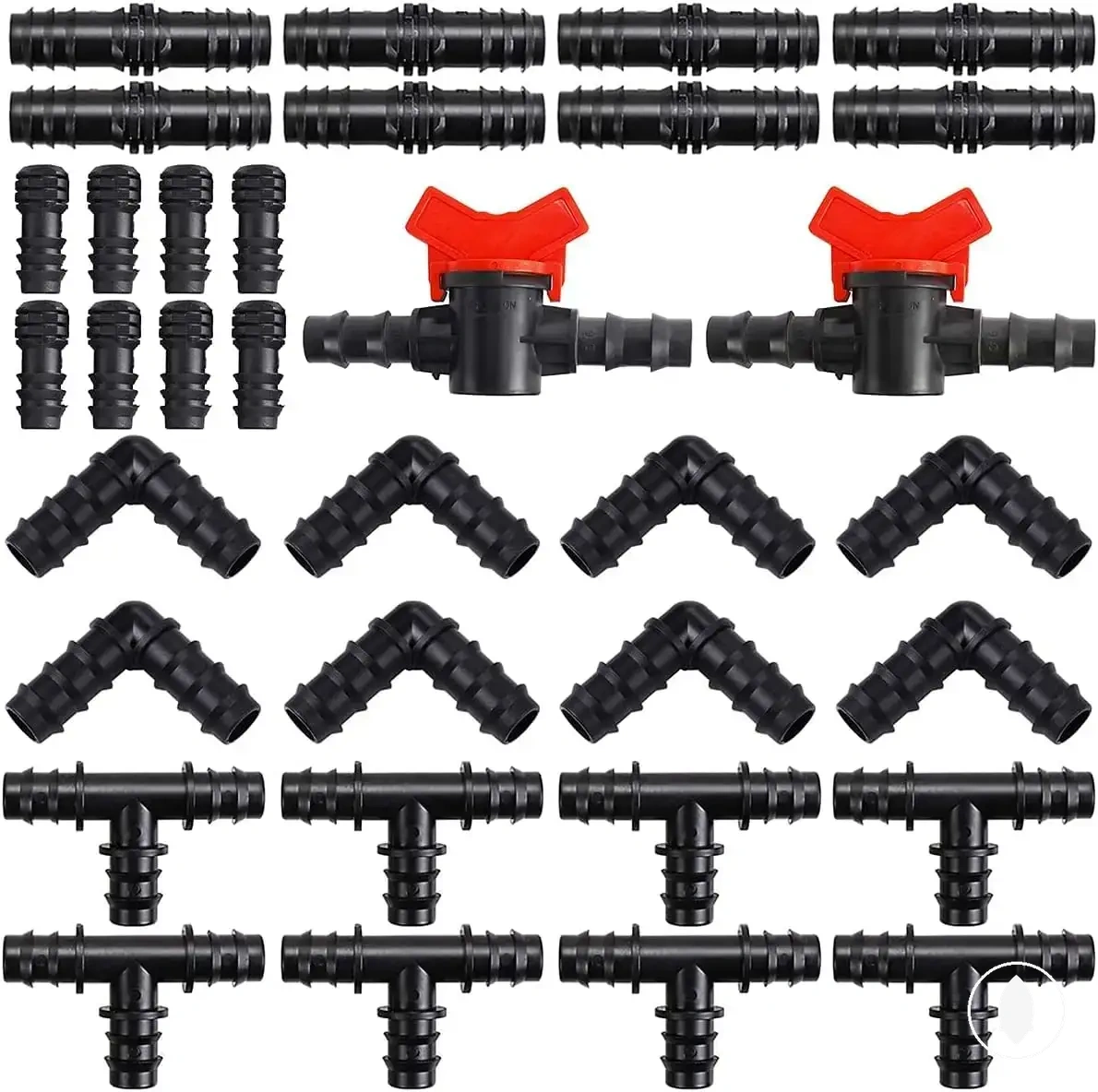
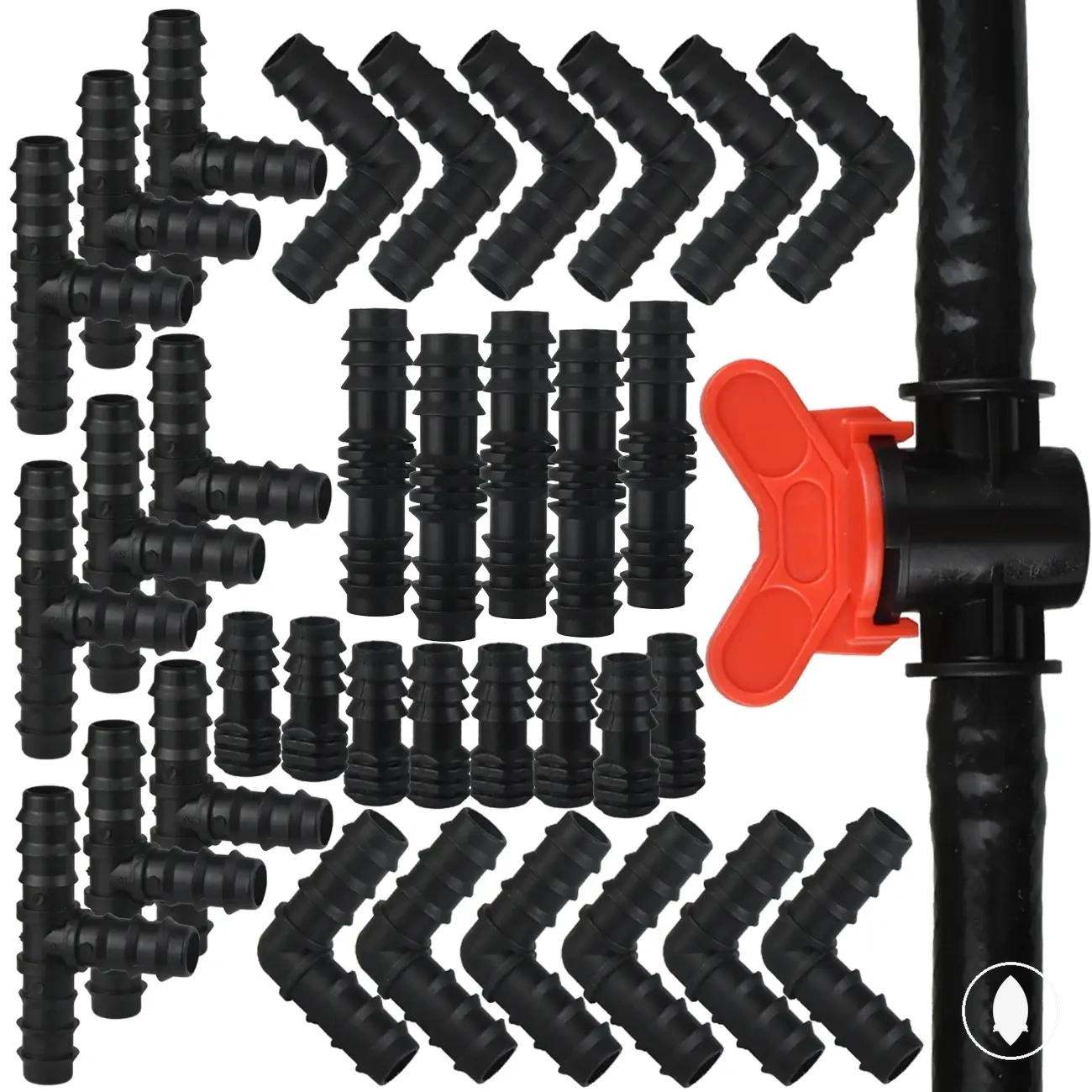
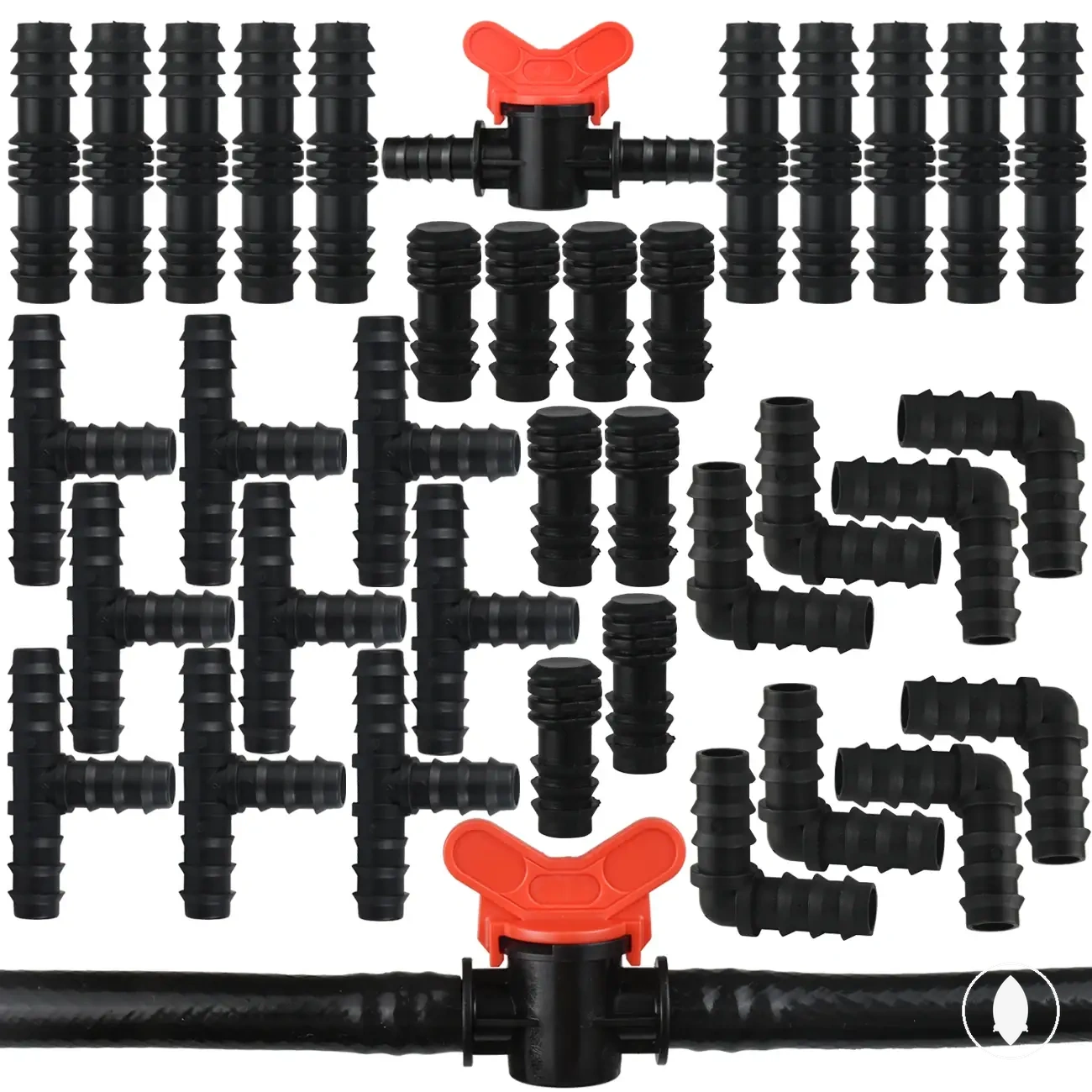
The products below are useful examples for comparing available options. Before buying, check that the compatibility criteria, key features, and product details match your needs.
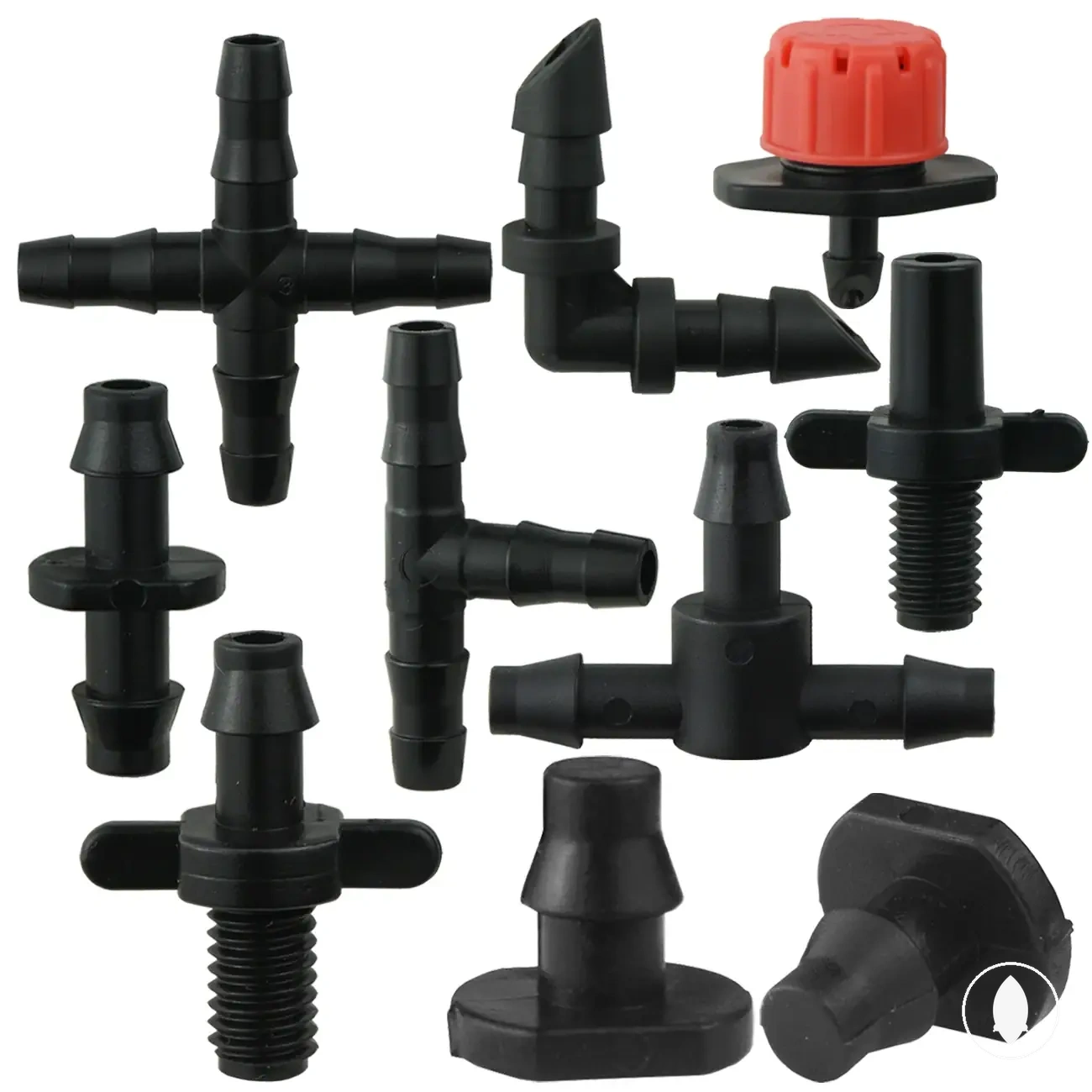
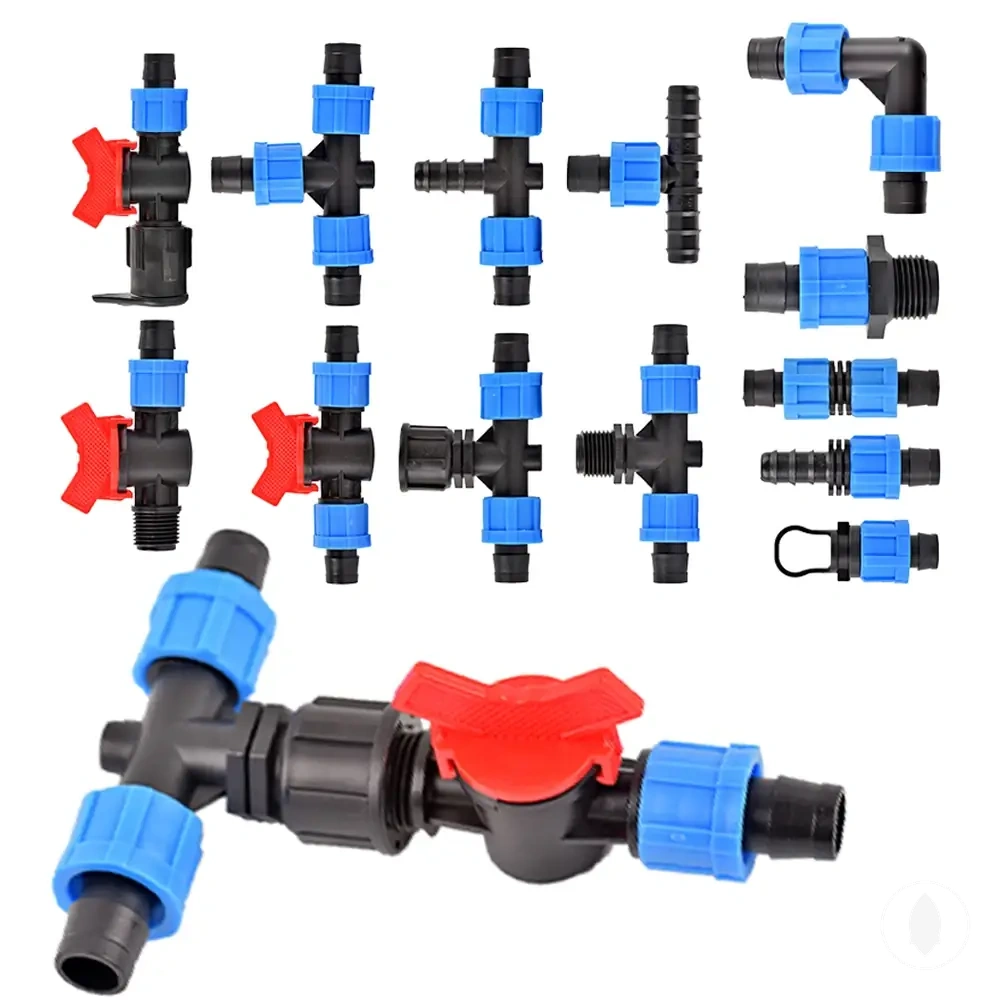
Included Fitting Types, Counts, and Missing Pieces
Included fitting types should be judged by useful role and count rather than raw item total. A kit with many pieces may still miss important components if the included fittings do not match the intended layout needs.
The verification table below checks kit contents by role, count cue, and missing-piece risk. This helps identify whether included pieces support the intended use before checking whether the kit is ready for comparison.
| Included piece | Role it covers | Count cue | Missing-piece risk |
|---|---|---|---|
| Couplers | Support tubing joins between sections | Connection points that require tubing continuation | Missing couplers may leave joining needs uncovered |
| Tees | Support branch connections | Number of split points in the intended layout | Missing tees may leave branch points without suitable fittings |
| Elbows | Support direction changes | Number of corners or turns requiring layout changes | Missing elbows may affect required turning points |
| End caps and plugs | Support endpoint closures | Number of endpoints requiring closure | Missing closures may leave end points without suitable pieces |
| Adapters | Support connection changes | Locations where different connection conditions may occur | Missing adapters may create gaps when layout changes are needed |
| Repair couplings | Support repair-related connection needs | Whether spare fitting coverage is useful for future needs | Missing repair pieces may reduce flexibility for changes |
When a Fittings Kit Is Better Than Separate Connectors
A fittings kit can be more suitable when connector variety, spare needs, or uncertain layouts make individual selection difficult. Separate connectors can be more suitable when the layout is known and only specific fittings are required.
The comparison below separates these buying paths by layout certainty, compatibility confidence, and unused-piece risk. The how to choose fittings guidance can help connect these criteria with broader fitting selection decisions.
| Buying choice | Better when | Main risk | Selection signal |
|---|---|---|---|
| Fittings kit | When connector variety, spare needs, or future changes are uncertain | Unused-piece risk may increase if included fittings exceed current needs | A mixed assortment may suit setups where flexibility and compatibility confidence are important |
| Separate connectors | When the layout and required fitting types are already known | Missing a needed piece may require additional selection later | Individual fittings may suit precise needs with fewer unnecessary pieces |
Price and Value Checks After the Fitting Checklist
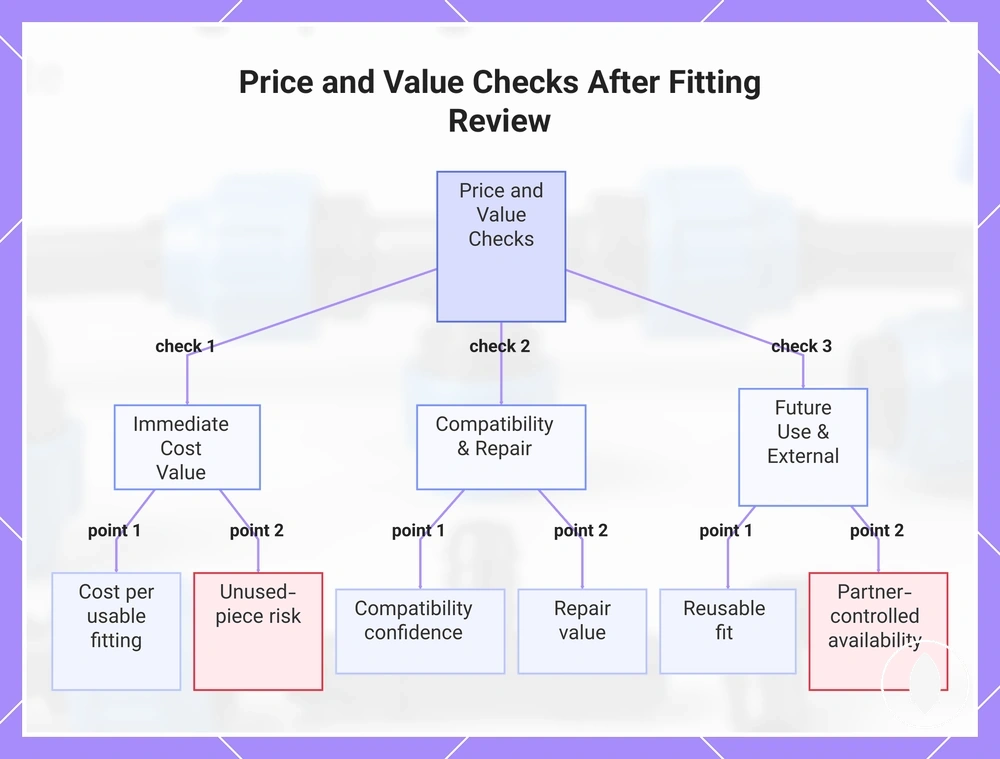
Price should be checked after fit, usefulness, and completeness are verified because the lowest visible price does not show whether a kit provides usable fittings for the intended need. Value checks depend on cost per usable fitting, compatibility confidence, spare coverage, and the risk of unused pieces.
The value checklist below helps compare offer usefulness after the fitting review is complete. It focuses on practical value conditions rather than price alone, including fit, quantity, durability signals, and future use.
- Cost per usable fitting: Review how many included pieces are likely to support the intended layout because unused pieces can affect usable-piece value.
- Unused-piece risk: Consider whether the included fittings match the required needs because unused items may reduce practical value.
- Compatibility confidence: Check tubing match, connector style, and fitting conditions because compatibility uncertainty can affect the buying decision.
- Repair value: Consider spare coverage and repair-related pieces when future changes or replacement needs are possible.
- Reusable fit: Review whether reusable fitting features align with expected use and possible future adjustments.
- Partner-controlled availability: Consider that price visibility and availability information may depend on external partners and can change.
Price checks can be used after these value criteria are reviewed, but offer details and availability may vary because they are controlled by external partners. Viewing available options should focus on verified fitting usefulness rather than unsupported price assumptions.
This chart shows the key value criteria to assess after the fitting checklist, and explains that price checks should follow these value evaluations.
The products below are useful examples for comparing available options. Before buying, check that the compatibility criteria, key features, and product details match your needs.