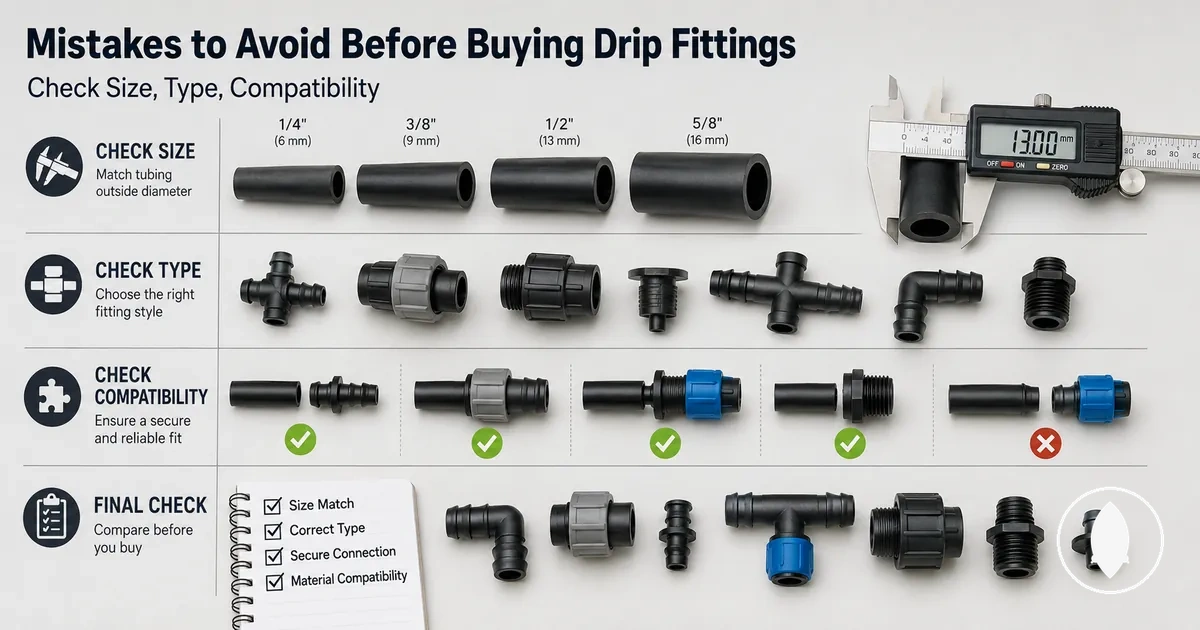
Drip Irrigation Fittings Mistakes Before Buying
Drip irrigation fittings buying mistakes usually come from unchecked tubing size, connector type, pressure conditions, layout role, and repair compatibility rather than from one isolated feature. Before purchase, checking these factors helps reduce selection risk and supports a more suitable choice for the system conditions.
Drip irrigation fittings are selection-dependent parts that connect different parts of a watering layout, so their suitability depends on how fittings, tubing, and connection requirements work together. A fitting set or connector assortment may appear suitable, but fit checks are still needed for tubing size, connector style, pressure conditions, and the existing system context.
Unsuitable choices often happen when key compatibility checks are skipped before purchase. Reviewing fitting type, layout role, pressure considerations, and repair compatibility helps identify potential selection risks before moving into installation or troubleshooting.
Mistakes That Make Fittings Unsuitable for the System
Unsuitable fittings depend on system conditions that affect how drip irrigation fittings connect and function within a layout. Tubing fit, connector style, layout role, pressure exposure, and repair context all influence whether a fitting is a suitable match for the intended system.
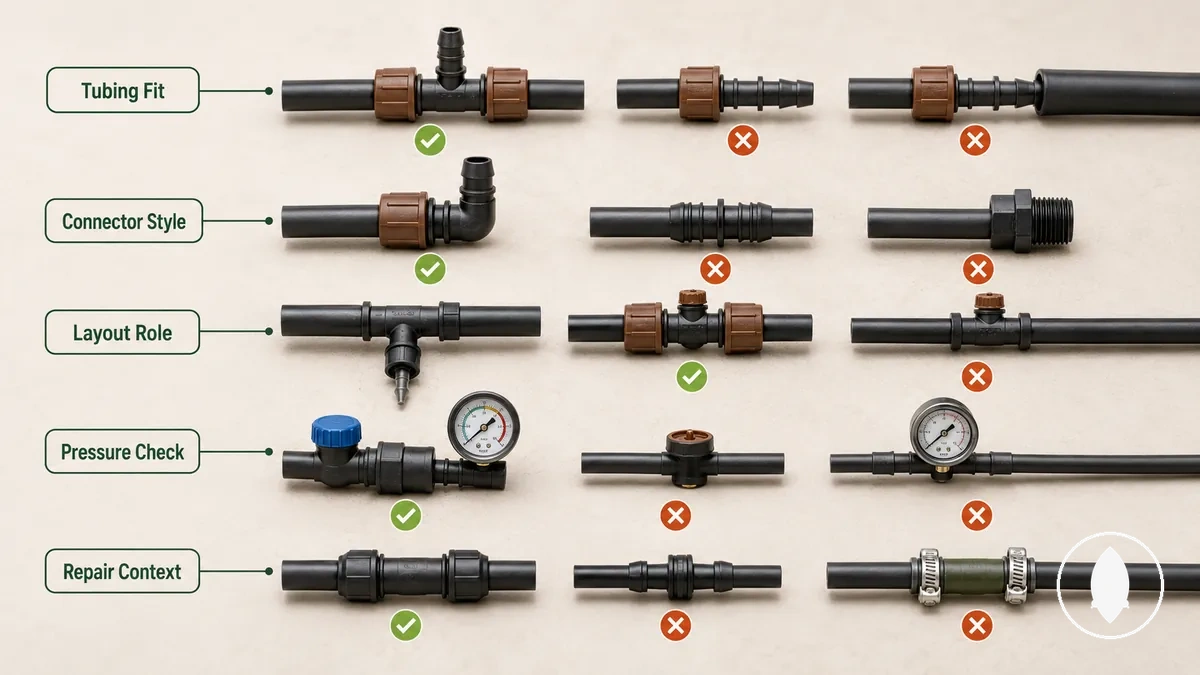
A poor match can happen when fittings are selected without considering the existing system requirements. The drip irrigation fittings hub provides broader context, while suitability checks focus on whether the fitting matches the tubing, connection method, and intended use. The main mistake categories include fit-based, type-based, pressure-based, and layout-based selection risks.
This section identifies the main categories of unsuitable fitting choices before purchase. Later sections examine specific checks for sizing, connector selection, pressure considerations, and other compatibility factors in more detail.
Size and Tubing Compatibility Mistakes
Size and tubing compatibility mistakes happen when the fitting, drip tubing, and connection method are not verified together before purchase. Fitting size should be checked alongside tubing diameter, wall thickness, and connection style because these factors work together to determine whether a fitting is a suitable match.
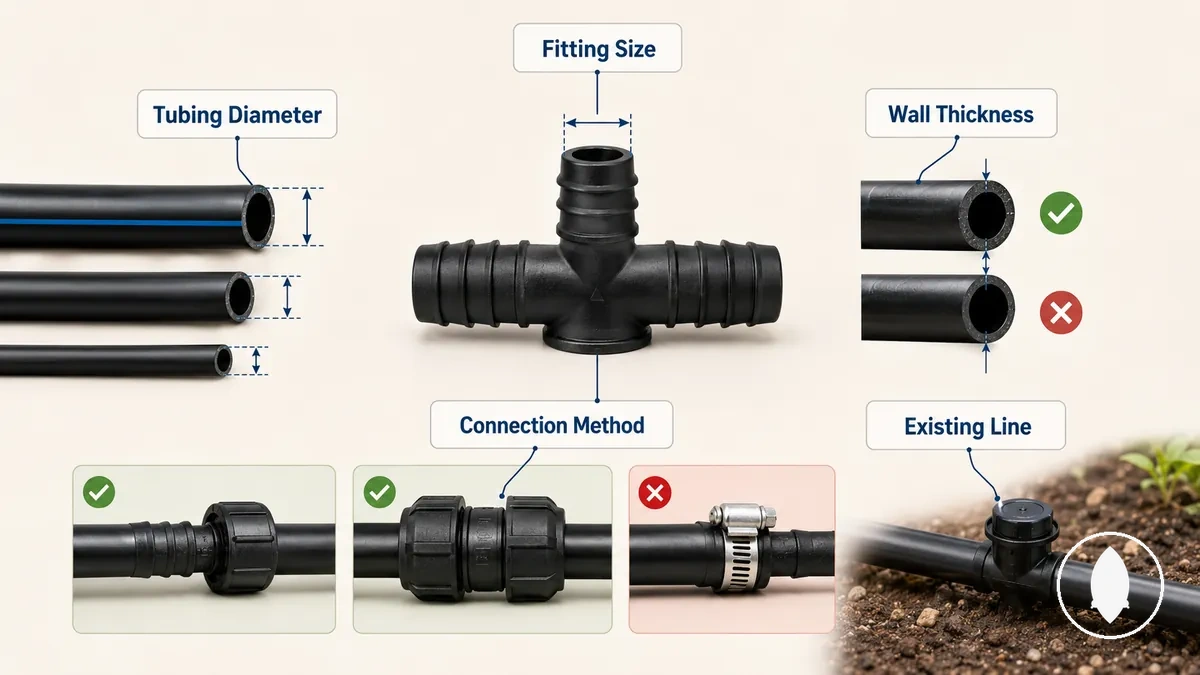
Compatibility issues can occur when existing line conditions or similar-looking tubing sizes create confusion during selection. Checking the fitting size, tubing fit, and connection method helps identify possible mismatch risks before purchase. For a deeper explanation of this topic, see size mistakes and the related compatibility factors.
The checklist below organizes common size and tubing compatibility mistakes by the checks that help verify a suitable fitting choice before purchase.
- Choosing a fitting size without checking the tubing diameter can create a poor connection match.
- Ignoring wall thickness may affect how the connector grips the existing line.
- Assuming similar-looking tubing sizes have the same fit can create compatibility risks.
- Selecting a connection method without matching it to the tubing type may lead to an unsuitable fitting choice.
- Replacing fittings without checking the existing line condition can create repair compatibility issues.
Assuming Similar Tubing Sizes Are Interchangeable
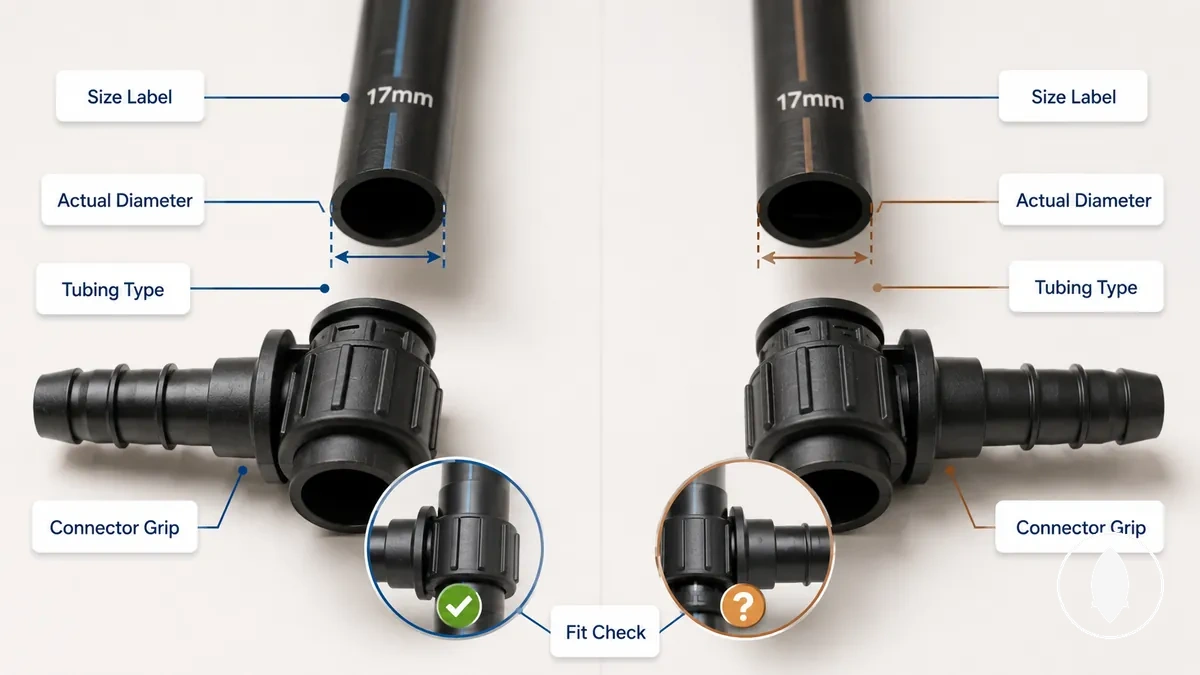
Similar tubing sizes are not interchangeable just because their labels appear similar. A nominal label may differ from the actual diameter, tubing type, or connector grip requirements, which can create a fit mistake when selecting drip irrigation fittings. Verifying the tubing measurement and connection details before purchase helps reduce confusion between similar-looking sizes.
Ignoring Inside Diameter and Outside Diameter Fit
Inside diameter and outside diameter are important fit checks because they can affect how a drip fitting connects with tubing. The inside diameter relates to the tubing opening and fitting body connection, while the outside diameter relates to the tubing wall and connector grip. Checking the available fitting and tubing specifications before buying can help reduce unsuitable fitting choices caused by fit differences.
Connector Type Mistakes Before Selection
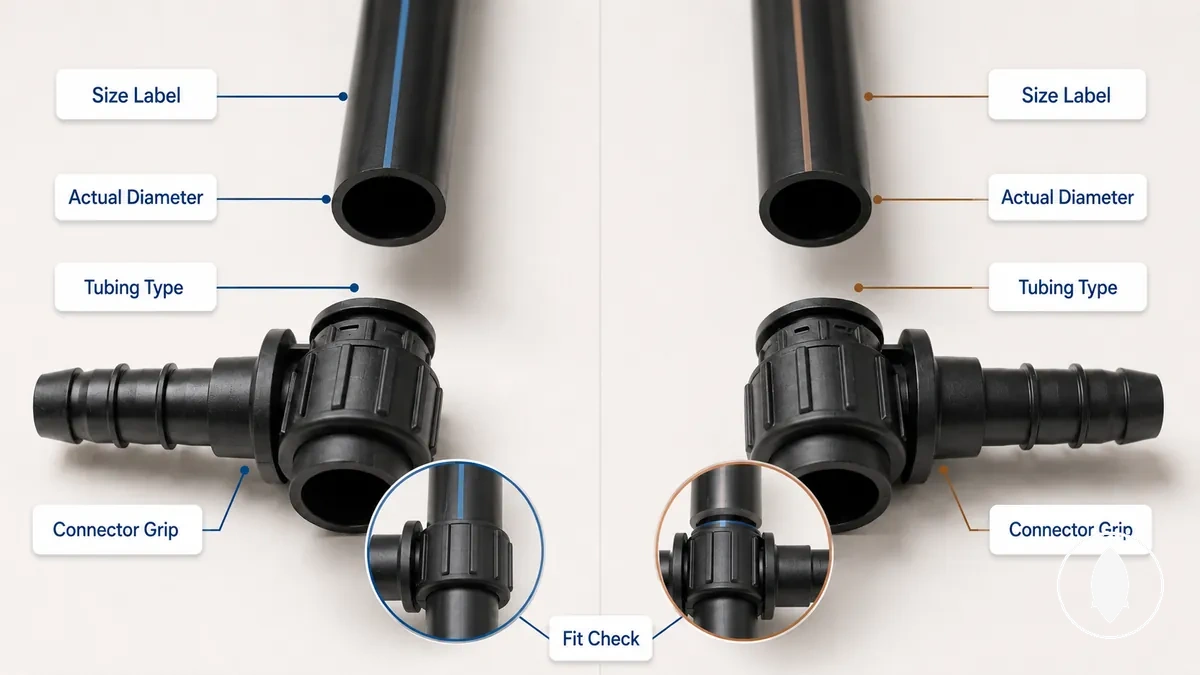
Connector type depends on tubing type, holding method, reuse expectation, and installation context before a fitting set is selected. A connector style can become a selection mistake when it is chosen without checking how it matches the system conditions and connection requirements.
Drip irrigation fittings require connector checks after size and tubing fit are understood. Different connector types may suit different conditions depending on tubing, connection method, and intended use. Reviewing these factors before purchase can help identify unsuitable connector choices. For broader selection guidance, see selection mistakes and related decision factors.
The comparison below separates common connector styles by their fit considerations and selection checks rather than ranking one type above another.
| Connector Type | Fit Consideration | Selection Check |
|---|---|---|
| Barbed fittings | Consider tubing type and holding method | Check whether the connector style matches the intended connection |
| Compression fittings | Consider tubing fit and connection requirements | Check fitting and tubing specifications together |
| Push-in fittings | Consider connection method and installation context | Check whether the connector design suits the system conditions |
Mixing Barbed, Compression, and Push-In Systems Without Fit Checks
Mixing connector systems without fit checks can create selection mistakes when the connector style does not match the tubing and connection point. Barbed fittings, compression fittings, and push-in fittings each involve different connection approaches, so tubing compatibility, holding method, and reuse expectations should be considered before choosing a fitting. Matching the connector style to the tubing system before buying extras helps reduce unsuitable combinations.
The comparison below shows how different connector styles may involve different fit conditions and trade-offs.
| Option | Fit Condition | Trade-off | Buying Correction |
|---|---|---|---|
| Barbed fittings | Depends on tubing compatibility and connector grip needs | Connection suitability may vary by tubing type | Check fit before mixing connector systems |
| Compression fittings | Depends on fitting specifications and tubing conditions | Connection approach may vary by system requirements | Confirm the connector style matches the intended use |
| Push-in fittings | Depends on connection method and tubing fit | Reuse expectations may vary by system needs | Verify compatibility before adding different connector styles |
Choosing Fitting Shapes Without Matching Connection Roles
Fitting shape should follow the connection role in the layout rather than visual similarity or pack availability. A fitting shape can become a selection mistake when it does not match the point where the connection is needed. Checking the layout function before choosing a fitting helps keep the choice focused on the real connection role.
The role check below shows how common fitting shapes relate to their intended connection points.
- Coupler: Used when a straight connection point requires joining compatible tubing sections.
- Tee: Used when a connection point requires a branch connection.
- Elbow: Used when a connection point requires a change in direction.
- Adapter: Used when a connection point requires a different connection type.
- End cap: Used when a line end requires closure.
Kit and Assortment Mistakes That Leave Layout Gaps
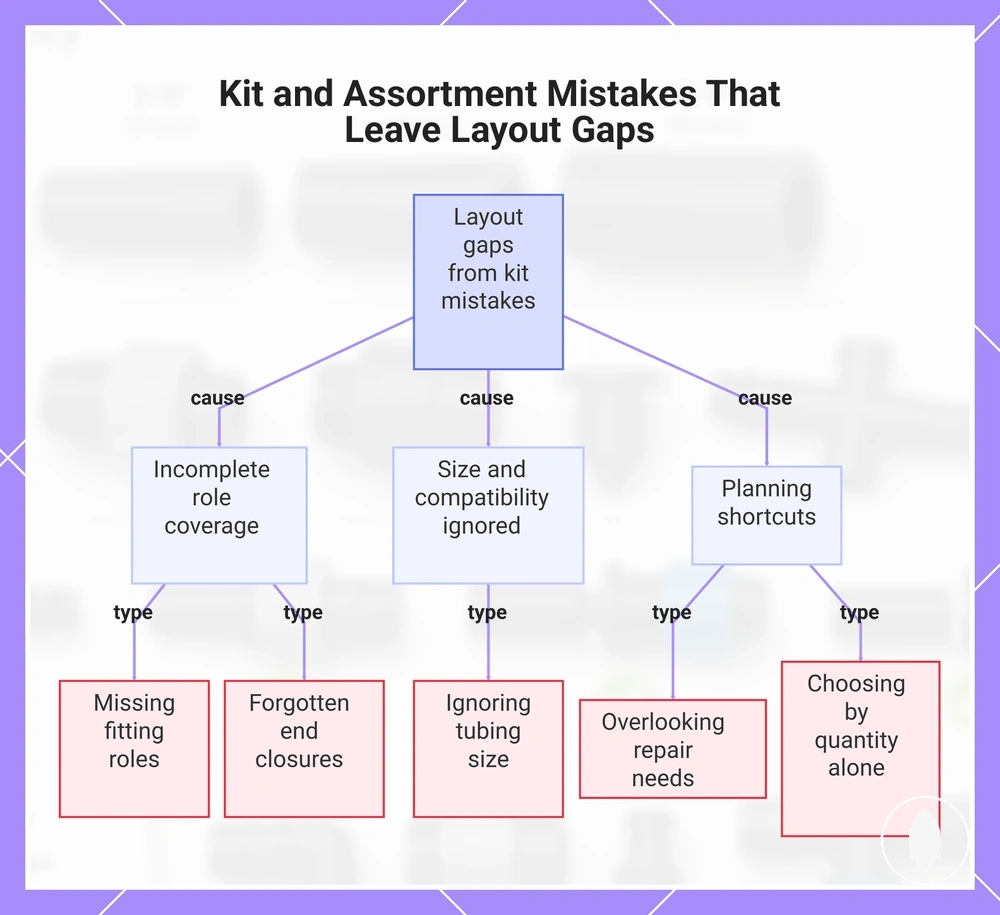
A kit or assortment can leave layout gaps when it does not cover the fitting roles required for the planned system. Checking fitting roles, tubing size, repair needs, spare parts, and end closures before purchase helps evaluate whether the set matches the connection requirements.
The number of parts alone does not determine whether a kit is suitable. A kit or connector assortment should be checked against the layout conditions, existing tubing, and possible repair needs. Missing roles can create gaps, such as needing a connection or closure that was not considered during selection. Reviewing the checklist helps identify these gaps before purchase.
The checklist below organizes common kit and assortment mistakes by the conditions that should be verified.
- Missing fitting roles: Check whether the assortment covers the connection points needed for the layout instead of assuming required roles are included.
- Ignoring tubing size: Verify that the included fittings match the tubing size used in the system before selecting the kit.
- Overlooking repair needs: Consider whether spare parts or additional connectors may be needed for future repair situations.
- Forgetting end closures: Check whether the layout requires end closures for specific line endings.
- Choosing by quantity alone: Evaluate the fitting roles and system conditions instead of assuming a larger assortment provides better coverage.
This chart categorizes common mistakes when selecting a kit or connector assortment that can result in layout gaps, helping identify what to check before purchase.
Missing Couplers, Tees, Elbows, Adapters, or End Closures
A kit can leave layout gaps when it includes fittings but misses the specific fitting roles required by the planned layout. Couplers, tees, elbows, adapters, and end closures support different connection points, so missing one role can affect how the system is completed. Checking the required roles before purchase helps correct this selection mistake.
The checklist below organizes missing-role mistakes by the connection needs that should be verified before choosing a kit or assortment.
- Missing couplers: Check whether straight connection points require joining compatible tubing sections and verify the kit includes that fitting role.
- Missing tees: Check whether the planned layout needs branch connection points and avoid assuming the assortment covers every role.
- Missing elbows: Check whether direction changes in the layout require an elbow role before selecting the kit.
- Missing adapters: Verify whether different connection conditions require an adapter role for the planned setup.
- Missing end closures: Check whether line ends require closure components based on the layout conditions.
- Missing spare parts: Consider repair needs and verify whether additional compatible fittings may be needed for future adjustments.
Buying Repair Fittings Without Matching Existing Tubing
Repair fittings need to match the existing tubing conditions before a repair begins, not only the damaged area. Existing tubing size, connector style, tube condition, and the available connection point all affect fitting fit. Checking these factors before buying helps reduce unsuitable repair fitting choices.
The local check below focuses on the conditions that should be verified when choosing a repair fitting.
- Existing tubing size: Check that the repair fitting matches the current tubing size before purchase.
- Connector style: Verify that the fitting connection method matches the existing tubing and related components.
- Tube condition: Consider the condition of the tubing around the repair area before selecting a fitting.
- Cut point: Check whether the intended connection point is suitable for the selected repair fitting.
- Sealing expectation: Review the fitting and tubing specifications together instead of relying only on the damaged area when making a choice.
Pressure and Flow Mistakes That Affect Fitting Reliability
Pressure and flow conditions should be considered before choosing fittings because they can affect how connectors hold, seal, and perform within a system. The decision depends on factors such as connector rating, tubing hold, and the expected flow conditions. Checking these conditions before buying helps match fittings to the intended system requirements.
Pressure and flow mistakes can occur when fitting choices are made without considering the wider system conditions. Run length, emitter load, connector style, and regulator presence can influence the suitability of a fitting choice. Poor matching between these factors may contribute to reliability issues such as leaks or pop-offs in some situations. For a deeper look at related concerns, see pressure mistakes and the conditions that can affect fitting selection.
The checklist below verifies common pressure and flow conditions that should be considered before selecting fittings.
- Ignoring pressure conditions: Check whether the connector rating and fitting specifications align with the expected pressure conditions.
- Overlooking flow demand: Consider the system flow requirements and whether the fitting choice suits those conditions.
- Not checking run length: Review tubing run length as part of the conditions that may affect fitting reliability.
- Ignoring emitter load: Consider how connected emitters influence flow demand before selecting fittings.
- Missing regulator considerations: Check whether regulator presence is part of the system conditions before choosing fittings.
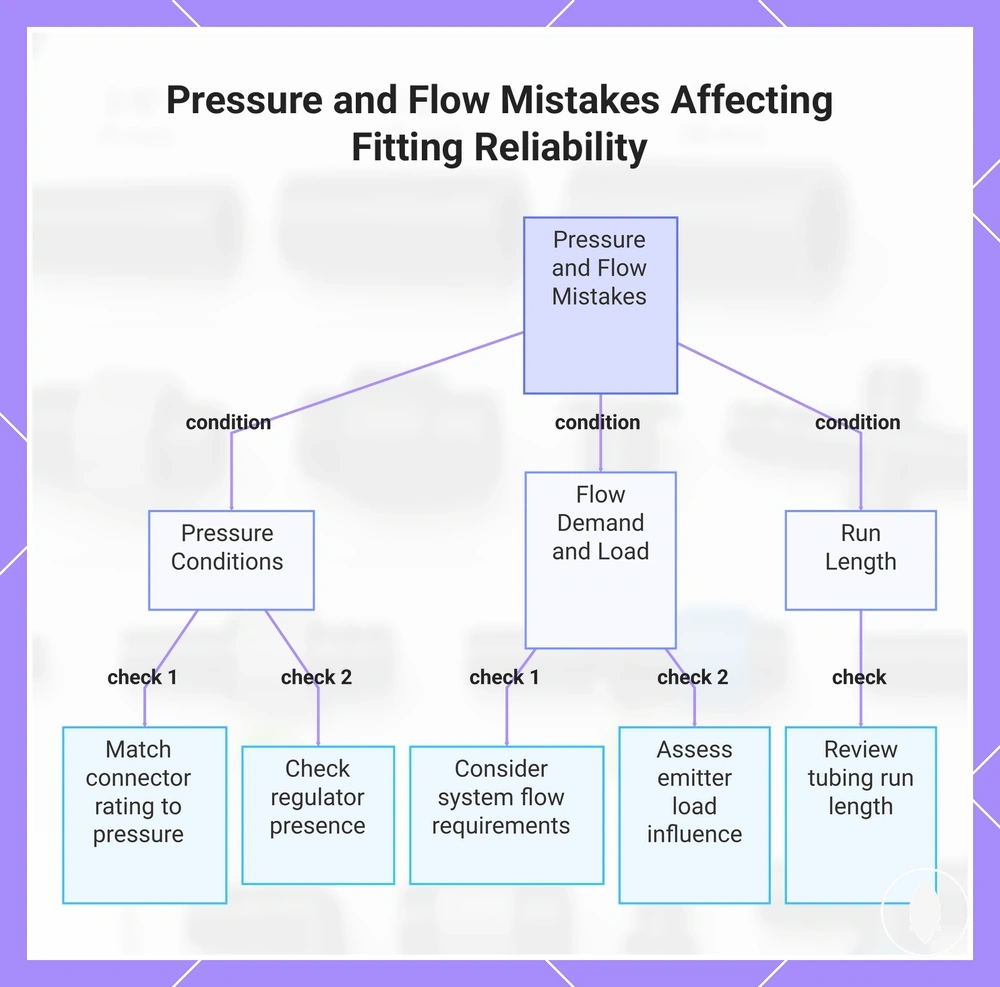
This chart shows the main pressure and flow conditions to check before selecting fittings to avoid reliability issues such as leaks or pop-offs.
Ignoring Pressure Limits Before Choosing Connectors
Pressure exposure matters before choosing connectors because connector suitability depends on the conditions the fitting will experience in the system. Connector rating, tubing hold, and connection stress should be considered before buying fittings for a line. Checking pressure-related requirements first helps reduce reliability risks from unsuitable connector choices.
Flow conditions, run length, emitter load, and regulator presence can influence how a connector choice matches the system. These factors should be reviewed alongside connector specifications rather than treating pressure as a separate issue. Confirming the pressure and flow conditions before purchase helps create a more suitable fitting decision.
Overlooking Run Length, Flow Demand, and Emitter Load
Run length, flow demand, and emitter load should be considered before choosing fittings because these conditions can influence fitting reliability within a system. Tubing runs, branches, and emitters can change distribution conditions that affect connector stress and fitting suitability. Checking these factors before buying helps match drip irrigation fittings to the intended layout conditions.
Flow requirement and pressure conditions should be considered together when reviewing a fitting choice. For example, a layout with longer tubing runs and multiple branches may require a different suitability check than a simpler connection point. Reviewing connector rating, tubing hold, and system conditions before purchase helps reduce avoidable fitting risks.
Layout and Installation Assumptions Before Buying
Layout should be known before buying fittings because installation assumptions can affect which connection points and fitting roles are needed. Branch points, corners, end points, fitting access, and assembly sequence all influence the suitability of a fitting choice. Checking these conditions before purchase helps reduce layout-related selection mistakes.
Fittings should be selected based on the planned layout rather than assumptions about how the installation will be completed. Access around connection points, insertion needs, and assembly sequence can affect which fittings may suit the intended setup. Reviewing these factors before buying helps identify possible mismatches, while proper installation technique is still required during assembly. For a deeper look at related issues, see installation mistakes and the conditions that can affect fitting selection.
The checklist below verifies common installation assumptions that should be reviewed before choosing fittings.
- Ignoring branch points: Check where branches are needed in the layout before selecting fittings.
- Overlooking corners: Verify whether corner locations require a suitable connection approach before purchase.
- Missing end points: Check whether end points require specific fitting roles based on the planned layout.
- Ignoring fitting access: Consider whether connection areas are accessible for the intended fitting choice.
- Assuming assembly sequence: Review the planned order of connections before buying fittings to reduce mismatch risks.
This chart shows the key assumptions to verify before purchasing fittings, grouped by layout and installation factors to reduce selection mistakes.
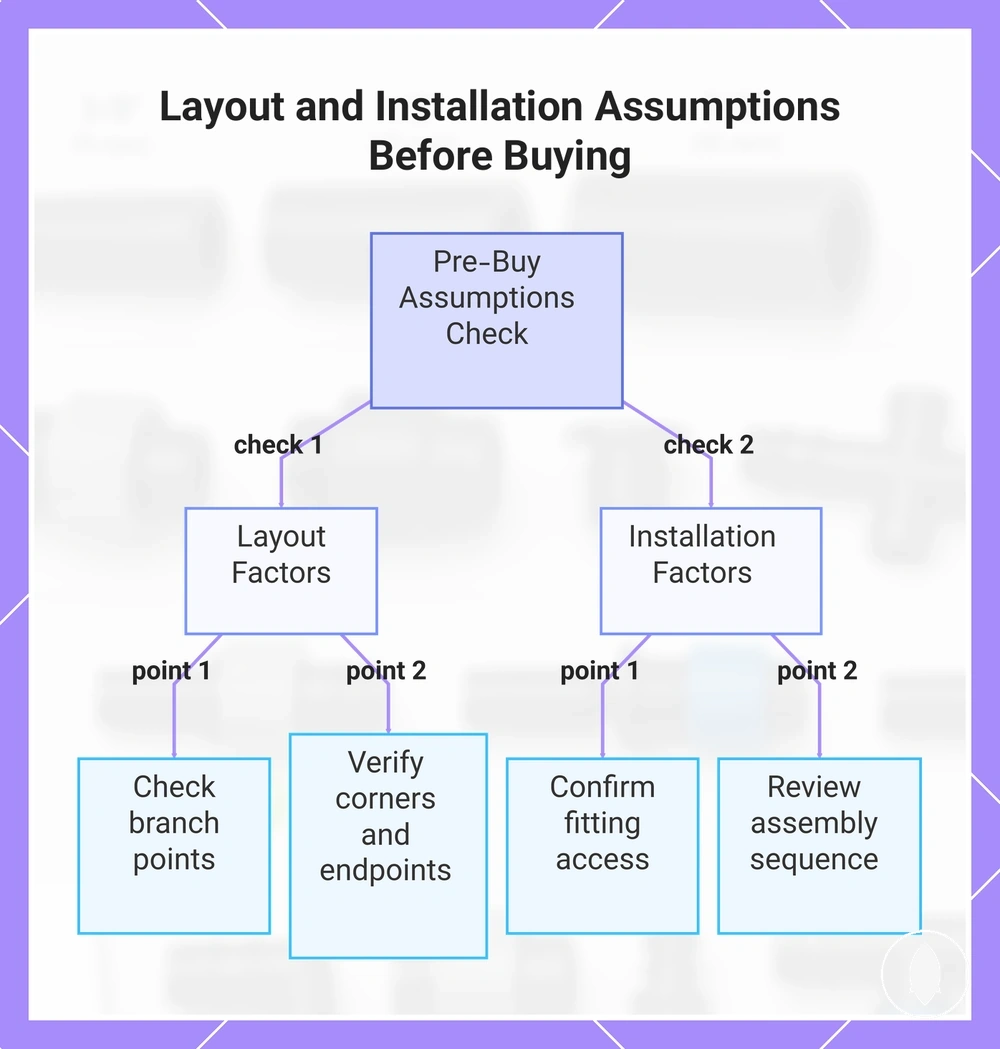
Buying Fittings Before Planning Branches, Corners, and End Points
Fittings should be counted from actual connection points before buying rather than estimated from kit size alone. Branches, corners, and end points determine the fitting roles needed for the planned layout. Mapping these points before purchase helps reduce the risk of choosing fittings that do not match the intended connections.
The checklist below organizes connection points that should be reviewed before selecting fittings.
- Branch points: Check whether branch locations require tee connections based on the planned layout.
- Corners: Check whether corner locations require elbow connections instead of assuming straight joins will suit the layout.
- End points: Verify whether line ends require end closures for the intended connection points.
- Straight joins: Check whether tubing sections require joining points and suitable connector roles.
- Spare connection points: Consider whether optional spare fittings may be useful depending on the planned layout conditions.
Assuming Installation Fixes Poor Fit Later
Installation cannot reliably correct poor fit because fittings still need to match the tubing and connector system before purchase. A poor fit may lead to issues such as forced insertion, loose grip, or damaged tubing when the connection conditions do not match. Leak risk can depend on the fitting and system conditions, so the correction is to check compatibility before buying rather than rely on installation adjustments later.
Leak and Pop-Off Risk Checks Before Purchase
Leak risk and pop-off risk can be screened before buying fittings by checking the conditions that may affect compatibility and connection reliability. A suitable choice depends on factors such as tubing match, pressure exposure, connector style, and connection condition. Reviewing these factors before purchase helps identify possible risks without promising that every issue will be prevented.
The checklist below diagnoses common buying conditions that may contribute to leak risk or pop-off risk.
- Tubing mismatch: Check whether the fitting matches the existing tubing conditions because a mismatch may increase compatibility risk.
- Pressure exposure: Consider the expected pressure conditions and whether the fitting choice suits the system requirements.
- Connector style: Verify that the connector style matches the tubing and connection point before purchase.
- Damaged tubing: Check tubing condition before selecting fittings because existing damage may affect connection reliability.
- Poor insertion fit: Review the connection fit because poor insertion conditions may contribute to loose connections or leak risk.
- End closure choice: Confirm that the end closure matches the intended line ending conditions before buying.
These checks focus on reducing buying risks before installation. For further detail on related issues, see leak prevention mistakes.
This chart shows the key factors to check before buying fittings to reduce leak and pop-off risk.
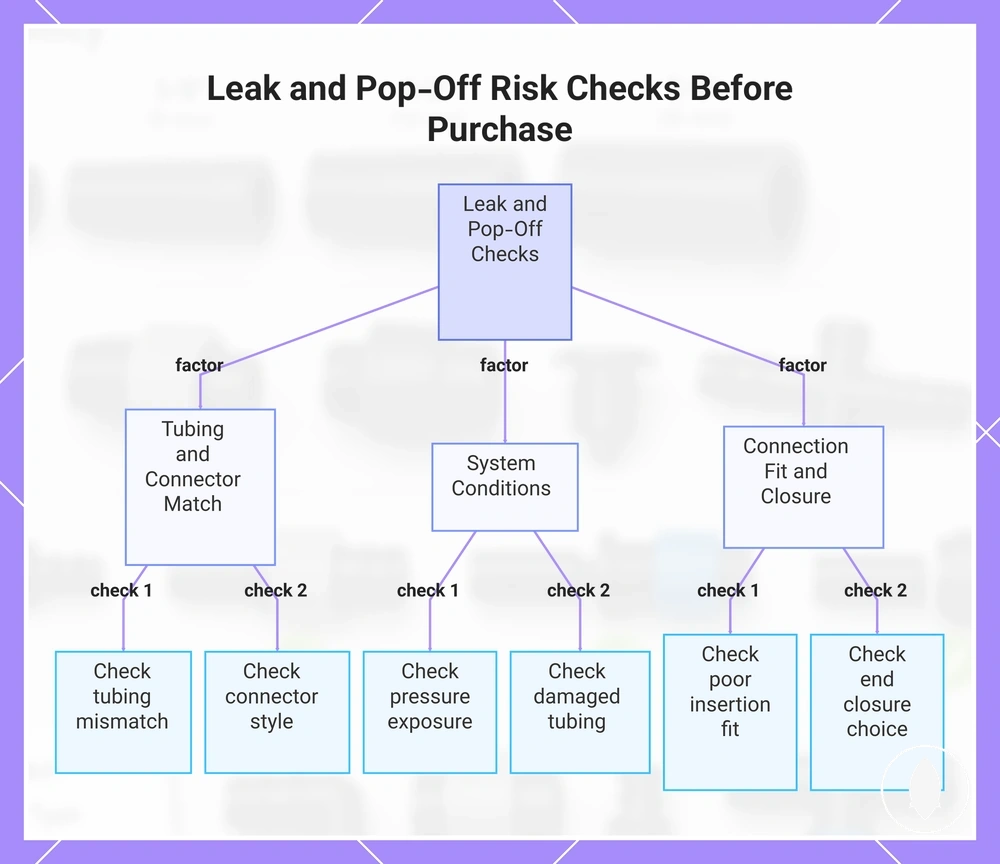
Pre-Buying Mistake Checklist for Drip Irrigation Fittings
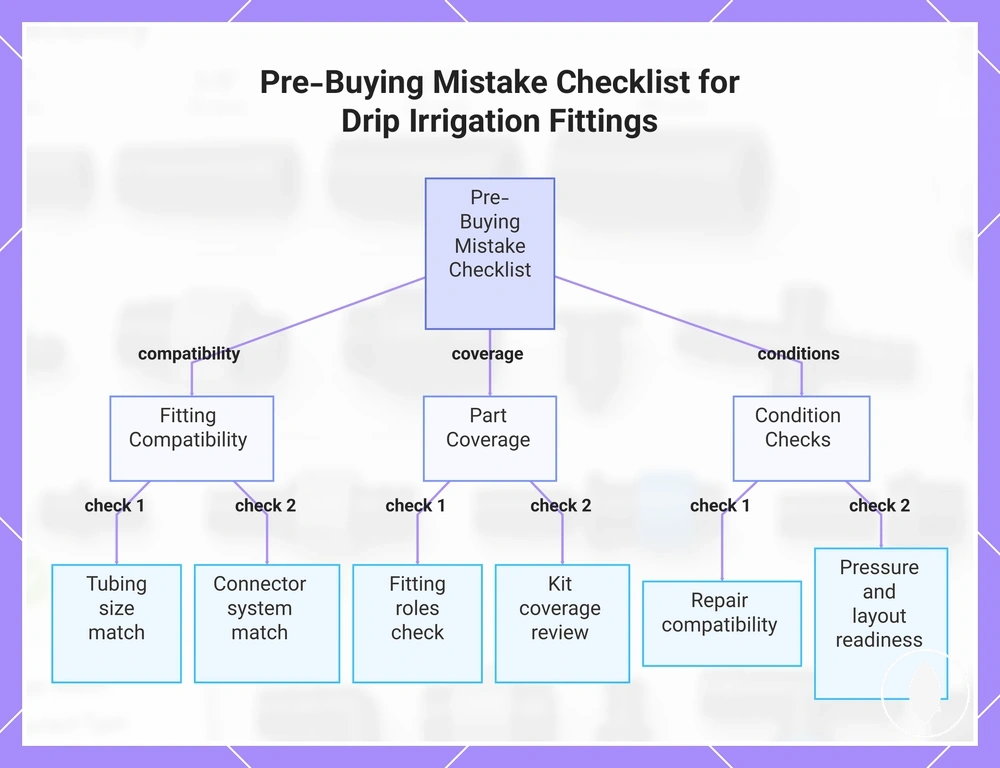
A final mistake checklist helps verify drip irrigation fittings before comparing suitable options. The main risk is checking one factor alone while missing how fit, type, kit coverage, pressure conditions, and layout readiness work together. Reviewing these criteria before buying helps reduce selection risk.
The checklist below consolidates the highest-value checks for a final pre-purchase review.
The products below are useful examples for comparing available options. Before buying, check that the compatibility criteria, key features, and product details match your needs.
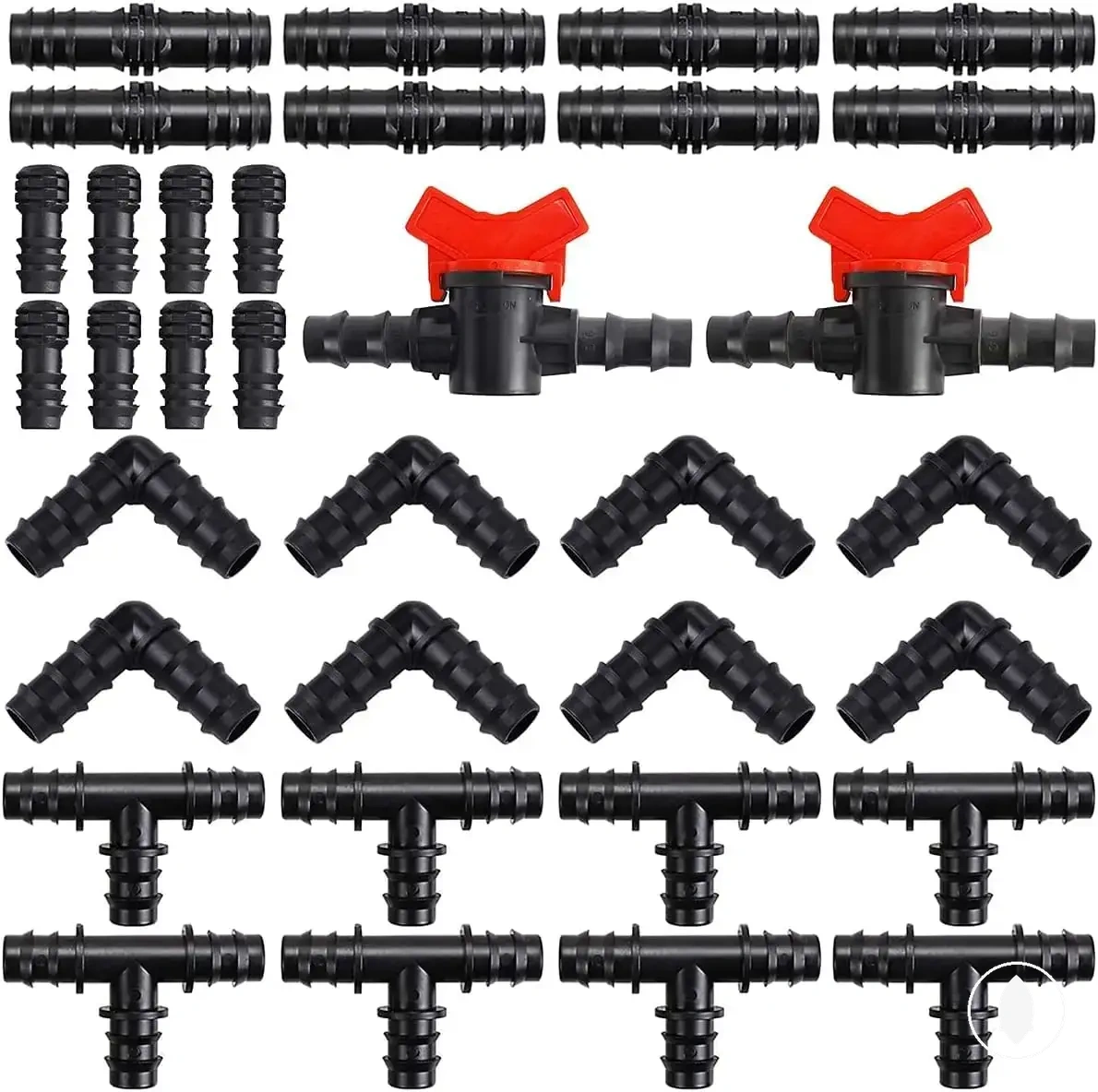
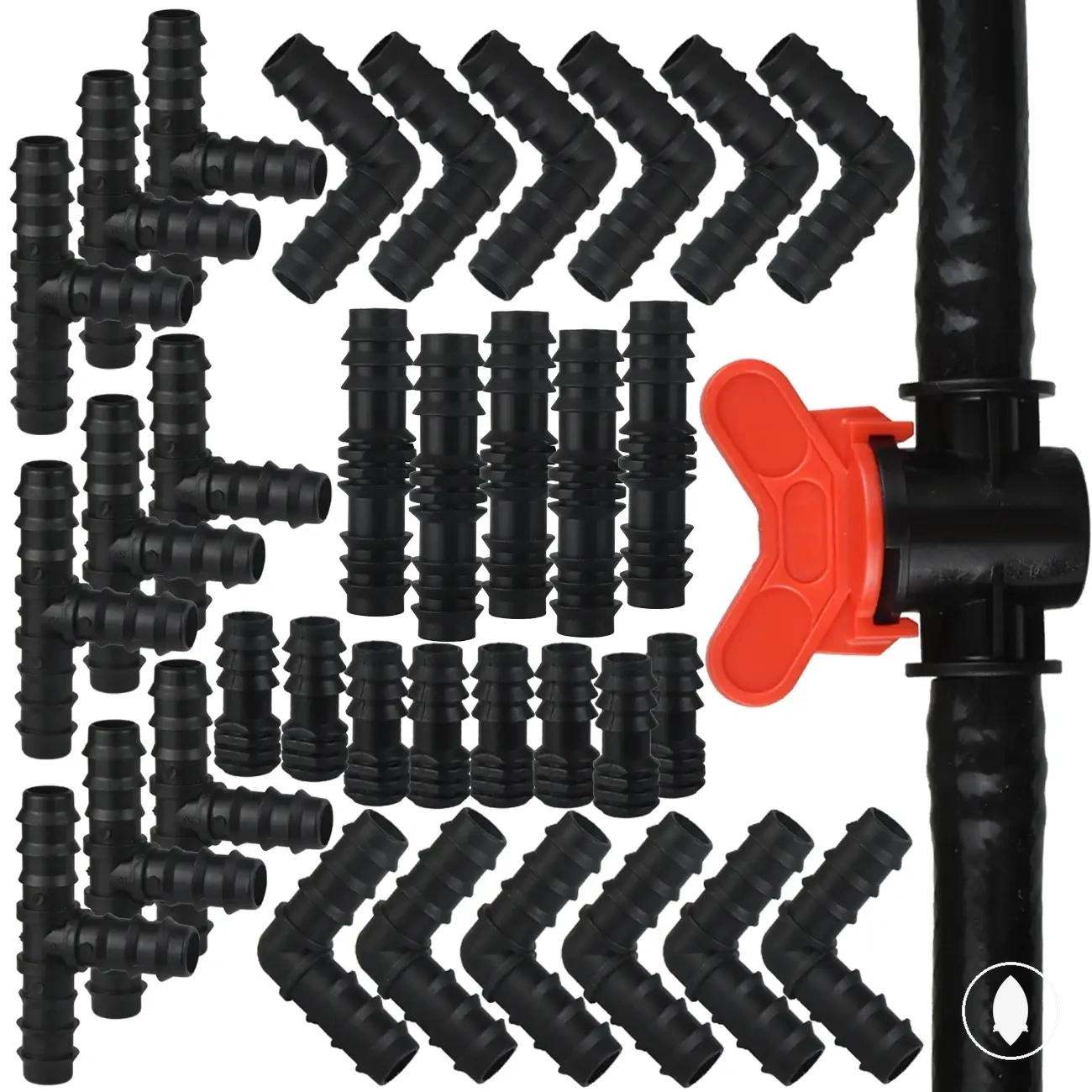
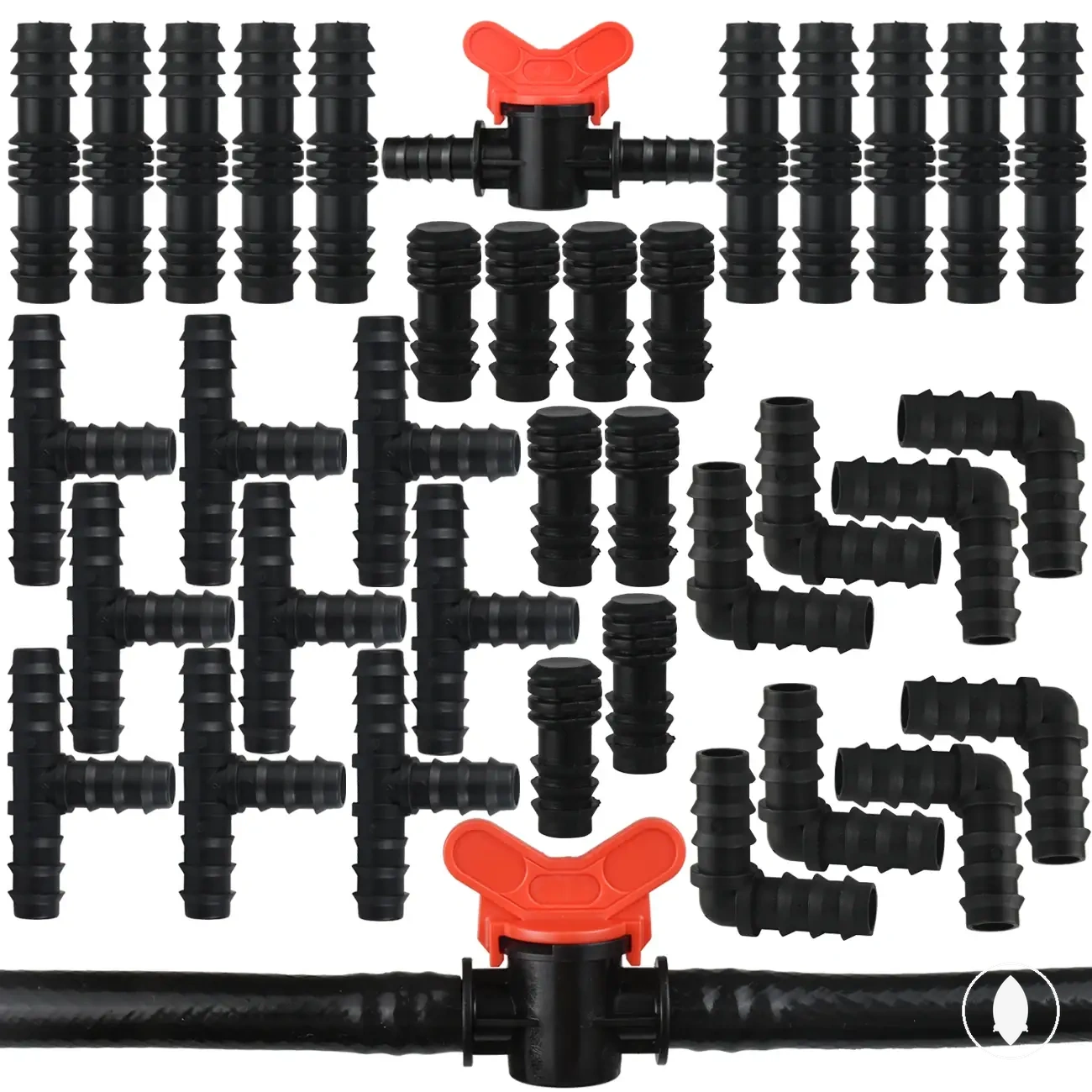
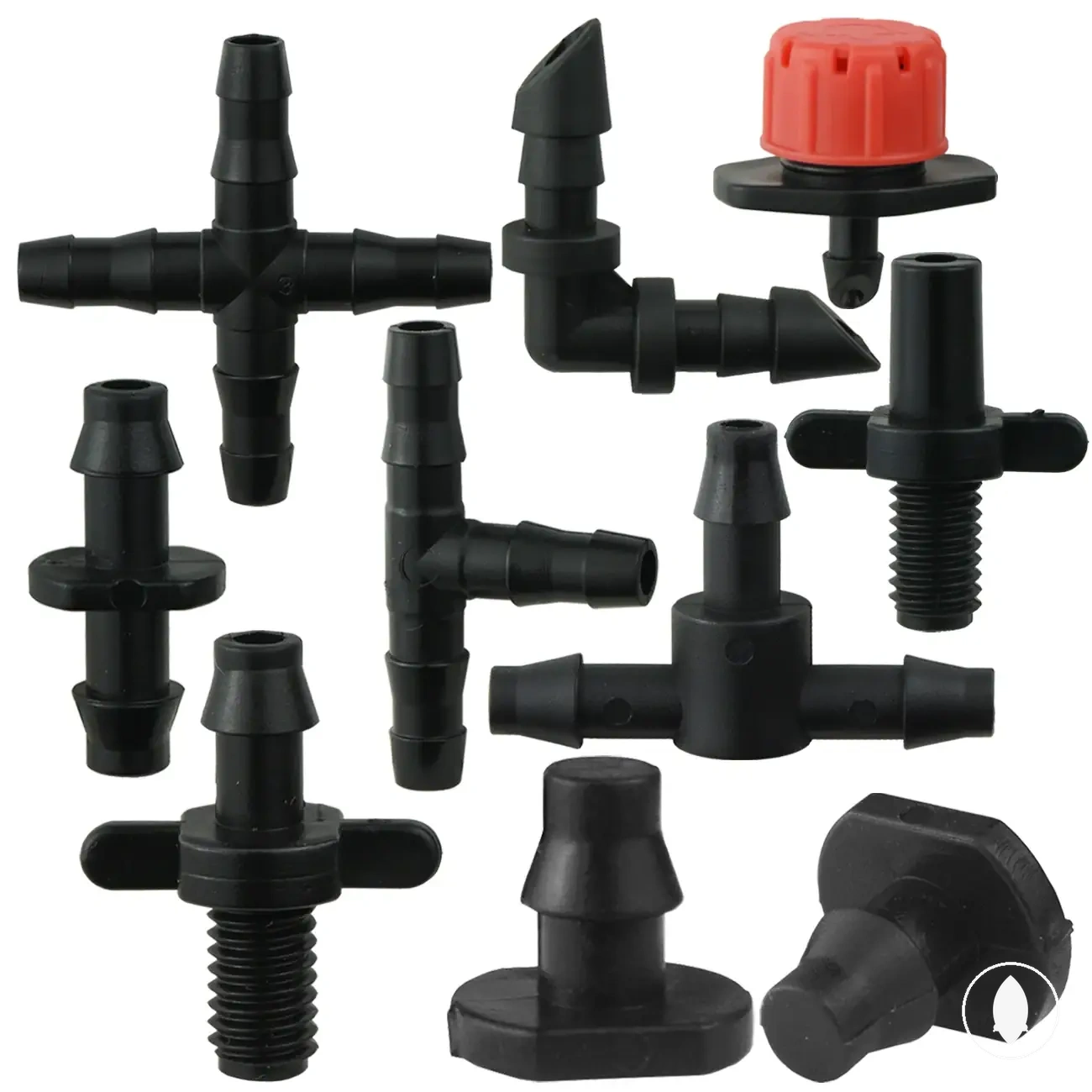
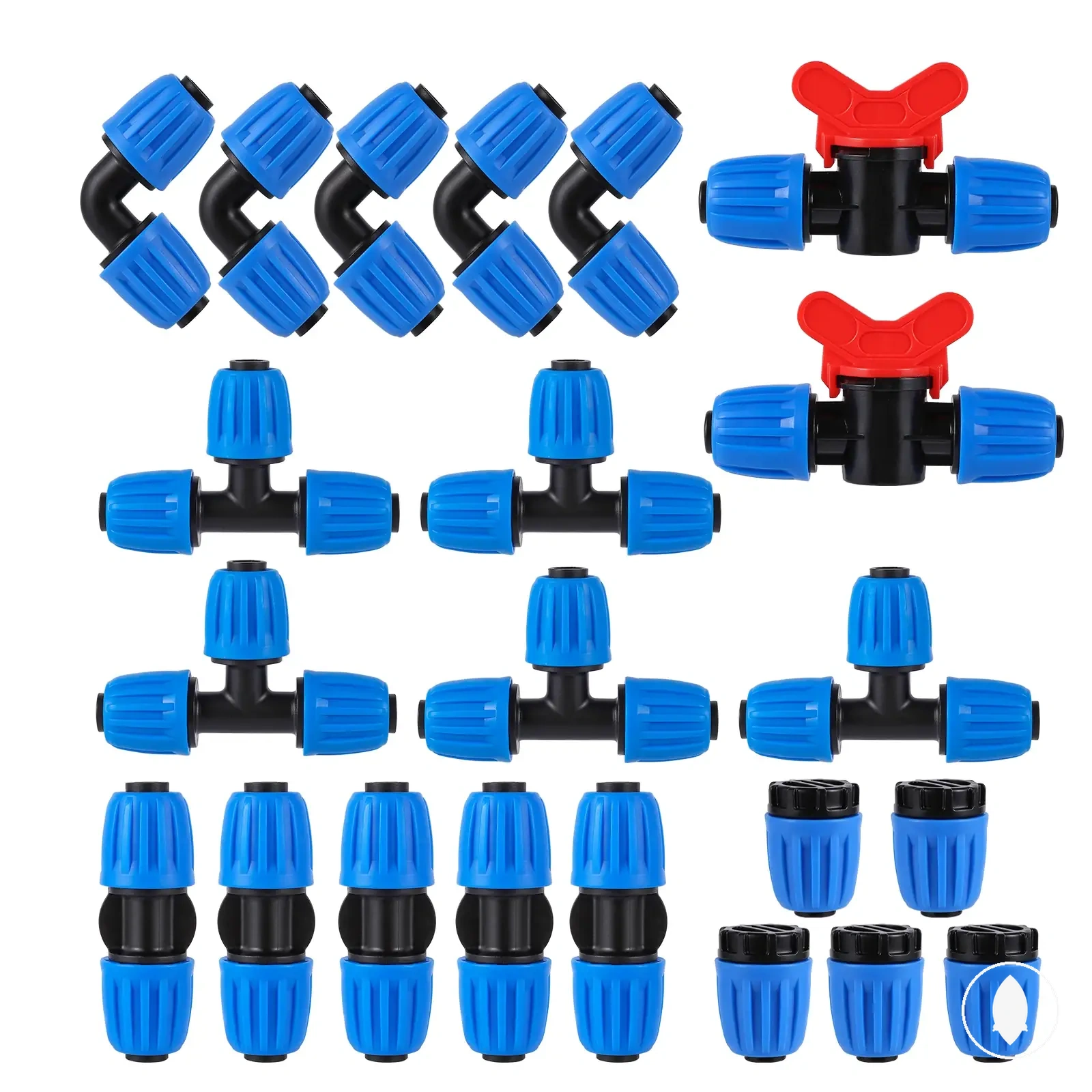
- Tubing size: Check whether the fitting matches the existing tubing conditions before choosing an option.
- Connector system: Verify that the connector style suits the intended connection method and compatibility requirements.
- Fitting roles: Check whether the required roles, including end closures and other connection types, match the planned layout.
- Kit coverage: Review whether the kit or assortment covers the needed roles instead of assuming more parts create a suitable choice.
- Repair compatibility: Consider repair needs and spare parts when existing tubing conditions may require matching fittings.
- Pressure and layout readiness: Check pressure exposure and installation assumptions before comparing suitable examples.
Suitable examples should be compared by conditions such as fit, connector type, kit coverage, and layout requirements rather than by unsupported product claims. For a broader review process, see the buying checklist and compare options based on the conditions that match the intended use.
This chart groups the key pre-purchase checks for drip irrigation fittings into three categories: compatibility, coverage, and condition readiness.