Drip irrigation fitting materials for durable outdoor connections
Drip irrigation fittings are connection components where materials influence outdoor durability, fit reliability, and how fittings respond to changing conditions. Material choice affects factors such as flexibility, UV resistance, pressure handling, and reuse potential. Durable outdoor connections depend on material grade, tubing fit, pressure conditions, sunlight exposure, and handling.
When drip irrigation fittings remain outdoors through changing conditions and repeated use, material properties become part of the selection process. Plastic fittings and other connector materials may respond differently to sunlight exposure, handling, and connection forces. For a broader overview of fitting types, parts, and selection factors, see the drip irrigation fittings hub.
Material evaluation starts with understanding how fitting construction relates to outdoor durability. The following sections examine material grade, weather exposure, pressure handling, and fit behavior to support material-specific selection criteria.
How material choice affects fitting strength and connection reliability
Material choice affects drip irrigation fitting strength and connection reliability because fitting materials influence how connection parts respond to pressure, movement, and outdoor conditions. The fitting body, barb, compression ring, thread, or lock feature can each respond differently depending on material properties. A suitable material supports stable connections, but it does not replace correct tubing size, installation force, or pressure checks.
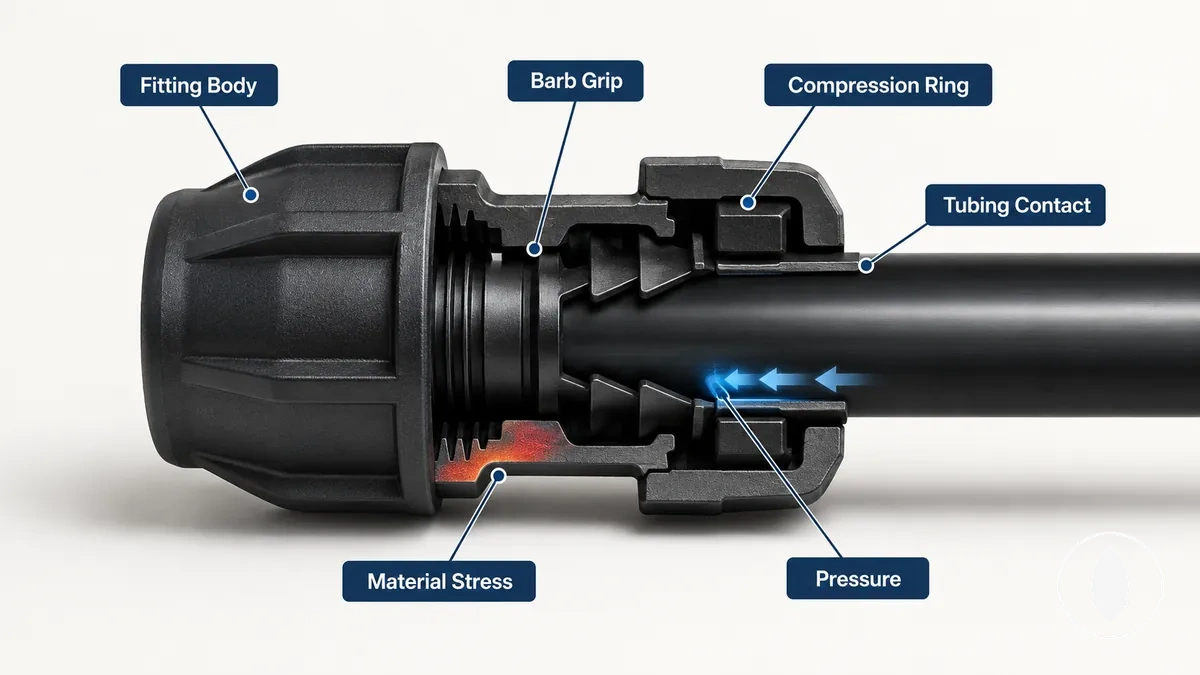
For example, a fitting used in an exposed outdoor line may experience sunlight exposure, pressure changes, and repeated handling. Material stiffness and flexibility can influence grip stability, while brittleness may increase cracking or loosening risk under certain conditions. Connection reliability depends on how material properties interact with the field environment.
When connection problems occur, material is only one part of the evaluation. Tubing size, installation force, sealing pressure, and ageing can also influence whether a fitting maintains a reliable connection.
Material choice affects fitting strength and connection reliability through specific parts and field conditions:
- Fitting body: Material properties can influence connector strength and how the body responds to pressure conditions.
- Barb area: Material stiffness and grip design can affect tubing hold and fit reliability.
- Compression ring: Material response can influence sealing pressure and connection stability when the fitting design relies on compression.
- Thread or lock feature: Material characteristics can affect how connection parts handle repeated handling and pressure changes.
- Tubing contact point: Material choice works together with tubing size and installation force to influence leak risk.
Common materials used in drip irrigation fittings
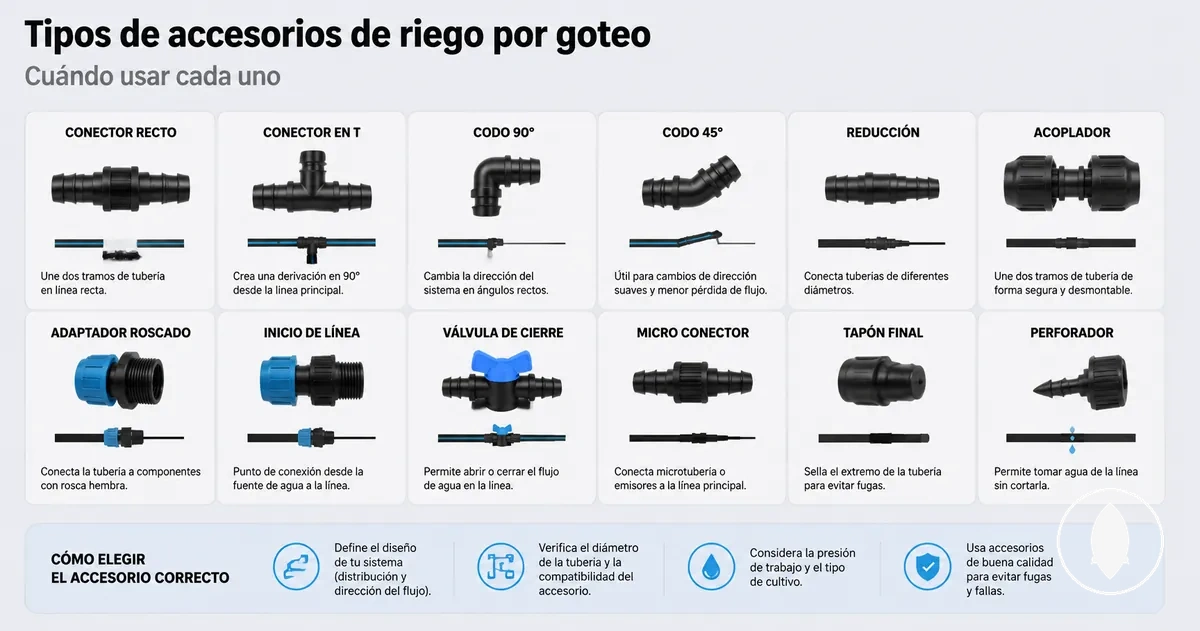
Drip irrigation fittings are made from different material families that influence flexibility, UV stability, water exposure response, and connection durability. Common material families include plastic fittings, engineered polymer, PVC, polyethylene, and metal fittings. Each material family has different properties that may affect how irrigation connectors perform in specific outdoor conditions.
In a garden layout, drip irrigation fittings may experience sunlight, moisture, and repeated connection forces. Plastic fittings are widely used because flexibility and practical outdoor performance can suit many connection points, while engineered polymer options may focus on specific material properties for demanding conditions. Material choice depends on the connector context, tubing fit, and exposure conditions rather than a single universal option.
Comparing fitting materials requires looking at strength, flexibility, UV stability, and water exposure. The table below provides a practical comparison of common material families used in drip irrigation fittings.
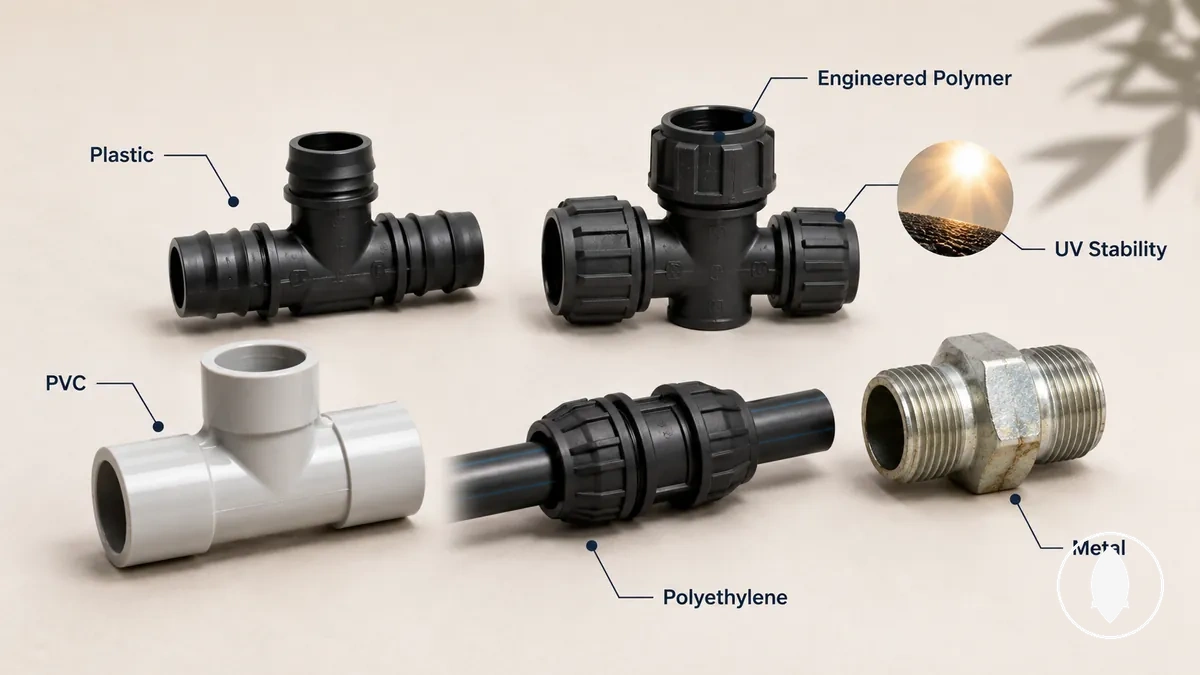
types affected by material choice
| Material family | Common fitting context | Durability strength | Main caution |
|---|---|---|---|
| Plastic | Common garden drip fittings and connectors | Flexibility and practical outdoor use | Outdoor conditions may influence material response |
| Engineered polymer | Connector applications requiring specific material properties | Material strength and outdoor durability considerations | Performance depends on material grade and conditions |
| PVC | Rigid fittings and threaded adapters | Rigidity and structured connection support | Water exposure and compatibility factors should be considered |
| Polyethylene | Tubing-related fitting contexts | Flexibility and fit behavior | Connection performance depends on tubing match |
| Metal | Metal fittings and exposed hardware contexts | Thread strength and structural properties | Corrosion risk depends on material and environment |
Plastic fittings and engineering plastic differences
Plastic fittings and engineering plastic variants differ through material grade, additives, and how the connector responds to outdoor stress. Basic plastic fittings can provide practical flexibility, while engineering plastic may use different formulations for specific durability needs. The key difference is how material properties influence cracking resistance, grip strength, and connection behaviour.
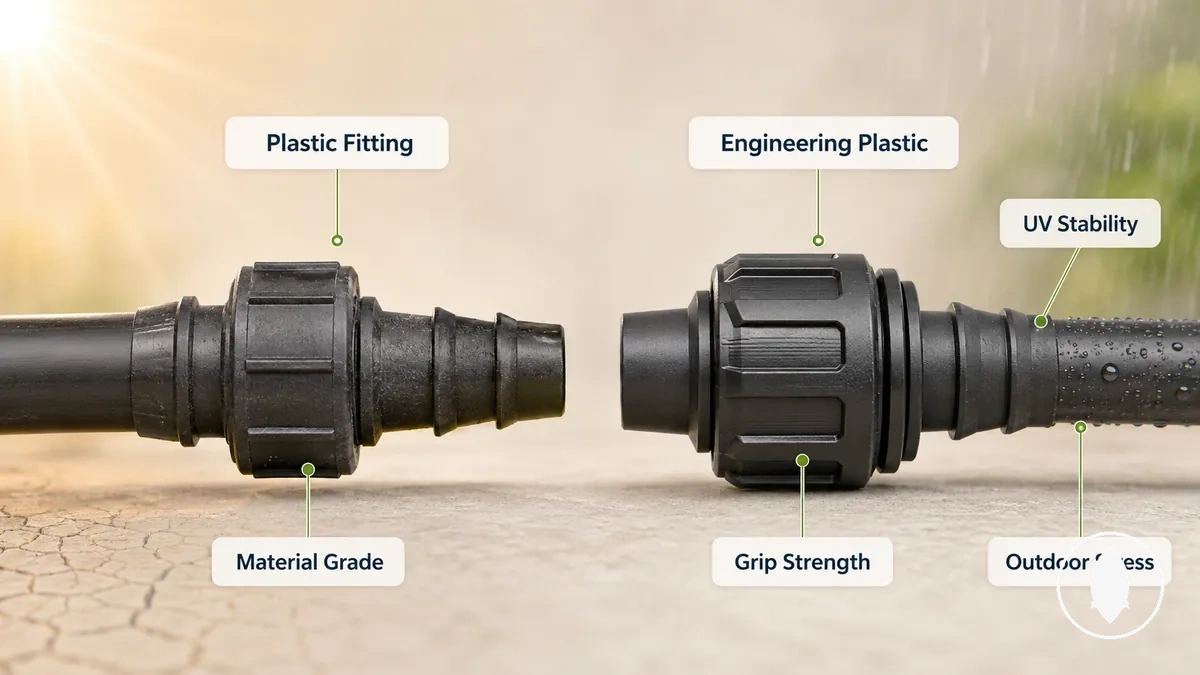
In an exposed outdoor setting, plastic fittings may experience heat, sunlight exposure, and repeated handling. A UV-stabilized formulation or additive may influence how a plastic connector responds to these conditions, while flexibility and tubing contact can affect grip stability. Outdoor stress, material grade, and connector use all contribute to the fitting response.
Plastic fittings and engineering plastic differences can be compared through these local material factors:
- Material grade: Different grades can influence plastic fitting strength and response to outdoor stress conditions.
- Additives: UV-stabilized additives may influence how plastic connectors respond to sunlight exposure.
- Flexibility: Material flexibility can affect tubing contact and grip stability during connection use.
- Cracking resistance: Material properties may influence how fittings respond to heat, brittleness, and outdoor exposure.
PVC, polyethylene, and metal fitting contexts
PVC, polyethylene, and metal fitting materials have different roles within drip irrigation connection contexts. PVC is commonly associated with rigid connection areas and threaded adapters, polyethylene supports flexible tubing contexts, and metal fittings may be relevant where thread strength or exposed hardware characteristics are considered.
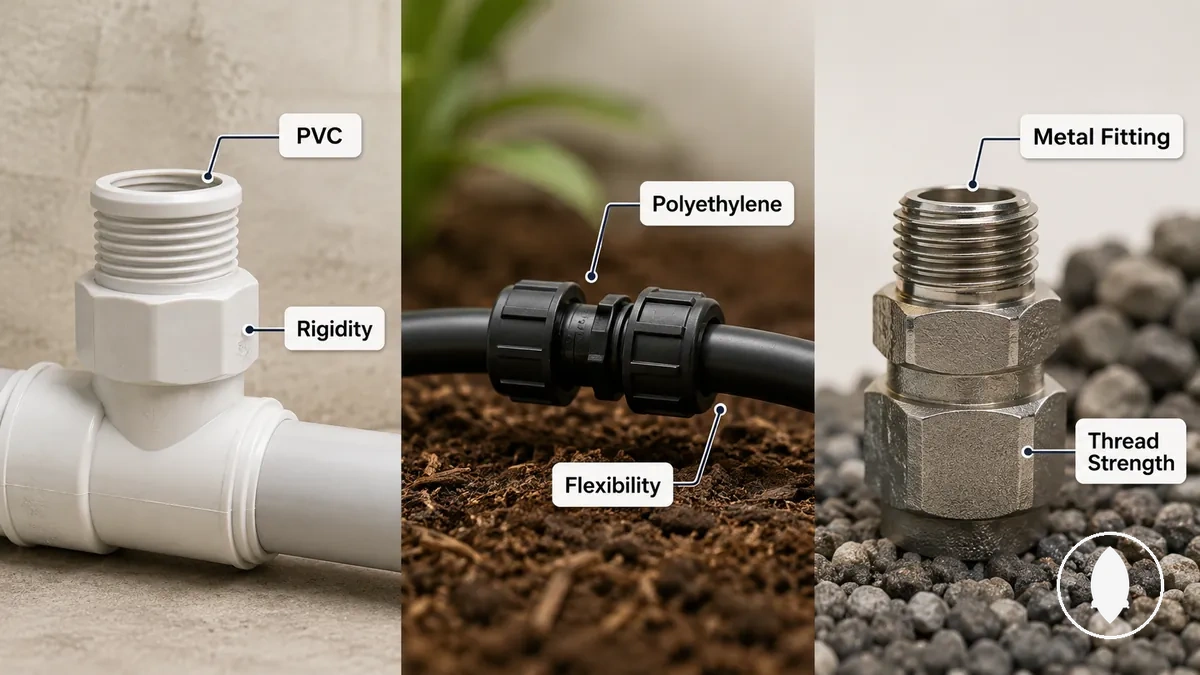
In a drip irrigation layout, these materials may suit different connection situations. PVC adapters may provide rigidity for certain threaded connections, polyethylene may support flexibility around tubing runs, and metal fittings may require consideration of corrosion risk based on exposure and material choice. Compatibility with nearby system parts remains important because material context alone does not determine fitting suitability.
These material contexts can be compared by where they appear, the property they may provide, and the factor that requires consideration:
- PVC: Used in rigid fitting contexts where rigidity and threaded adapter connections may be relevant; water exposure and compatibility should be considered.
- Polyethylene: Used in tubing-related contexts where flexibility and fit behavior are important considerations; tubing match remains a key factor.
- Metal: Used in metal fitting or exposed hardware contexts where thread strength may be relevant; corrosion risk depends on the material and environment.
Outdoor durability factors for drip irrigation fittings
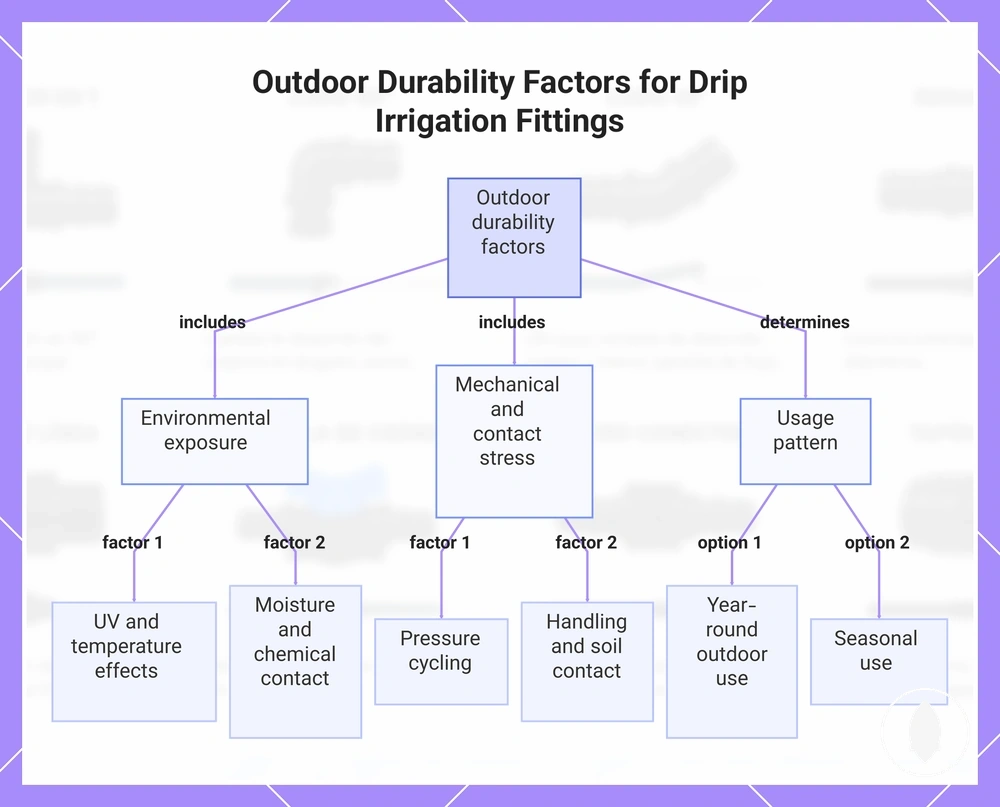
Outdoor durability depends on how drip irrigation fittings respond to exposure conditions and material response over time. UV exposure, heat, cold, moisture, chemicals, pressure cycling, soil contact, and repeated handling can influence whether fittings remain stable or develop issues such as brittleness, loosening, or cracking.
When drip irrigation fittings are used in exposed outdoor areas, sunlight and temperature changes can place stress on the connector material. UV exposure and heat may influence material response, while cold conditions can affect flexibility in some fitting materials. These effects depend on the fitting construction, outdoor conditions, and connection environment.
Moisture, chemicals, and pressure cycling can also influence drip irrigation fitting durability. Water exposure, chemical contact, and repeated pressure changes may contribute to weakening, corrosion risk, or connection movement depending on the material response. Evaluating these conditions helps identify potential leak risk and replacement signals.
Outdoor durability decisions depend on whether fittings remain outdoors year-round or are used seasonally. Year-round outdoor use may require closer attention to exposure conditions, while seasonal use may involve different handling and storage considerations.
Outdoor durability factors to consider:
- UV exposure: Sunlight conditions may influence brittleness, surface changes, and cracking risk in some materials.
- Heat and cold: Temperature changes can affect flexibility and material response under outdoor conditions.
- Moisture and chemicals: Water exposure and chemical contact may contribute to weakening or corrosion risk depending on fitting material.
- Pressure cycling: Repeated pressure changes may affect connection stability and increase loosening or leak risk.
- Soil contact: Surrounding environmental contact may influence material response and fitting condition.
- Repeated handling: Removal and reuse may affect grip stability and create material fatigue signals.
This chart shows the main environmental, mechanical, and usage factors that influence the outdoor durability of drip irrigation fittings.
UV resistance and weather exposure
UV resistance affects how a plastic drip fitting responds to sunlight exposure and outdoor stress conditions. A UV-stabilized material may help reduce brittleness risks, but UV resistance does not mean permanent outdoor durability. The fitting material, exposure level, and surrounding conditions influence surface degradation and connection security.
For an exposed line in direct sunlight, weather exposure can contribute to changes such as fading, chalking, cracking, or stiffness. A shaded run may experience different conditions compared with a fully exposed fitting, so material response depends on the environment, weathering conditions, and how the connector is used.
- Fading: May indicate changes associated with prolonged sunlight exposure.
- Chalking: May indicate surface degradation from weather exposure.
- Cracking: May indicate increased brittleness or material stress.
- Stiffness: May indicate reduced flexibility that can influence connection security.
Chemical, freeze, and corrosion resistance
Chemical resistance, freeze resistance, and corrosion resistance are local durability factors that affect drip irrigation fittings differently depending on material and environmental conditions. Fertiliser contact, hard water, freezing expansion, and moisture exposure can influence material response. These risks are conditional and depend on the fitting material, connection context, and surrounding conditions.
For example, a plastic fitting exposed to fertiliser contact may respond differently from a metal fitting exposed to moisture and air. Cold exposure can create different challenges where freezing expansion affects plastic brittleness, while hard water and mineral contact may influence connection areas. The outcome depends on material choice and exposure conditions.
These durability factors can be considered through the condition, affected material context, and practical caution:
- Chemical resistance: Fertiliser contact may influence plastic fitting material response and chemical resistance depending on exposure conditions.
- Freeze resistance: Freezing expansion may place stress on fittings, with plastic brittleness and cracking risk depending on material response.
- Corrosion resistance: Metal fittings and exposed adapters may require consideration of metal corrosion risk based on moisture exposure and material choice.
Heavy-duty construction and pressure handling
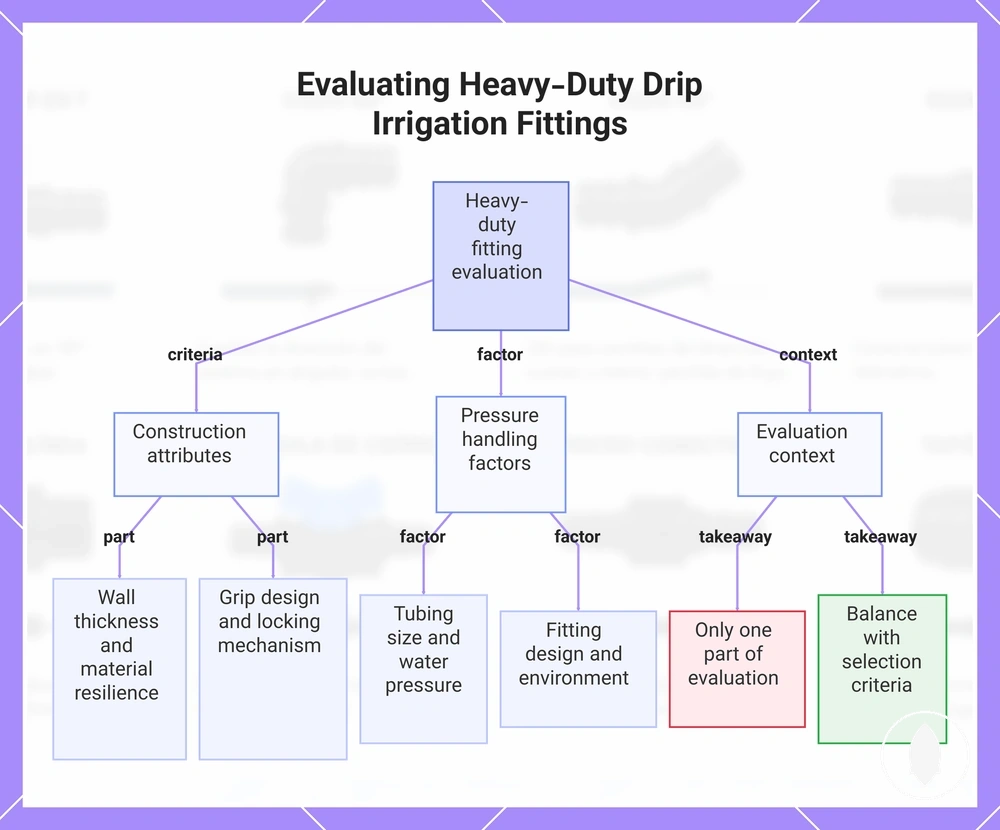
Heavy-duty construction in drip irrigation fittings is evaluated through wall thickness, grip design, pressure tolerance, and material resilience rather than the label alone. A durable connector may suit demanding conditions, but pressure handling depends on tubing size, water pressure, fitting design, and the environment where the connection is used.
For a mainline connector or exposed line, construction features can influence how a fitting responds to pressure and repeated handling. The connector body, barb, compression collar, thread, and locking mechanism each contribute to connection behaviour. These factors become more relevant when fittings experience pressure changes, movement, or removal and reuse.
When a fitting does not maintain a stable connection, heavy-duty construction is only one part of the evaluation. Tubing size, installation force, connection fit, and operating conditions can also influence secure hold or failure risk. Reviewing the construction attributes helps separate useful durability signals from unsupported assumptions.
Heavy-duty construction can involve a balance between added features and overall selection criteria. A fitting with additional construction characteristics may suit certain pressure handling or reuse conditions, but the choice depends on the intended application and required connection factors. For broader comparison considerations, see cost and value signals.
Criteria for evaluating heavy-duty drip irrigation fittings:
- Wall thickness: Connector body construction may influence material resilience under pressure and handling conditions.
- Grip design: Barb design and connection surfaces can affect tubing grip and secure hold.
- Pressure tolerance: Pressure handling depends on water pressure, tubing size, and fitting design.
- Material resilience: Material properties may influence response to outdoor stress and repeated use.
- Compression collar: Compression components can influence connection stability when used in suitable fitting designs.
- Locking mechanism: Lock features may influence connection security during repeated handling or reuse.
This chart shows the key construction attributes and pressure handling factors to consider when evaluating heavy-duty drip irrigation fittings, along with important context for interpretation.
Reusable fittings and wear after removal
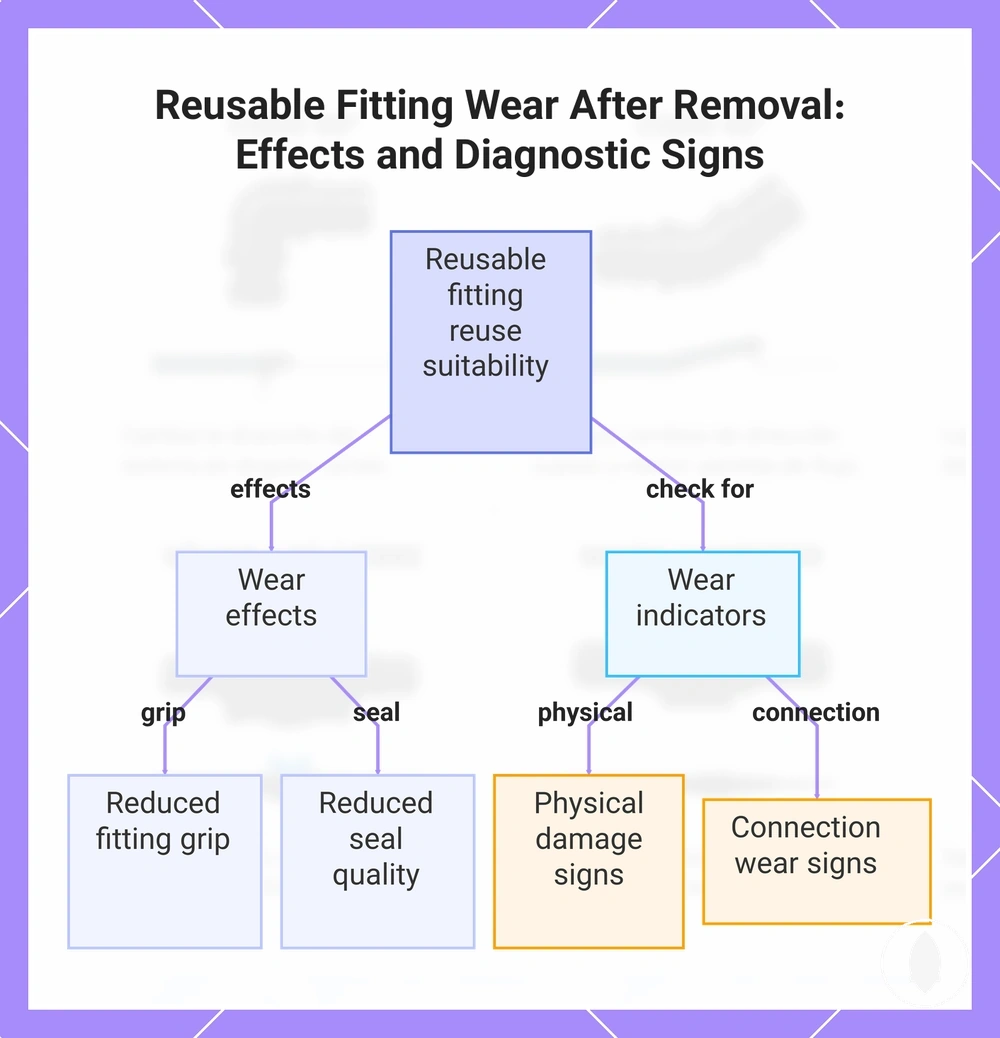
Reusable fittings depend on their condition after removal, reinstalling, and seasonal adjustment rather than repeated use alone. Wear after removal can affect fitting grip, seal quality, and material fatigue depending on the fitting type and connection design. A reusable fitting may remain suitable when its connection surfaces and materials stay in good condition.
When fittings are removed for seasonal adjustment or system changes, reinstalling can place stress on connection areas. Barb deformation, compression grip changes, thread wear, and tubing stretch may influence how securely the fitting reconnects. The effect depends on removal practices, fitting construction, and previous use conditions.
If a reused fitting develops connection issues, checking wear signals can help identify the likely cause. Cracking, visual damage, reduced grip, or changes around the sealing area may indicate increased leak risk. These signs help separate normal seasonal reuse from fittings that may need replacement.
Reusable fittings can be practical for seasonal reuse when the fitting remains intact and maintains a stable connection. A worn fitting with damaged grip, reduced seal quality, or visible material fatigue may be less suitable for reuse. For related care practices, see maintaining fittings longer.
Diagnostic signs to consider after removal and reinstalling:
- Barb deformation: Changes to the barb area may reduce tubing grip and connection stability.
- Compression grip changes: Reduced compression contact may influence seal quality after reuse.
- Thread wear: Worn threads may affect connection fit during reinstalling.
- Tubing stretch: Changes at the tubing contact point may influence fitting grip.
- Cracking or visual damage: Visible damage may indicate material fatigue or reduced reuse suitability.
- Loose connection: Reduced holding strength may indicate wear after removal and reinstalling.
This chart shows the main effects of wear on reusable fittings after removal and the key diagnostic signs to check for reuse suitability.
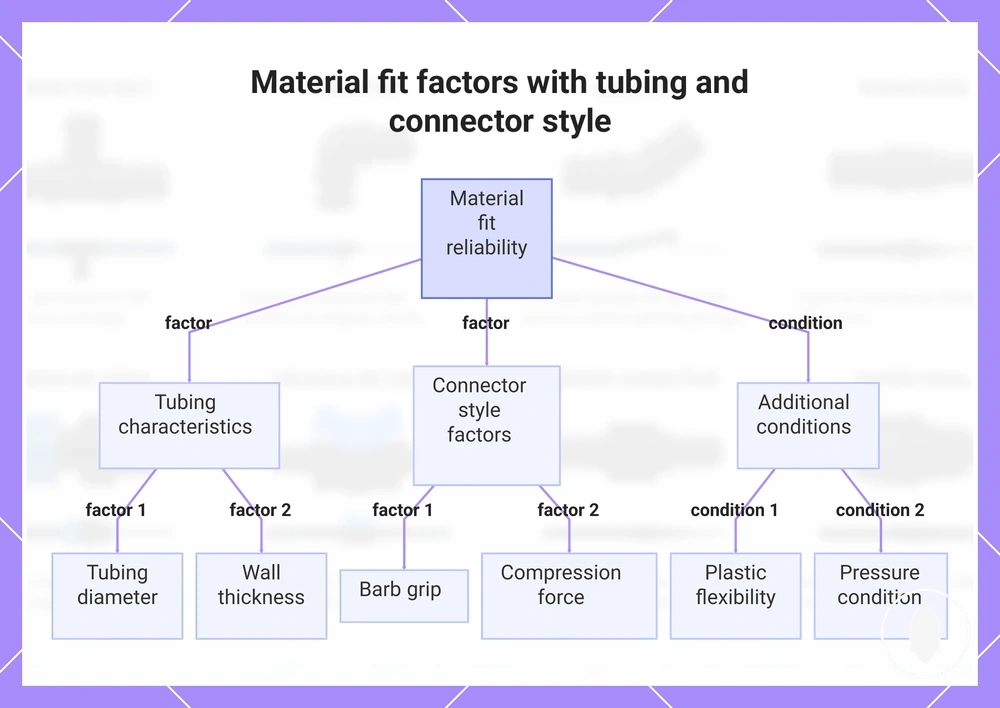
Material fit with tubing and connector style
Material fit depends on how the fitting material, tubing, and connector style work together to create a secure connection. Tubing diameter, wall thickness, barb grip, and compression force all influence fit reliability. A stable connection depends on both material choice and tubing match rather than material alone.
When tubing is used with a drip fitting, the tubing diameter and wall thickness can influence how the connector holds. A mismatch between the tubing structure and fitting design may affect barb grip and compression contact. These conditions help determine how securely the fitting performs within the connection context.
If a fitting does not hold securely, the issue may involve more than the material used. Connector style, barb shape, compression force, plastic flexibility, and pressure condition can influence leak risk or loosening. Evaluating these variables helps identify how fitting design and tubing characteristics interact.
Material fit decisions require both fitting evaluation and size compatibility checks. For additional guidance on matching fittings with tubing requirements, see fit and tubing compatibility.
Compatibility factors to consider:
- Tubing diameter: The tubing size and fitting dimensions need to align for reliable connection behaviour.
- Wall thickness: Tubing structure can influence barb grip and compression contact.
- Barb grip: Connector shape can affect how securely the fitting holds the tubing.
- Compression force: Compression-based connections depend on suitable contact and connection conditions.
- Plastic flexibility: Material flexibility may influence response to movement and temperature changes.
- Pressure condition: Water pressure and tubing movement can influence connection stability.
This chart shows the key factors that influence material fit reliability when using tubing and connector styles, including tubing characteristics, connector style factors, and additional conditions.
Barbed, compression, and lock-ring fit behavior
Barbed fittings, compression fittings, and lock-ring fittings create different fit behavior through their grip design and holding force. Each connector style uses a different mechanism to maintain connection stability, while material stiffness and tubing condition influence the final result. The three local fit behaviours are barb grip, compression force, and locking mechanism response.
For different tubing conditions, connector style can affect how material response influences secure hold, leak risk, and reuse. Barbed fittings rely on grip design, compression fittings rely on compression contact, and lock-ring fittings use a locking mechanism to support retention. These differences are influenced by tubing condition and material stiffness.
| Connector style | How it holds | Material-related caution | Best-fit context |
|---|---|---|---|
| Barbed fittings | Uses barb grip to hold tubing through internal gripping points | Material stiffness and tubing condition can influence tubing hold | Connections where direct tubing grip is suitable |
| Compression fittings | Uses compression force to secure the connection | Wall thickness and material flexibility may affect connection behaviour | Connections where compression contact supports the fitting design |
| Lock-ring fittings | Uses a locking mechanism to support connection retention | Reuse and locking performance may depend on material response and handling | Connections where a locking feature is part of the connector style |
Choosing durable fittings for outdoor use
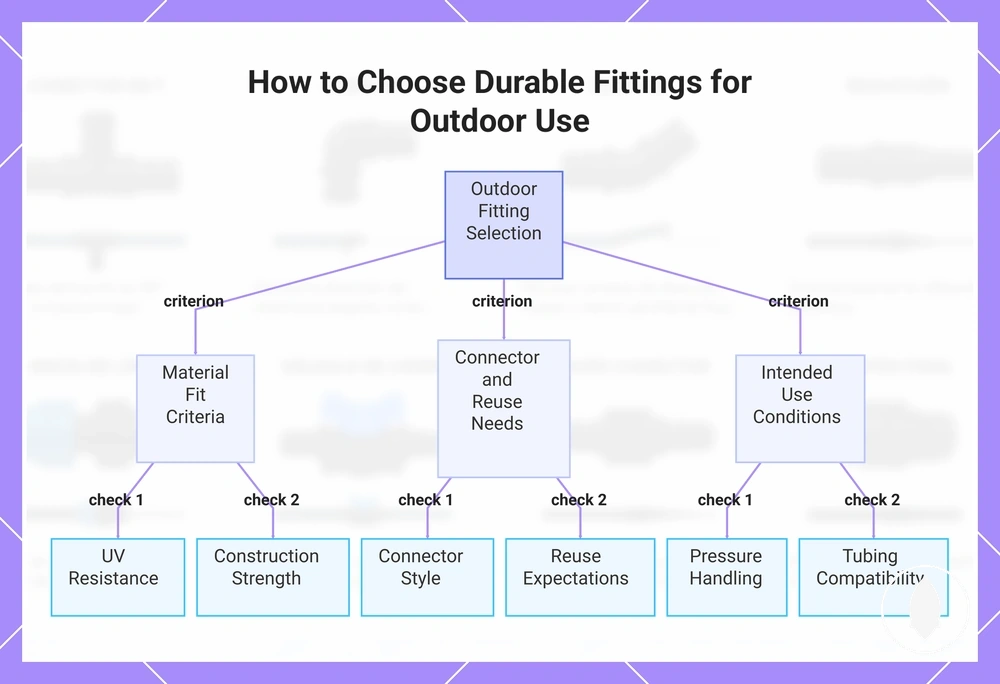
Choosing durable fittings for outdoor use depends on matching material signals, exposure conditions, pressure handling, and tubing compatibility rather than selecting one universal material. Durable fittings are evaluated through UV resistance, construction strength, connector style, and how the fitting responds to its intended environment. The main selection frame is the relationship between fitting attributes and real operating conditions.
For fittings used outdoors year-round, exposure conditions become an important decision factor. UV resistance, weather exposure, moisture, and temperature changes can influence material response over time. A fitting selected for an exposed line may require different durability considerations from one used in a protected or seasonal setup.
Durable fitting choices should be based on clear selection criteria rather than product labels alone. The buying checklist for fittings can help organize decisions around material fit, connector style, and intended use conditions. Important signals include UV resistance, construction strength, pressure handling, and tubing compatibility.
When pressure handling or reuse is important, the fitting design and connection conditions need closer evaluation. Connector style, material resilience, and tubing compatibility can influence secure hold and reuse expectations. Matching pressure conditions, tubing fit, and fitting construction helps reduce compatibility issues.
Durable fittings can involve a balance between durability tradeoffs and value signals. Product examples can support decision-making when they are evaluated by attributes such as material, connector style, and intended application rather than treated as universal recommendations.
The products below are useful examples for comparing available options. Before buying, check that the compatibility criteria, key features, and product details match your needs.
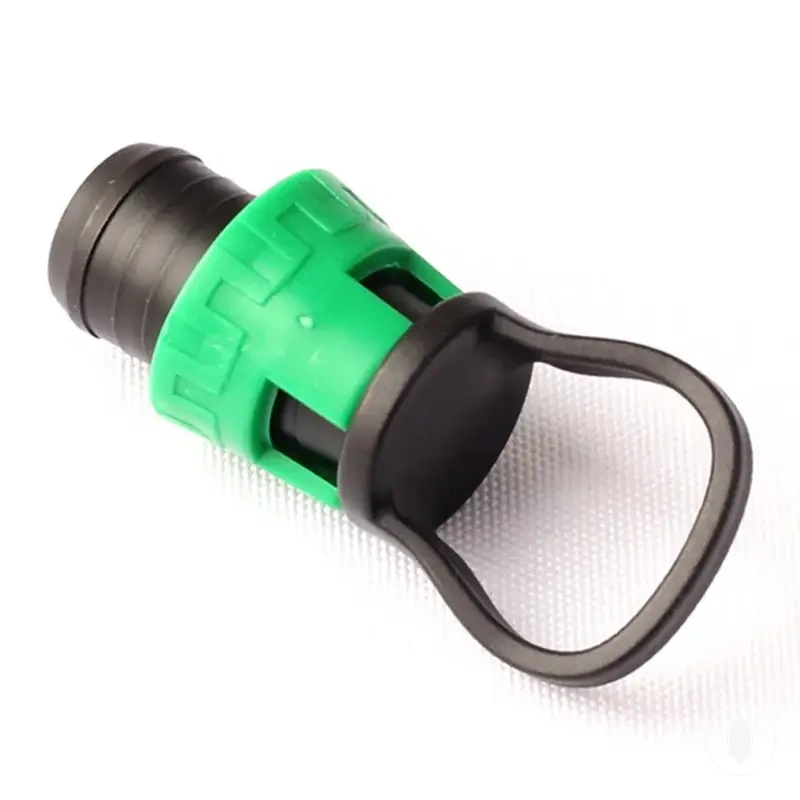
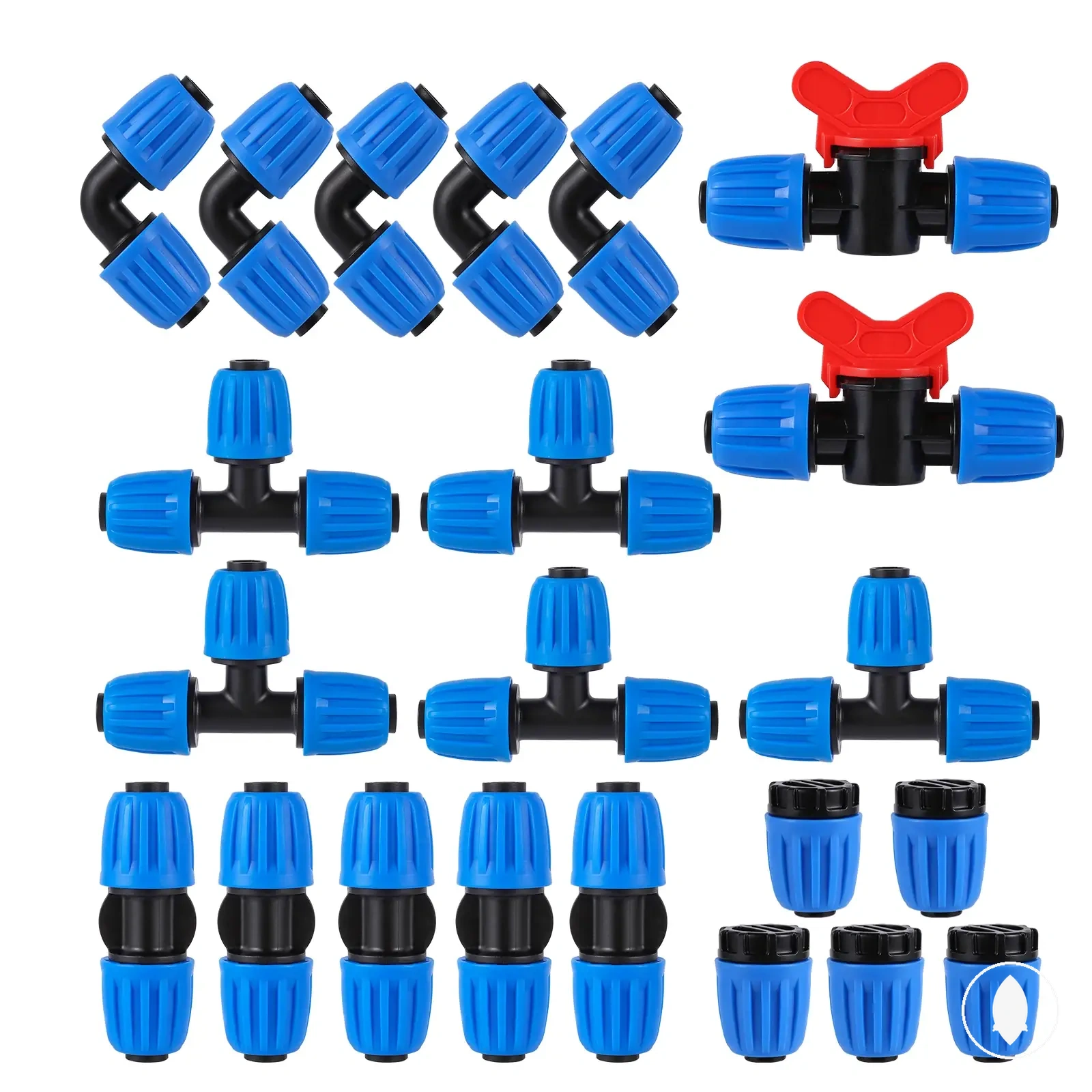
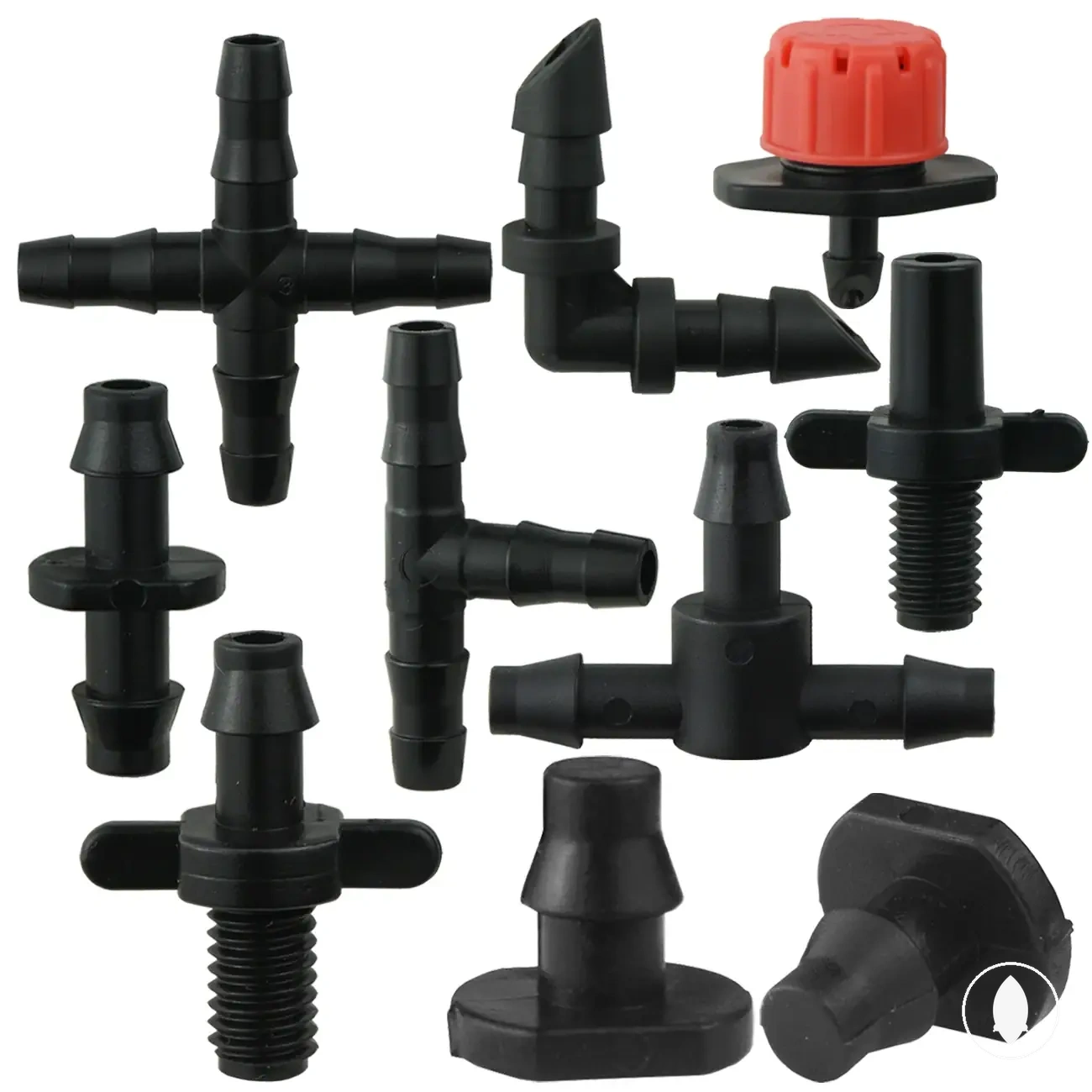
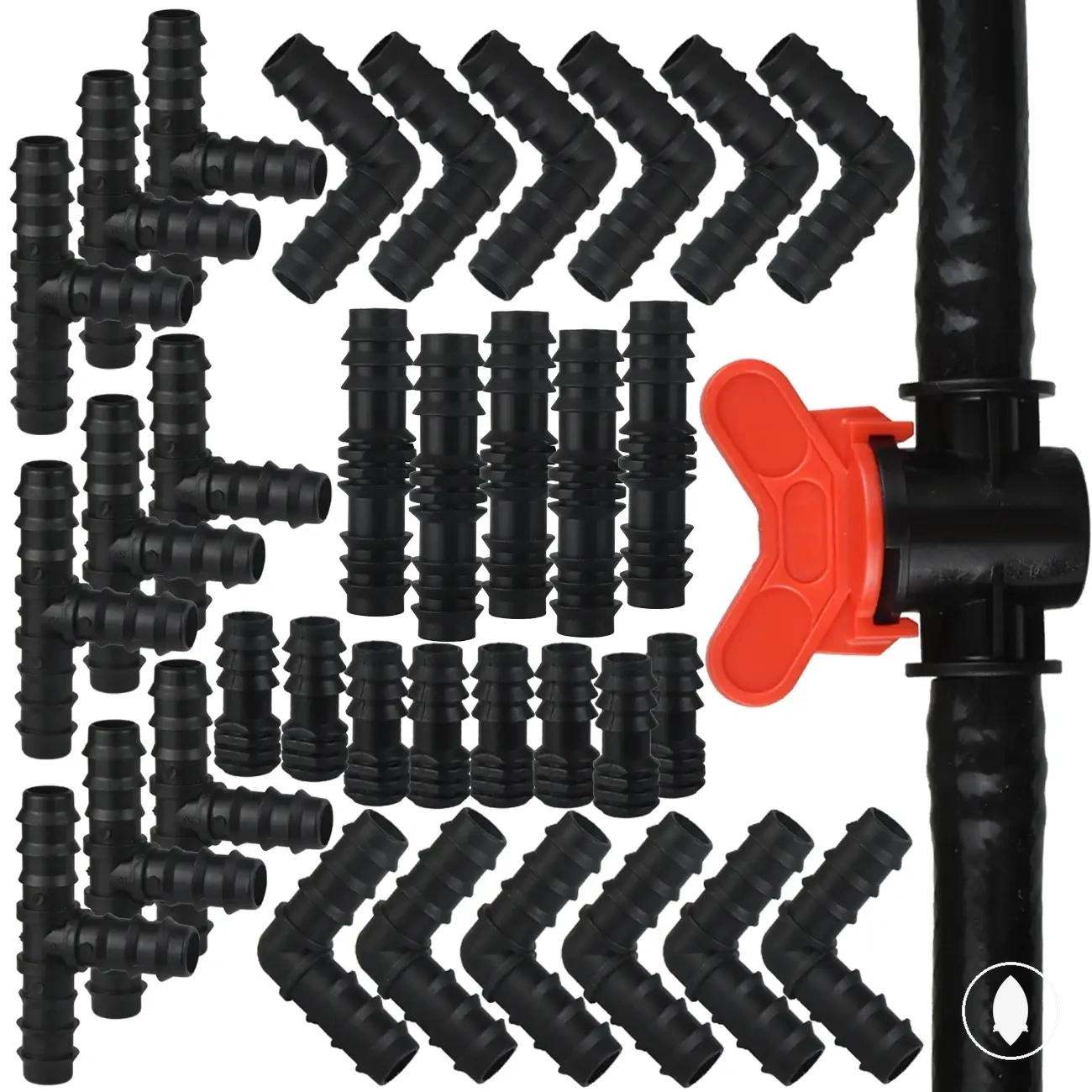
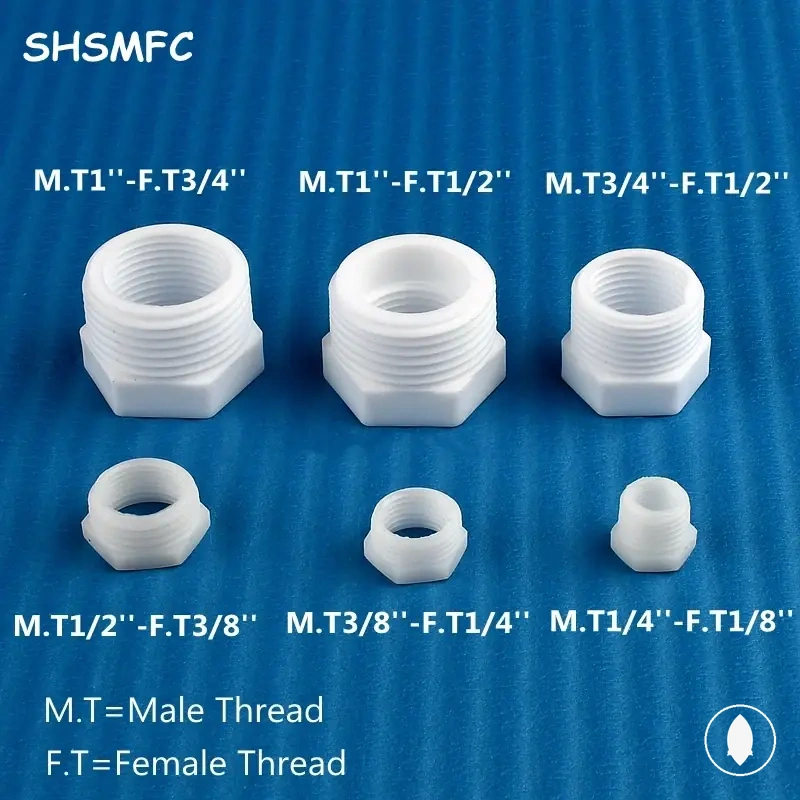
Criteria to consider when choosing durable outdoor fittings:
- UV resistance: Consider how the fitting material may respond to sunlight exposure and outdoor conditions.
- Construction strength: Review connector structure, material resilience, and grip design for the intended use.
- Pressure handling: Match fitting characteristics with water pressure and connection conditions.
- Connector style: Consider how the grip mechanism suits tubing and reuse expectations.
- Tubing compatibility: Check material fit, tubing size, and connection requirements.
- Reuse expectations: Consider whether removal and reinstalling are part of the intended use.
- Value signals: Compare durability factors with the expected use conditions and selection priorities.
This chart outlines the key criteria for selecting durable fittings for outdoor applications, organized by material fit, connector and reuse needs, and intended use conditions.