
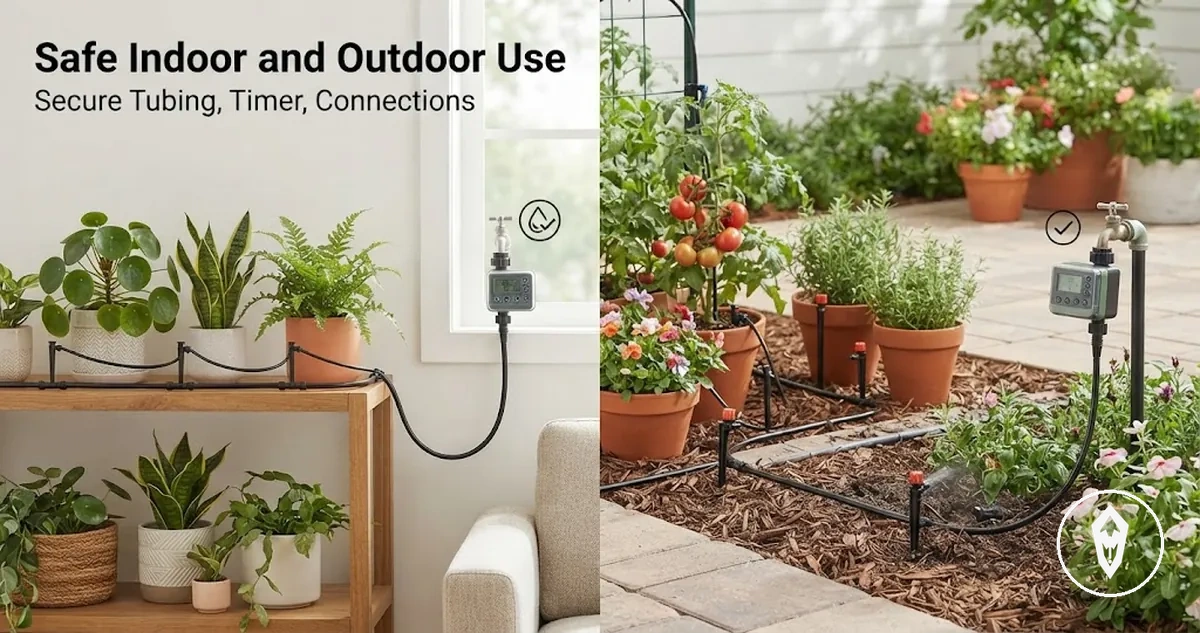
Automatic Watering Kit Safety for Indoor and Outdoor Use
Automatic watering kit safety depends on matching the kit to its environment, water source, placement, control method, and maintenance condition before regular or unattended use. Safe use requires checking how the kit components interact with the surrounding area because water exposure, incorrect placement, or uncontrolled flow can create risks such as leaks, surface damage, or unwanted watering outcomes.

An automatic watering kits system should be evaluated as a connected setup where each component has a defined safety role. The timer controls watering schedules, tubing directs water movement, connectors join system parts, reservoirs hold the water supply, pressure affects water delivery conditions, and the power source influences how electronic controls should be positioned.
Safe use is a conditional outcome rather than a universal feature of every automatic watering kit.
Safe use is a conditional outcome rather than a universal feature of every automatic watering kit. The suitable approach depends on the kit documentation, installation environment, surface conditions, water supply arrangement, and ongoing checks performed before leaving the system unattended. Later sections address indoor leak risks, outdoor exposure, pressure and shut-off considerations, electrical controls, installation validation, and maintenance checks separately.
Table of Contents
Safe Use Conditions for Automatic Watering Kits
Safe use conditions for an automatic watering kit are determined by the environment, water control setup, and component fit before regular operation or unattended watering. A safer setup uses suitable placement, controlled water delivery, secure connections, and appropriate supervision because these conditions help reduce risks from leaks, water damage, electrical exposure, and uncontrolled watering.
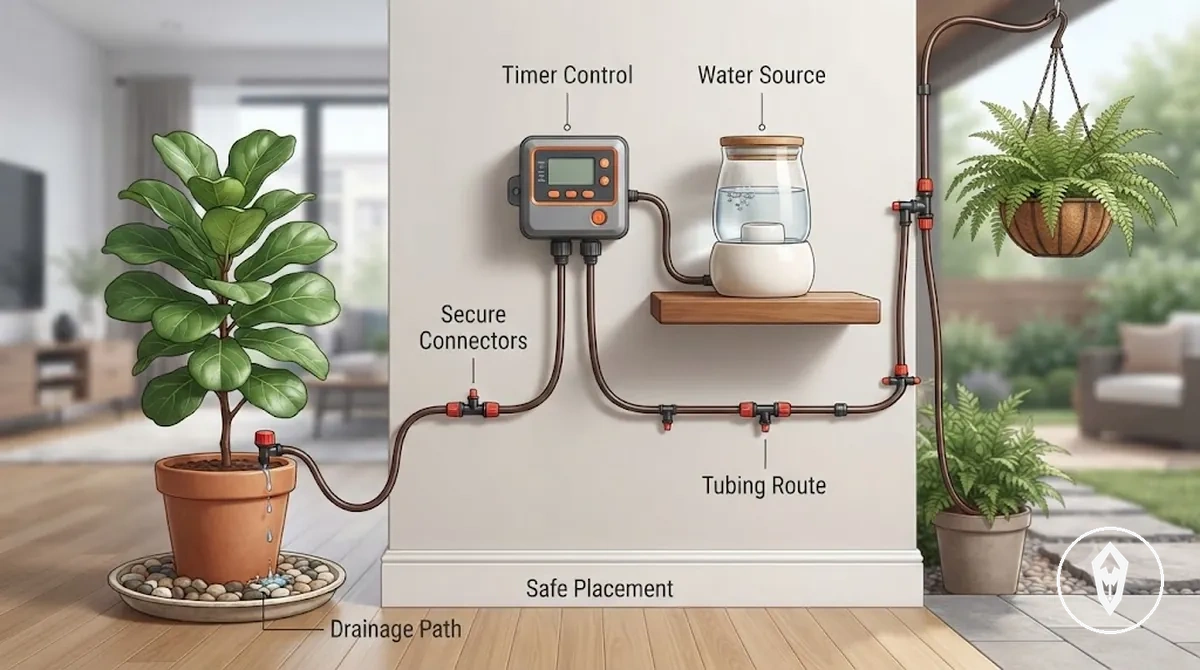
The safety suitability of an automatic watering kit is narrower than general setup compatibility. Compatibility considers whether a kit matches a location or plant setup, while safety conditions focus on whether the arrangement helps prevent avoidable risks through correct water source selection, component positioning, and operating checks. For broader setup matching, see indoor and outdoor compatibility.
- Environment type: The location should match the kit arrangement, with indoor and outdoor areas requiring different checks for moisture exposure, surface protection, and surrounding conditions.
- Water source: The water supply method should match the kit design, including whether water is supplied from a connected source, reservoir, or another supported arrangement.
- Pressure conditions: Water pressure should remain suitable for the kit components because unsuitable pressure conditions can increase stress on tubing, connectors, or outlets.
- Timer protection: Timer placement should protect the control component from unsuitable exposure conditions and allow the watering schedule to be checked before unattended use.
- Connector sealing: Connectors should form secure joins between components because poorly seated connections increase the possibility of water leakage.
- Tubing route: Tubing placement should avoid unnecessary movement, damage points, or positions where water flow could be disrupted.
- Drainage path: The installation area should provide a suitable path for excess water because poor drainage can increase surface moisture and damage risks.
- Supervision level: The amount of monitoring should match the setup conditions, especially before leaving the system operating without direct observation.
Indoor Leak, Spillage, and Surface Protection
Indoor automatic watering kit risks mainly come from leaks, overflow, unstable containers, and unnoticed water movement near indoor surfaces. The level of risk changes according to the surface type, container placement, drainage path, watering duration, and how the system components are positioned and monitored.
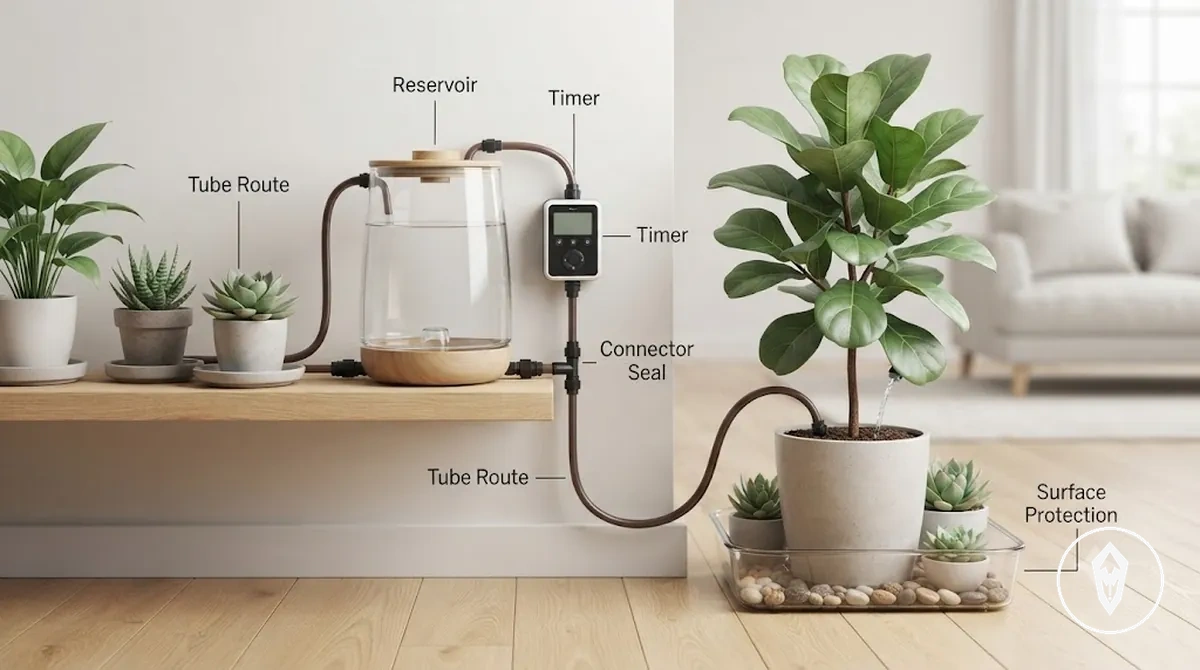
An indoor automatic watering kit should be assessed through the relationship between its parts and the surrounding area. Reservoir position affects stability, pot drainage affects excess water handling, tubing bends affect water movement, connector seals affect leak points, and timer duration affects how much water reaches the container and surrounding surfaces. These conditions become more important in locations such as shelves, windowsills, apartments, or areas near electronics where water exposure can have different consequences.
| Risk Area | Condition to Check | Possible Outcome |
|---|---|---|
| Reservoir position | The reservoir should remain stable and supported in its placement area. | Movement or unstable placement can increase the chance of unwanted water movement. |
| Pot drainage | The container drainage path should match the watering setup. | Limited drainage can increase standing water around the plant container. |
| Tubing and bends | Tubing routes should avoid positions that restrict movement or create stress points. | Restricted flow paths can contribute to uneven water delivery or leakage conditions. |
| Connector seals | Connections between tubing and components should remain properly seated. | Loose connections can create points where water escapes. |
| Timer duration | The watering schedule should be checked against container capacity and drainage conditions. | Unsuitable watering duration can increase overflow risk. |
| Indoor surfaces | Floors, shelves, trays, furniture, and nearby electronics should be considered during placement. | The effect of water exposure depends on the material and surrounding items. |
Indoor surface protection focuses on reducing avoidable water exposure rather than assuming every indoor setup has the same risk level. For symptoms involving leaks, spills, or unexpected water behaviour, see leaks and water problems.
Reservoirs, Tubing, and Connectors Near Indoor Surfaces
Reservoir height, tubing route, connector fit, and surface contact influence indoor leak and spill risk because each component affects how water moves near indoor surfaces. These local checks focus on part placement, support, and connection conditions rather than repeating the broader indoor safety assessment.
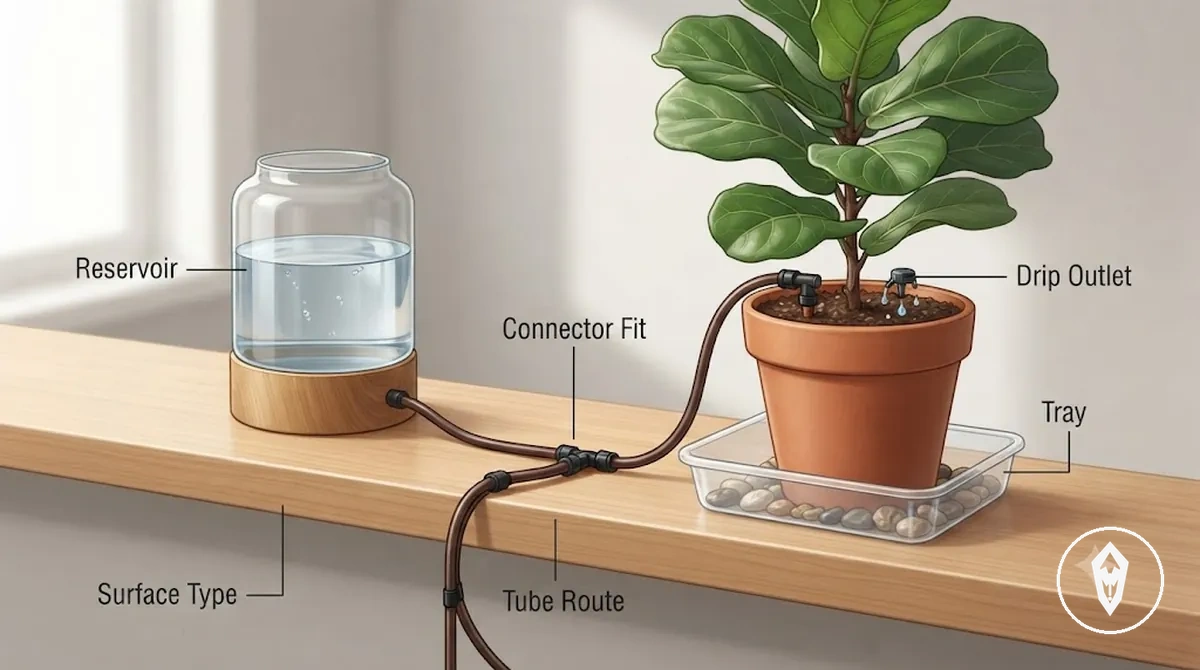
The reservoir position should provide stable support because an unstable container can increase unwanted water movement near nearby surfaces. The tubing route should avoid sharp bends or restricted paths because changes in tube positioning can affect water delivery conditions. Connector fit should be checked at each connection point because poor seating can create local leakage risks.
- Reservoir height: Reservoir height should be checked against its support surface because a raised or unstable position can change how water moves through the setup.
- Tubing route: Tubing placement should avoid pinch points, tight bends, and contact with objects that could alter the tube position.
- Connector fit: Connector joins should remain properly seated because connection points are local areas where water may escape if the fit is unsuitable.
- Drip outlet position: Drip outlets should align with the intended container area so water is directed toward the plant container rather than nearby surfaces.
- Tray and pot edge: Trays and pot edges should support the watering arrangement because their position affects where excess water collects.
- Surface material: Indoor surfaces such as shelves, floors, and furniture should be considered because different materials respond differently to moisture exposure.
Watering Schedules That Reduce Indoor Overflow Risk
Watering schedules reduce indoor overflow risk when timer intervals, flow delivery, drainage conditions, and container capacity are evaluated together before unattended use. A tested schedule helps show how the automatic watering kit responds in a specific setup instead of applying a fixed watering pattern to every indoor environment.
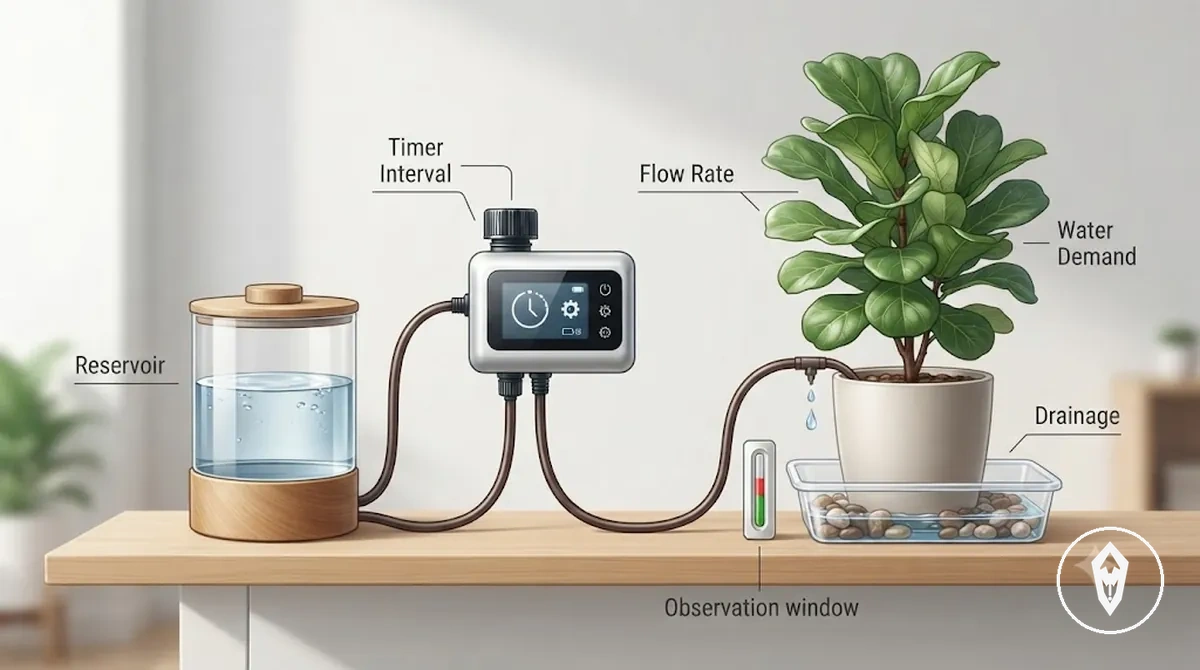
The timer interval should be considered alongside flow rate, plant water demand, pot drainage speed, and reservoir capacity because each factor influences how water collects around the container. A test cycle can be used to observe drainage behaviour and water movement before longer operation, while the result is influenced by emitter output, plant type, potting conditions, and container design.
- Timer interval: The watering interval should be tested with the specific setup to observe how the container responds before regular operation.
- Flow rate: Water delivery speed should be considered because it affects how quickly water reaches the plant area.
- Pot drainage: Drainage speed should be checked because container designs can retain and release water differently.
- Plant demand: Plant water requirements should be considered because different plants use water at different rates.
- Reservoir capacity: Reservoir capacity should be matched with the watering pattern because available water volume influences how the setup operates between checks.
- Test duration: A test period should be used to observe water movement, drainage response, and overflow conditions rather than creating a universal schedule.
Outdoor Weather Exposure and Timer Protection
Outdoor automatic watering kit safety changes when weather exposure, timer protection, tubing stability, and placement conditions are considered together. Rain, irrigation splash, sunlight, wind, movement, and outdoor power exposure create different conditions from indoor use because components remain exposed to changing surroundings.
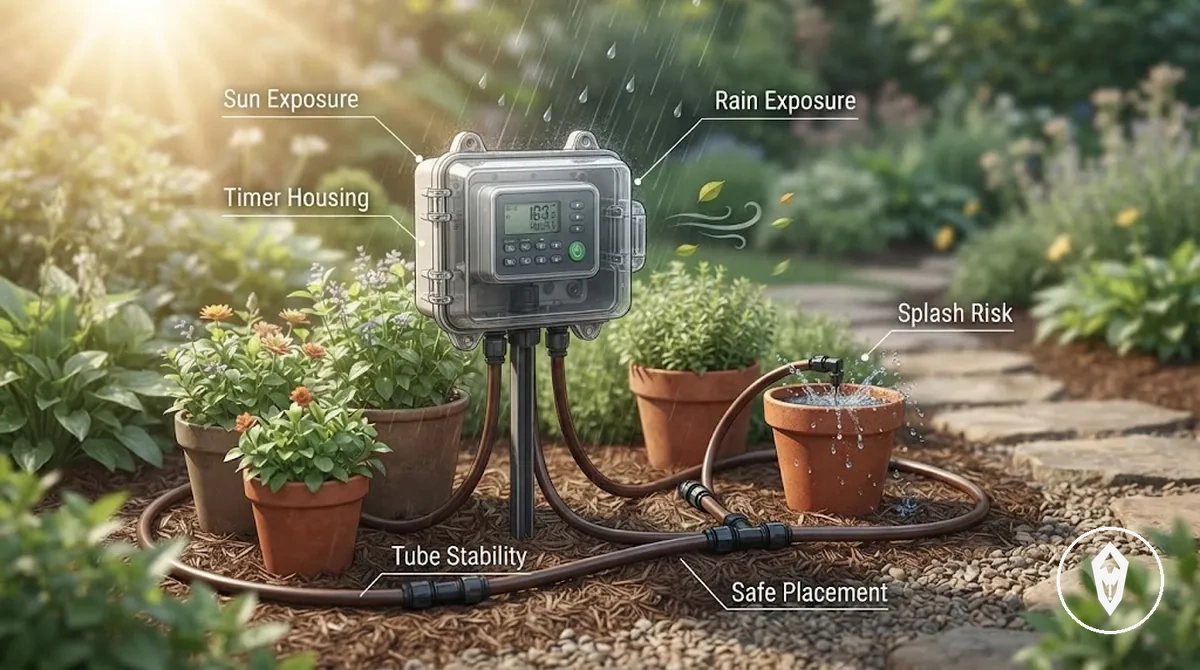
Outdoor safety focuses on exposure management rather than confirming full outdoor compatibility or garden coverage. Protected placement, suitable timer positioning, stable tubing routes, and component placement should be checked according to the kit design, installation position, and surrounding conditions. For broader setup matching between indoor and outdoor environments, see indoor and outdoor compatibility.
- Rain exposure: Direct rain contact should be considered because exposed components may experience different moisture conditions depending on their placement and protection features.
- Irrigation splash: Nearby watering activity should be considered because repeated splash exposure can change component placement and surface conditions.
- Sun exposure: Sunlight exposure should be considered because outdoor conditions can influence material condition over time.
- Wind movement: Tubing and connected parts should remain positioned securely because movement can affect stability and connection conditions.
- Soil movement: Ground changes should be considered because shifting outdoor surfaces can alter tubing and component positions.
- Pets and foot traffic: Areas with regular movement should be considered because contact can disturb exposed components.
- Timer housing: Timer protection should be checked against the stated protection level, sealing, orientation, and installation position because these conditions influence outdoor use suitability.
- Outdoor power exposure: Powered components should be positioned according to their intended use conditions because water exposure and electrical placement require separate safety checks.
Waterproof Timer Placement and Outdoor Ratings
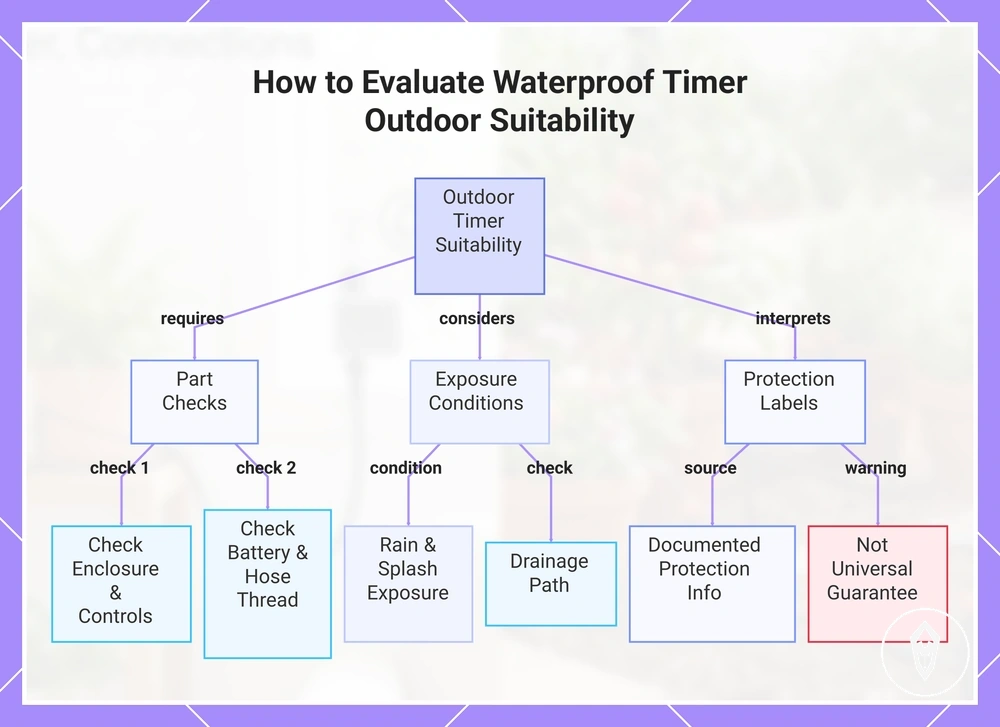
Waterproof timer claims should be interpreted through placement, documented protection information, cover protection, and exposure direction rather than treated as a universal protection guarantee. A timer’s outdoor suitability depends on how the timer body, screen, buttons, battery door, and connection areas are positioned within the installation environment.
Timer placement, sealing condition, orientation, and exposure conditions provide the context needed to evaluate outdoor use suitability.
Terms such as water-resistant, weatherproof, and waterproof should only be distinguished according to the product documentation because these labels may describe different levels of protection. Timer placement, sealing condition, orientation, and exposure conditions provide the context needed to evaluate outdoor use suitability.
- Timer body: The timer enclosure should be checked against the documented protection information because housing design affects how moisture exposure is managed.
- Screen and buttons: Control areas should be considered during placement because exposed surfaces may have different protection conditions from covered components.
- Battery door: The battery compartment should be checked for its sealing condition because this area can influence moisture exposure around the power section.
- Hose thread: The hose connection orientation should be considered because the connection area can experience different exposure conditions depending on positioning.
- Rain and splash exposure: Water contact conditions should be evaluated because direct rain and nearby splash create different exposure scenarios.
- Drainage path: Timer placement should allow surrounding water to move away from the device because standing moisture can change local exposure conditions.
This chart shows how to interpret waterproof timer claims and evaluate outdoor suitability through component checks, exposure conditions, and protection label understanding.
Tubing Stability Around Sun, Wind, and Foot Traffic
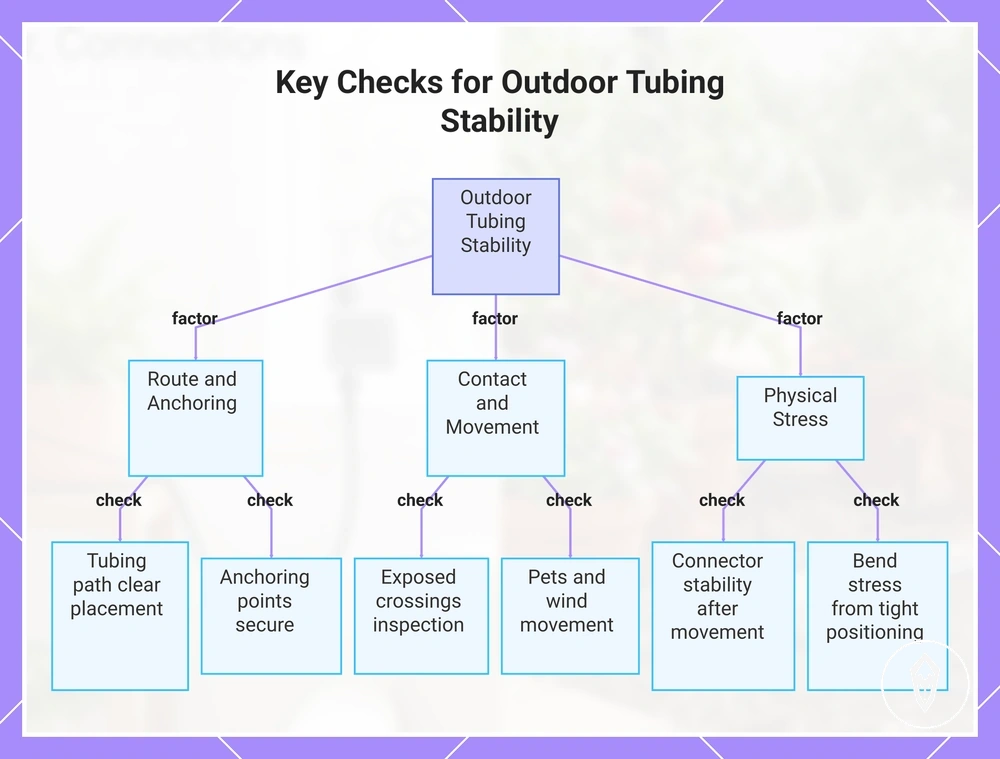
Outdoor tubing stability affects safety when tubing paths, anchoring points, exposed crossings, and stress areas are exposed to movement or contact. A stable route helps reduce risks from trips, disconnections, kinks, and emitter movement, while tubing condition depends on physical exposure, material condition, and environmental changes.
- Tubing path: The route should be checked for clear placement because walkways, balcony edges, and frequently used areas can increase contact and movement risks.
- Anchoring points: Support points should keep tubing positioned securely because wind movement or surface changes can alter the route.
- Exposed crossings: Tubing across movement areas should be inspected because foot traffic or accidental contact can disturb connections or emitter positions.
- Connectors: Connector areas should be checked after movement because physical stress can affect connection stability.
- Bends and stress points: Bends should be reviewed because tight positioning or repeated movement can create local stress areas.
- Sun exposure: Exposed tubing should be monitored because sunlight and material ageing can influence flexibility and physical condition over time.
- Pets and wind exposure: Outdoor movement from pets or wind should be considered because contact or shifting conditions can change tubing placement.
This chart shows the main stability checks for outdoor tubing, covering route placement, movement risks, and physical stress points.
Pressure, Backflow, and Shut-Off Safety
Pressure level, backflow risk, connector tolerance, and shut-off behaviour affect automatic watering kit safety because water-control conditions influence the risk of leaks, uncontrolled flow, or unwanted water movement. These attributes should be evaluated together with the water source, connected components, and installation conditions before leaving a system operating without direct checks.
For criteria related to pressure and flow behaviour, see pressure and flow safety .
Water-control attributes should be assessed by how they influence component stress and water containment. For criteria related to pressure and flow behaviour, see pressure and flow safety.
| Attribute | Safety Consideration | Risk Condition |
|---|---|---|
| Water source | The water supply arrangement should match the connected automatic watering kit components and operating conditions. | Unsuitable supply conditions can increase stress on connected parts. |
| Pressure regulator | A regulator can be considered when the water source conditions require additional pressure control for the connected components. | Uncontrolled pressure conditions can increase the possibility of leaks or component stress. |
| Low-pressure conditions | Water delivery conditions should be checked when the system requires consistent operation across connected components. | Unsuitable pressure conditions can affect expected water movement. |
| Connector tolerance | Connectors should match the system connections and remain securely fitted. | Poor fit or unsuitable connections can create local leakage points. |
| Tubing tolerance | Tubing condition should be suitable for the installation environment and connected components. | Unsuitable tubing conditions can affect water containment. |
| Backflow prevention | Backflow protection should be checked when the water arrangement requires separation between water paths. | Missing or unsuitable prevention measures can allow unwanted reverse water movement. |
| Valve closure and timer failure | Shut-off behaviour should be checked according to the system design and control method. | Failure to stop water movement as expected can increase leak or overflow risks. |
A regulator check is relevant when the water source conditions require additional control, while backflow and shut-off checks are relevant when the setup includes connected water paths or unattended operation. These checks help identify whether the water-control arrangement is suitable before relying on automatic operation.
Pressure Regulators and Low-Pressure Kit Limits
Pressure regulation can help reduce connector stress and leak risk when the water source conditions do not match the automatic watering kit requirements. The need for regulation or low-pressure checking should be assessed through the water source type, kit documentation, tubing condition, connector tolerance, and emitter output.
- Mains tap pressure: Mains-fed systems should be checked against the kit requirements because supply conditions can affect stress on connected components.
- Gravity-fed pressure: Gravity-fed systems should be evaluated based on the available water supply arrangement because lower pressure conditions can affect water delivery behaviour.
- Pump pressure: Pump-fed systems should be checked against the connected kit components because changing supply conditions can influence tubing and connector performance.
- Pressure regulator fit: A regulator should only be considered when the water source conditions require additional control and the regulator connection matches the kit setup.
- Tubing rating: Tubing suitability should be verified for the intended installation conditions because unsuitable tubing can affect water containment.
- Connector tolerance: Connector fit should be checked because compatibility between connected parts influences local leak risk.
- Emitter output: Emitter output should be considered because water delivery characteristics affect how the system responds under different source conditions.
Low-pressure kit limits should be interpreted through the kit documentation rather than a universal pressure value. Checking source compatibility, regulator fit, and component suitability before regular use helps determine whether the automatic watering kit arrangement matches the intended operating conditions.
Backflow Prevention and Automatic Shut-Off Protection
Backflow prevention and automatic shut-off protection reduce water-source and uncontrolled watering risks when the connection type, kit design, and installed components provide suitable control. These features should be verified because automatic watering kits differ in how they manage reverse water movement, water flow stopping, and source protection.
The relevant checks depend on whether the system uses a tap connection, reservoir supply, or pump arrangement.
The relevant checks depend on whether the system uses a tap connection, reservoir supply, or pump arrangement. Backflow components, shut-off behaviour, and manual controls should be reviewed according to the specific kit design rather than assumed as standard features.
- Tap connection: The connection method should be checked because the water source arrangement influences whether backflow protection is needed.
- Non-return valve: The presence of a non-return valve should be verified because not every automatic watering kit includes this feature.
- Siphoning path: The water path should be reviewed because reservoir position and height differences can influence unwanted water movement.
- Valve closure: Automatic shut-off behaviour should be checked because stopping water flow depends on the installed valve and control design.
- Timer failure state: The system response during timer issues should be verified because different designs handle uncontrolled watering conditions differently.
- Reservoir height: Reservoir placement should be considered because height differences can influence water movement in some configurations.
- Manual shut-off access: A manual shut-off point should remain accessible because it allows water flow control during checks or adjustments.
Electrical Safety Around Timers and Smart Controls
Electrical safety around automatic watering kit controls depends on the power type, water exposure, cable routing, device rating information, and failure behaviour of the connected components. Timers and smart controls require different safety checks from mechanical parts because powered components introduce additional placement considerations near water.
This section focuses on safe placement and risk recognition rather than electronics troubleshooting or repair.
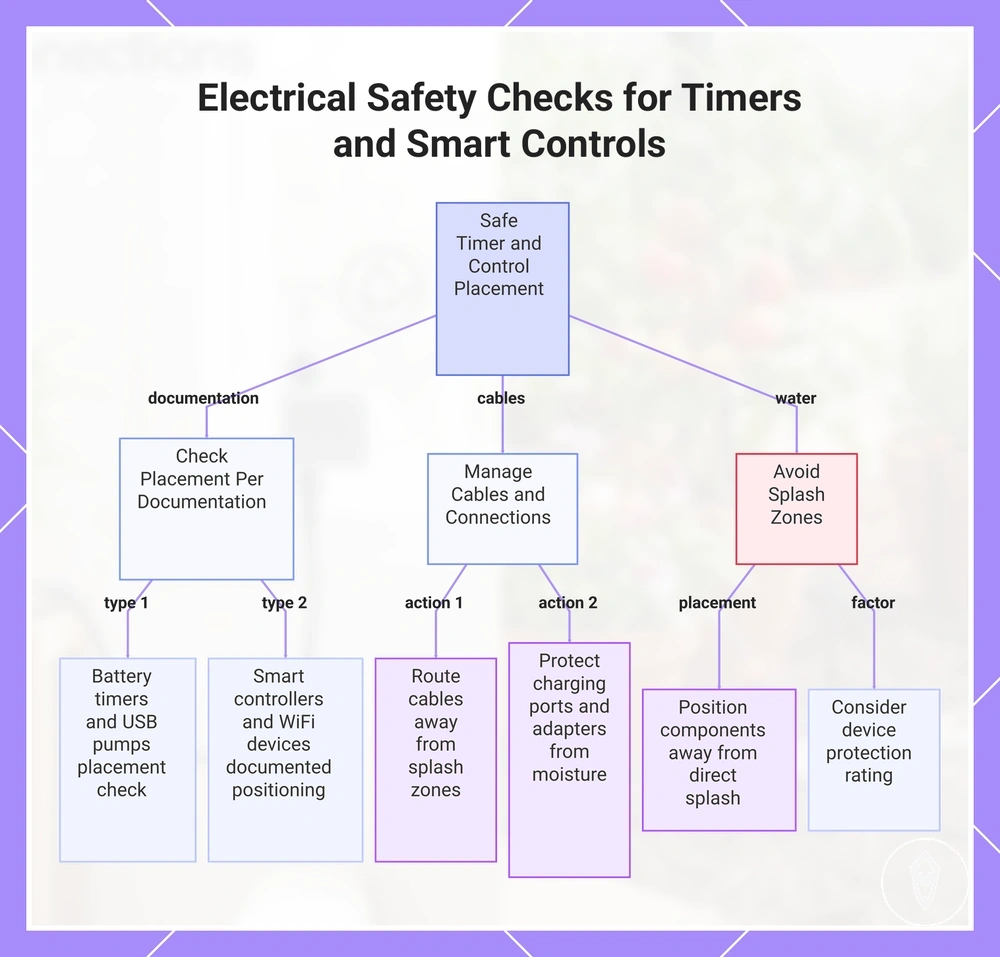
This section focuses on safe placement and risk recognition rather than electronics troubleshooting or repair. Battery timers, USB-powered pumps, smart controllers, WiFi devices, charging ports, cables, adapters, and sockets should be assessed according to their design documentation and installation environment.
- Battery timer: Battery-powered timers should be checked for suitable placement because battery compartments and control areas have their own exposure conditions.
- USB-powered pump: USB-powered pumps should be positioned according to the power connection design because cable connections and charging areas require suitable protection from water exposure.
- Smart controller: Smart controllers should be checked according to their documented placement conditions because powered controls require suitable positioning near moisture sources.
- WiFi device: WiFi-enabled controls should be placed according to the device documentation because wireless operation does not remove the need for safe power and moisture management.
- Cable routing: Cables should be arranged away from splash zones because cable position affects exposure to water and physical contact.
- Charging ports: Charging areas should be protected from unsuitable moisture exposure because connection points require careful placement.
- Adapters and sockets: Power adapters and sockets should be positioned according to their intended use conditions because nearby water exposure changes the risk conditions.
- Splash zones: Control components should be placed away from direct splash areas because water exposure depends on device design, protection information, and installation position.
This chart shows the key safety checks for timer and smart control placement, organized by documentation, cable management, and water exposure avoidance.
Battery, USB, and WiFi-Controlled Watering Devices
Control type changes the electrical safety checks for automatic watering devices because battery, USB-powered, and WiFi-controlled systems have different power connections, exposure points, and placement considerations. The control type does not automatically determine safety; housing condition, charging location, cable routing, signal dependence, and water proximity influence the relevant checks.
| Control Type | Exposure and Placement Check | Failure Behaviour Consideration |
|---|---|---|
| Battery device | The battery compartment and housing should be checked because sealing condition and moisture exposure affect placement suitability. | Battery operation should be assessed according to the device design and documented operating conditions. |
| USB-powered device | The USB cable route and charging location should be checked because connection points require careful positioning near water. | Power connection conditions should be considered because cable position and charging access affect exposure risk. |
| WiFi-controlled device | The smart controller housing and power placement should be checked because wireless control does not remove moisture and placement considerations. | Signal dependence and power conditions should be considered because control behaviour relies on the connected system design. |
Power Failure and Water Shut-Off Behaviour
Water shut-off behaviour should be verified before unattended use because power loss, battery failure, signal loss, timer control issues, pump stoppage, and valve conditions can change how an automatic watering kit manages water movement. A system should not be assumed to stop water flow during a failure condition unless the specific design documentation confirms that behaviour.
- Power loss: The response to power interruption should be checked because powered controls may handle water flow differently depending on the valve and control design.
- Battery failure: Battery condition should be monitored because depleted batteries can affect timer operation and scheduled control functions.
- Signal loss: Wireless control behaviour should be verified because communication loss can affect connected control functions according to the system design.
- Stuck valve: Valve operation should be checked because a valve that does not change position as expected can affect water shut-off behaviour.
- Pump stoppage: Pump behaviour should be considered because stopping or loss of pump operation changes water delivery conditions.
- Open tap state: The tap position should be checked because a connected water source may continue supplying water when other controls stop operating.
- Reservoir siphoning: Reservoir height and tubing arrangement should be reviewed because siphoning conditions can influence unwanted water movement.
- Manual shut-off access: A manual shut-off point should remain accessible because it provides a way to control water flow during checks or unexpected conditions.
Safe Installation Checks Before Regular Use
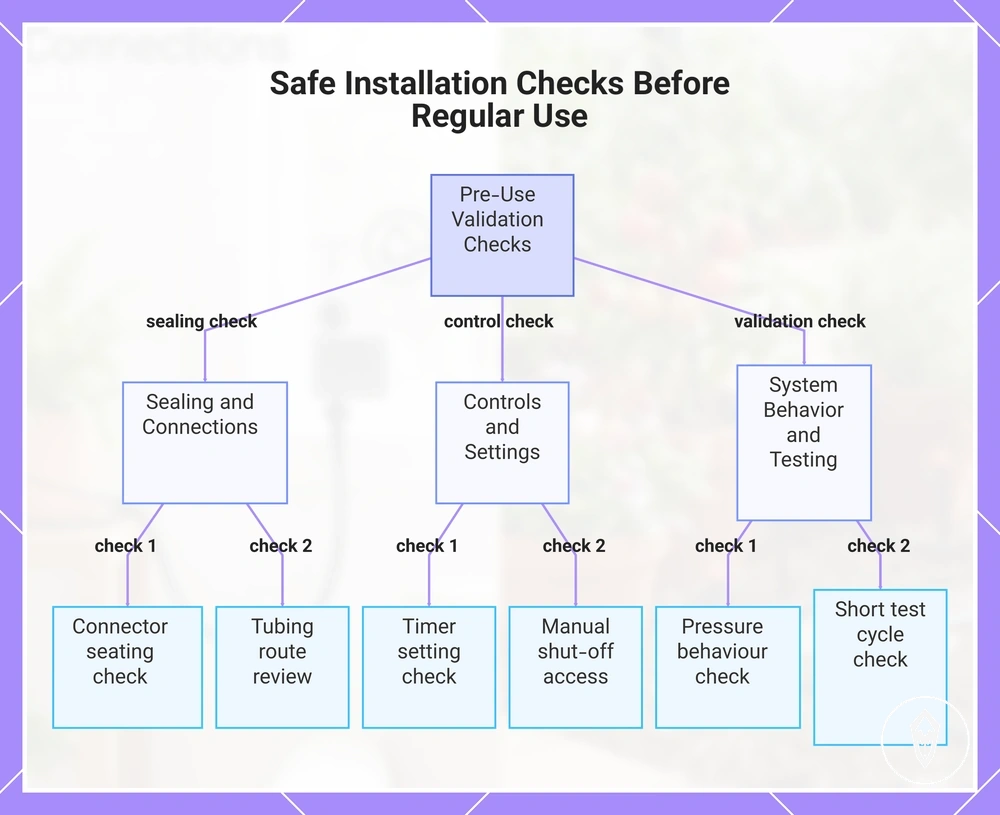
Safe installation checks confirm that an automatic watering kit setup is sealed, stable, controlled, and suitable for its environment before regular or unattended use. These checks validate the completed system rather than explain assembly, with each component reviewed for conditions that could affect safe operation.
These validation checks complement the safe installation steps by focusing on post-setup conditions that should be confirmed before ongoing use.
These validation checks complement the safe installation steps by focusing on post-setup conditions that should be confirmed before ongoing use.
- Connector seating: Check that connectors are properly seated because loose connections or unsuitable fits can create local leak risks during operation.
- Tubing route: Review the tubing path because movement, exposed sections, or unsuitable positioning can affect water delivery and physical safety conditions.
- Emitter position: Confirm emitter placement because the outlet position affects where water is delivered and how nearby surfaces respond.
- Timer setting: Verify timer settings because watering schedules determine when water is released and should match the intended setup conditions.
- Pressure behaviour: Observe system response because pressure conditions can influence connector stress and water movement during operation.
- Power placement: Check powered component locations because proximity to water and placement conditions influence electrical safety considerations.
- Manual shut-off access: Confirm access to manual water controls because quick flow interruption may be needed during checks or unexpected conditions.
- Drainage path: Review drainage conditions because excess water movement can affect indoor surfaces, outdoor areas, and the surrounding installation environment.
- Short test cycle: Run a brief test cycle because observed results can reveal unexpected leaks, water movement, or control behaviour before unattended use.
This chart shows the key validation checks to confirm an automatic watering kit is sealed, stable, controlled, and safe before regular use.
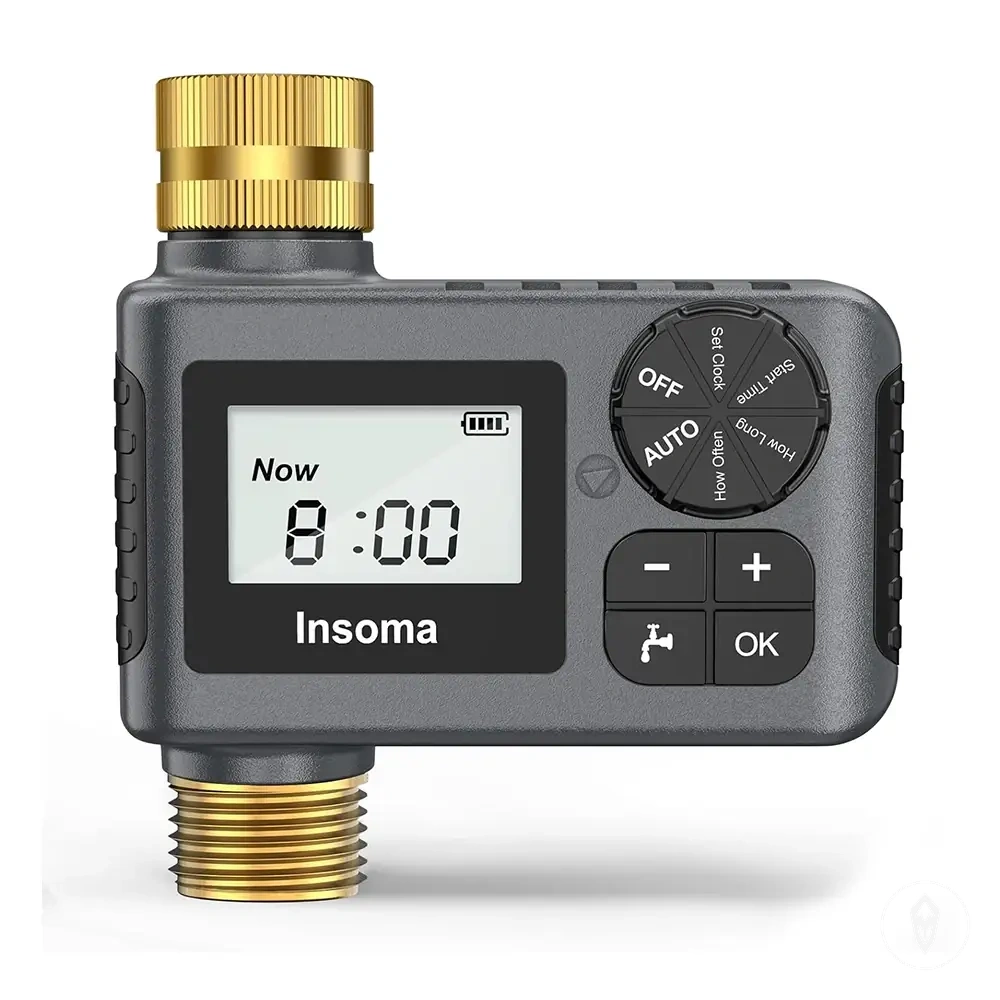
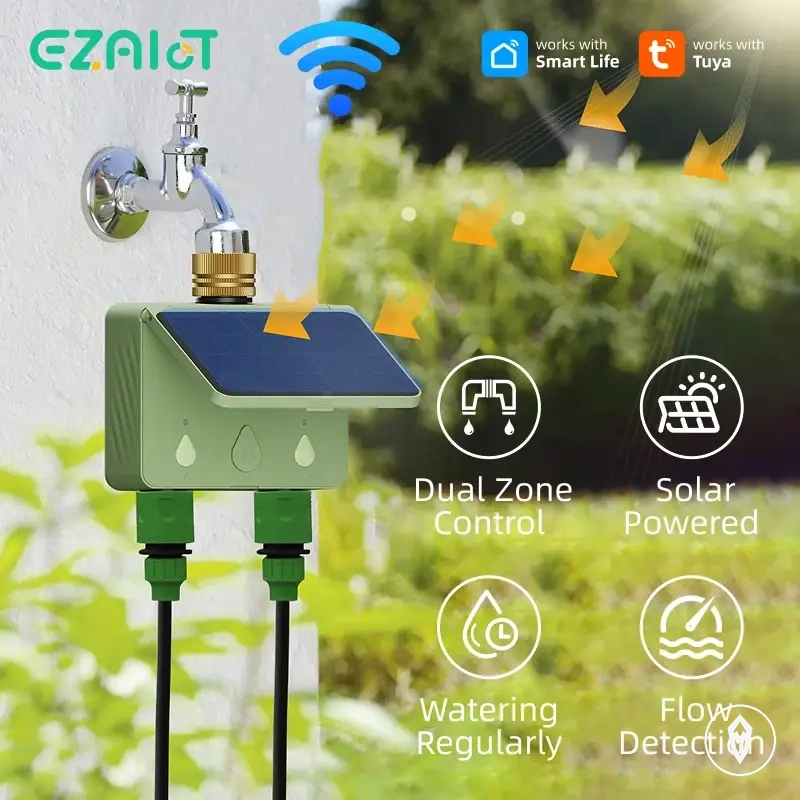
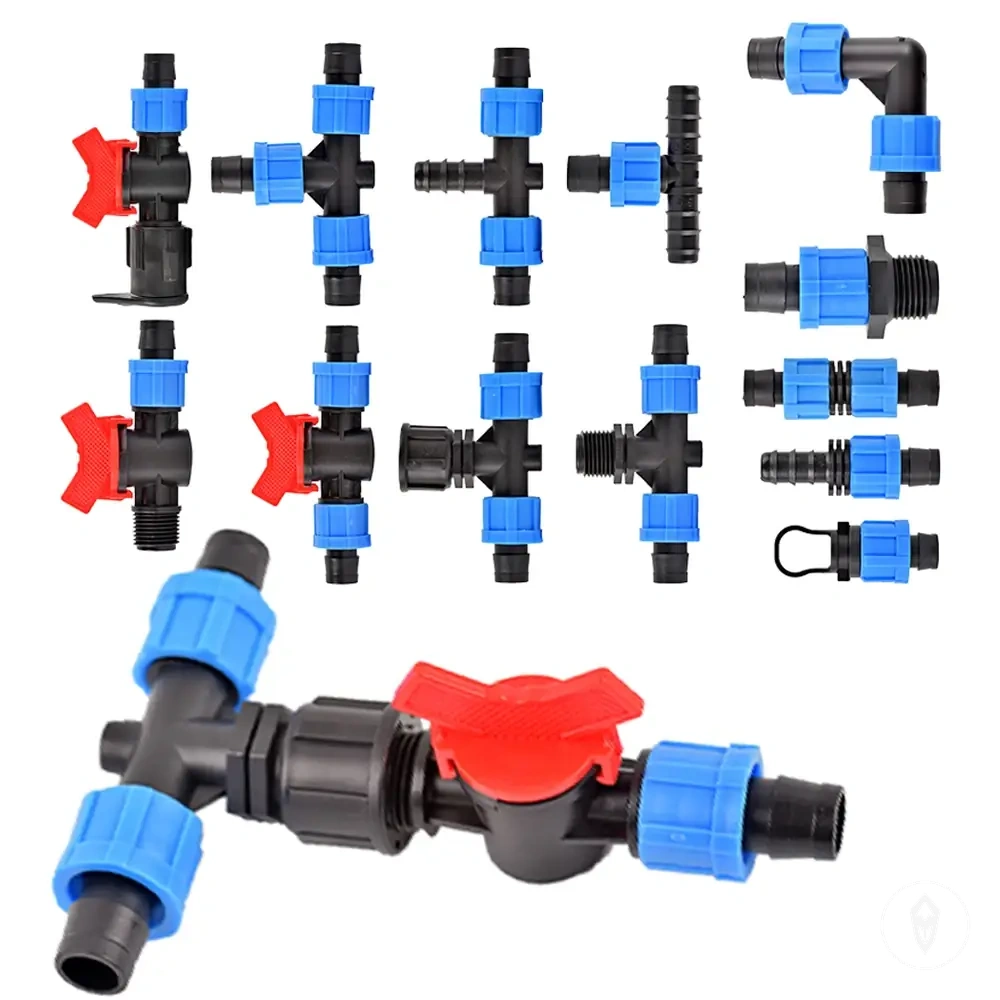
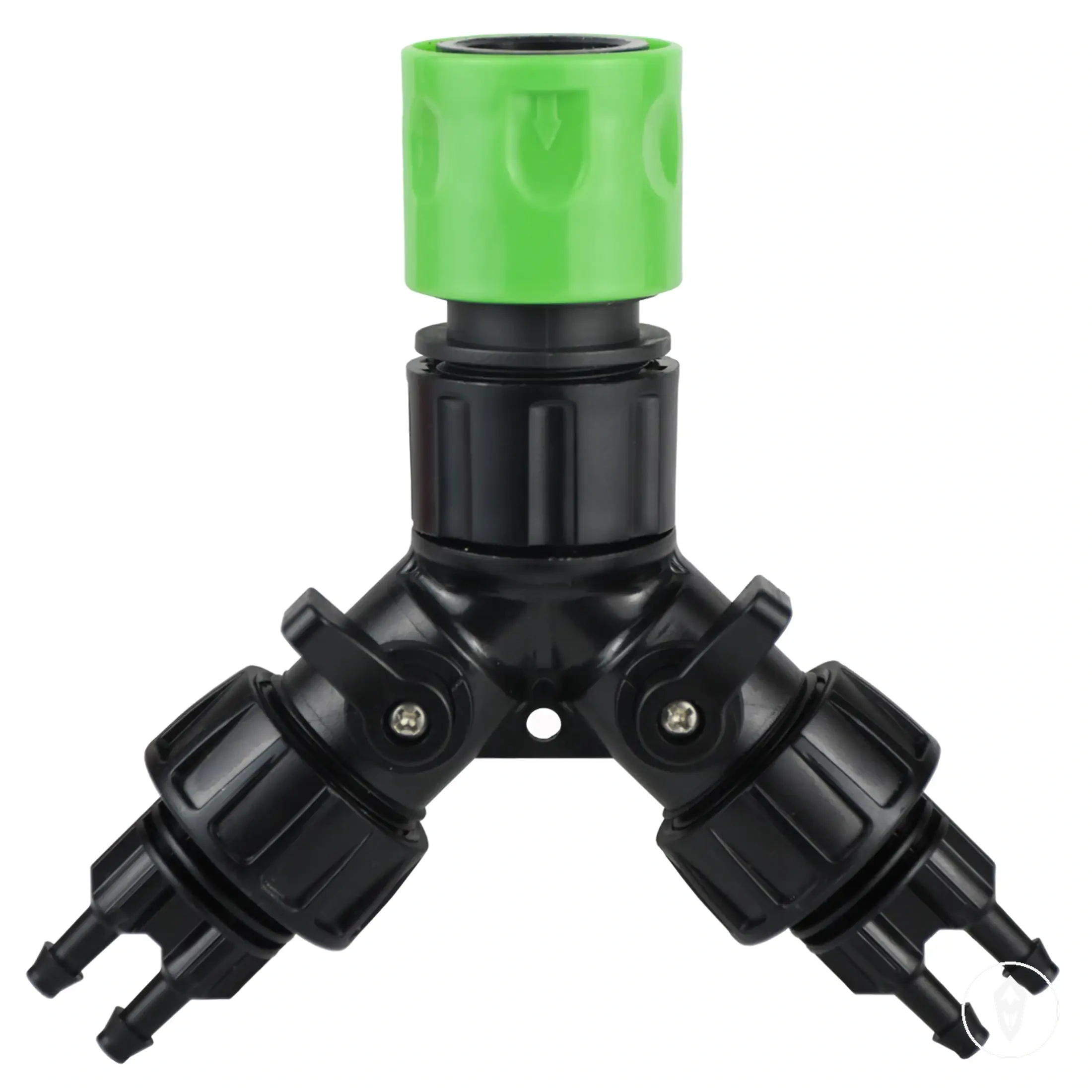
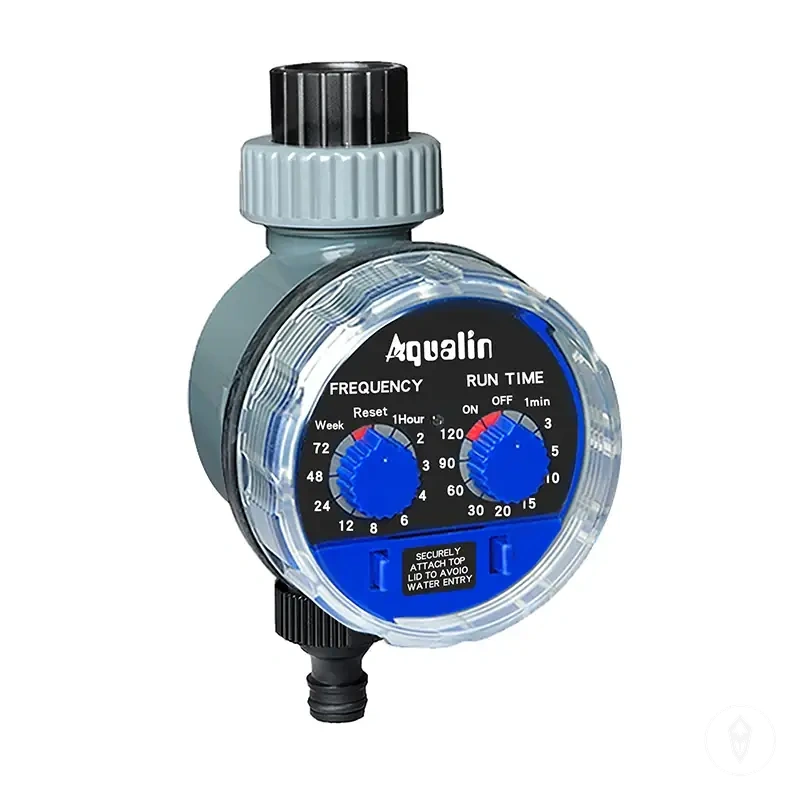
Here are product examples that may make comparison easier. Before buying, always review the compatibility criteria, essential features, and product details.
Ongoing Safety Checks for Leaks, Damage, and Blockages
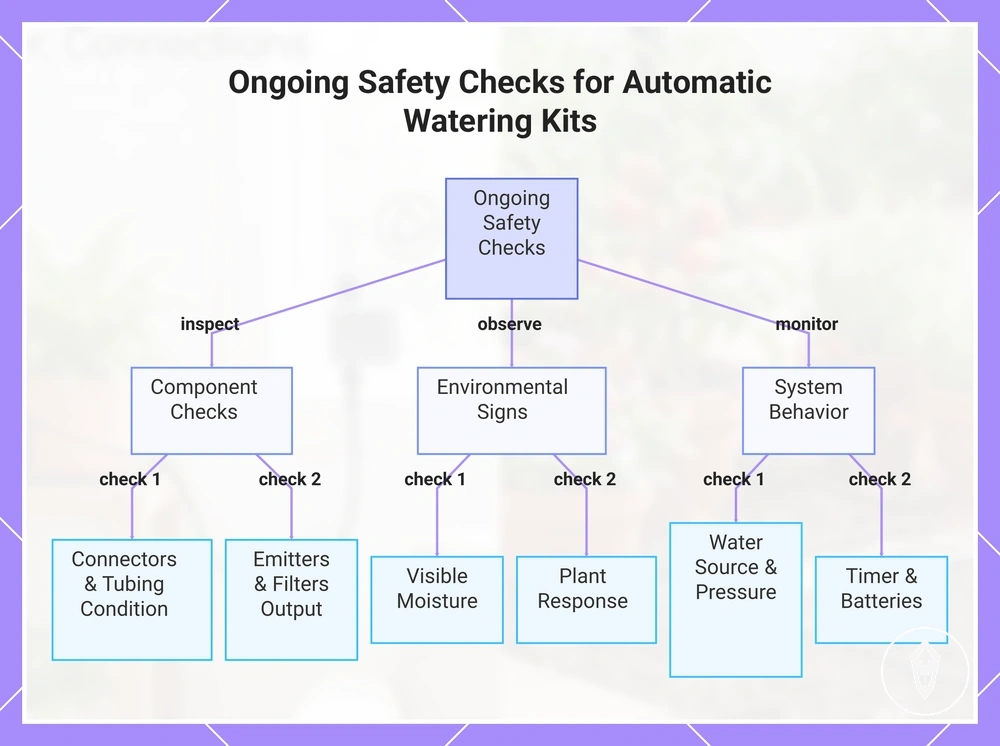
Ongoing safety checks help keep an automatic watering kit safe after installation by identifying leaks, wear, blockages, pressure changes, and timer issues before they affect the surrounding environment. Regular inspection focuses on symptoms and component condition because connectors, tubing, emitters, filters, controls, and water sources can change during continued use.
When visible leaks or unexpected water behaviour appear, see leaks and water problems for issue-specific guidance.
These checks support maintenance for safe use by focusing on safety-related inspection points rather than replacing a complete maintenance routine. When visible leaks or unexpected water behaviour appear, see leaks and water problems for issue-specific guidance.
- Connectors: Check connectors for looseness or visible moisture because connection changes can indicate a need to reseat or replace a damaged part.
- Tubing: Inspect tubing for visible wear, movement, or damage because physical condition can affect water containment and delivery.
- Emitters: Review emitter output because reduced or uneven delivery can indicate blockage or a change in the watering path.
- Filters: Check filters for restricted flow because blockage conditions can affect water movement through the system.
- Timer housing and batteries: Inspect timer condition and battery status because control changes can affect scheduled watering behaviour.
- Water source and pressure behaviour: Observe supply conditions because changes in the water source or pressure response can affect connected components.
- Visible moisture: Check surrounding surfaces for unexpected moisture because water outside the intended path can indicate a leak or drainage issue.
- Plant response: Observe plant condition because unusual dryness or excess moisture can indicate changes in watering delivery.
- Surface damage: Review nearby surfaces because marks, standing water, or material changes can signal a need to pause and investigate the setup.
Pause the kit when visible leaks, unexpected water movement, or component damage require inspection. Cleaning may be relevant for blockages, replacing a connector may be relevant for damaged joins, reducing pressure may be relevant when pressure behaviour affects components, and leak investigation may be needed when the source of moisture is unclear.
Pause the kit when visible leaks, unexpected water movement, or component damage require inspection.
This chart shows the key inspection points for ongoing safety checks, grouped into component checks, environmental signs, and system behavior.
Here are product examples that may make comparison easier. Before buying, always review the compatibility criteria, essential features, and product details.