
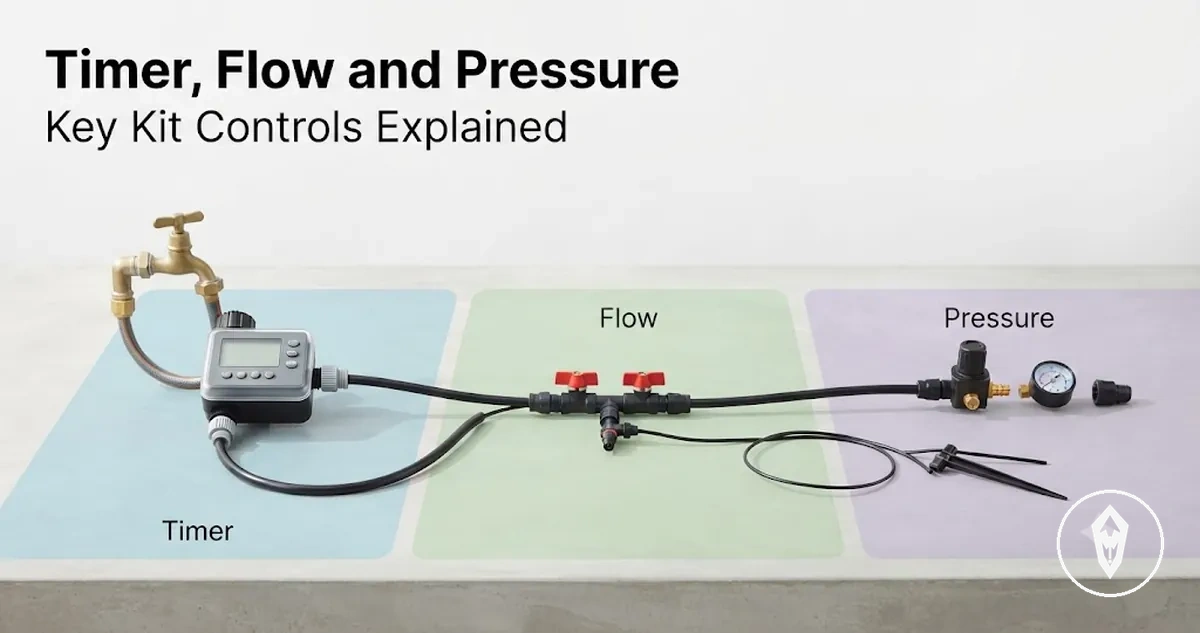
Automatic watering kit control guide for timers, flow, and pressure
An automatic watering kit control system connects timer scheduling, flow delivery, and pressure management to influence watering consistency. The timer controls the watering schedule and duration, the emitter controls outlet flow, and pressure conditions influence how consistently water moves through the layout. These connected controls help users evaluate whether a kit matches their setup.
These connected controls help users evaluate whether a kit matches their setup.
When evaluating an automatic watering kit, the control relationship between the timer, emitter flow, pressure regulator, and layout demand affects the decision. A watering timer with suitable schedule settings supports repeatable watering cycles, while unsuitable flow control or pressure conditions can reduce distribution consistency. The main risk is selecting a control setup that does not match the plant count, tubing arrangement, or available water source conditions.
Automatic watering kit control is separate from detailed installation steps and complete troubleshooting.
Automatic watering kit control is separate from detailed installation steps and complete troubleshooting. Installation explains how components are arranged, while troubleshooting addresses problems after they occur. This guide focuses on the relationship between timer, flow control, emitter output, and pressure stability.
Product examples should remain illustrative rather than becoming the primary focus.
Product examples should remain illustrative rather than becoming the primary focus. The main decision is understanding how an automatic watering kit uses a timer, emitter, pressure regulator, and flow control within a specific layout demand.
Table of Contents
How timer settings, flow output, and pressure work together
How timer settings, flow output, and pressure work together determines how an automatic watering kit delivers water across a connected layout. Timer duration controls the length of a watering cycle, outlet flow controls water movement through each emitter, and pressure influences delivery consistency across the system. The relationship between these controls determines the resulting watering output.
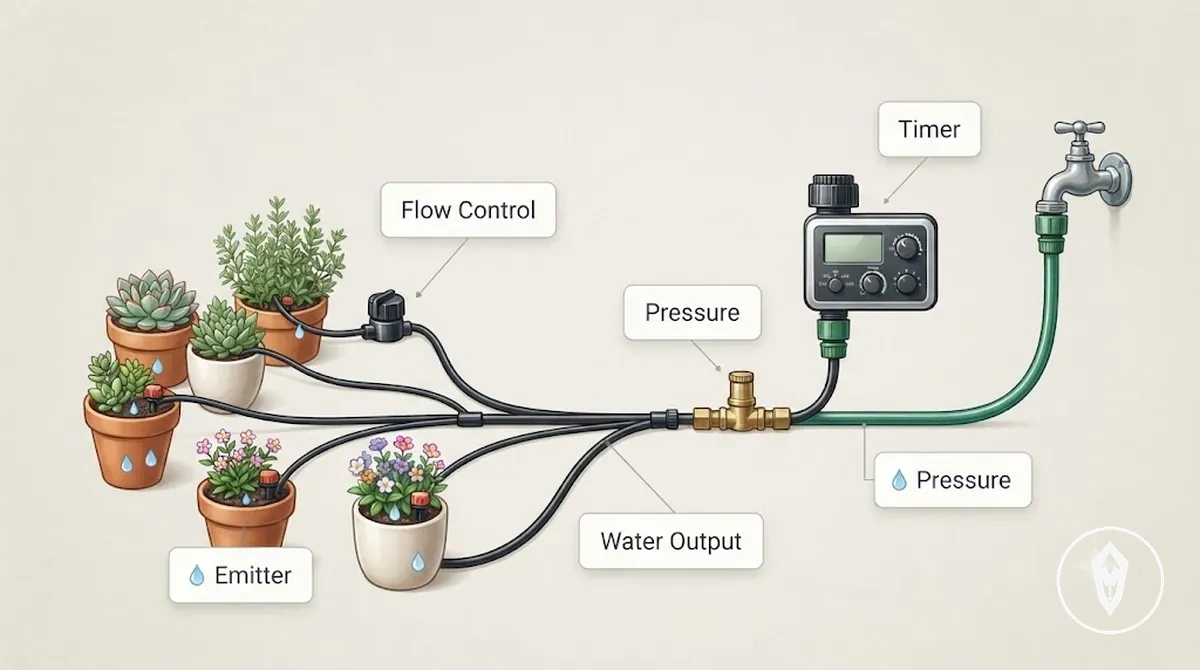
These control factors work as connected conditions rather than isolated features. Timer duration and frequency influence the delivered amount, while emitter output, tubing demand, source pressure, and regulator presence influence how evenly that water reaches the outlets. A watering timer can provide the intended run time, but unsuitable outlet flow or pressure conditions may still limit distribution consistency.
These control factors work as connected conditions rather than isolated features.
The relationship below organizes the main control factors by their effect on watering output. For information about the physical parts involved in these controls, see the kit components and parts guide.
| Control factor | What changes | Delivery effect | Decision cue |
|---|---|---|---|
| Timer duration | Watering cycle length and schedule timing | Changes the time available for water delivery | Match run time and frequency to the watering requirement |
| Outlet flow | Water released through each drip outlet or emitter | Changes emitter output and distribution consistency | Compare flow control with layout demand |
| Pressure | Water source pressure moving through the tubing | Influences delivery stability across connected outlets | Consider regulator or pressure reducer requirements for pressure management |
| Tubing demand | Water requirement created by the connected layout | Affects watering output across multiple outlets | Consider kit size, plant count, and layout arrangement |
A correct timer setting does not always indicate a complete control match. For example, a watering timer may use the intended run time, while limited outlet flow or pressure conditions still reduce emitter delivery. Evaluating the timer, flow, and pressure relationship helps identify whether the control setup matches the layout demand.
Timer controls that affect watering consistency
Timer controls affect watering consistency by managing the schedule and duration of water delivery in an automatic watering kit. Frequency determines how often watering cycles occur, run time determines how long each cycle operates, and start time determines when the scheduled cycle begins. These timer control attributes influence repeatability and the consistency of watering output.
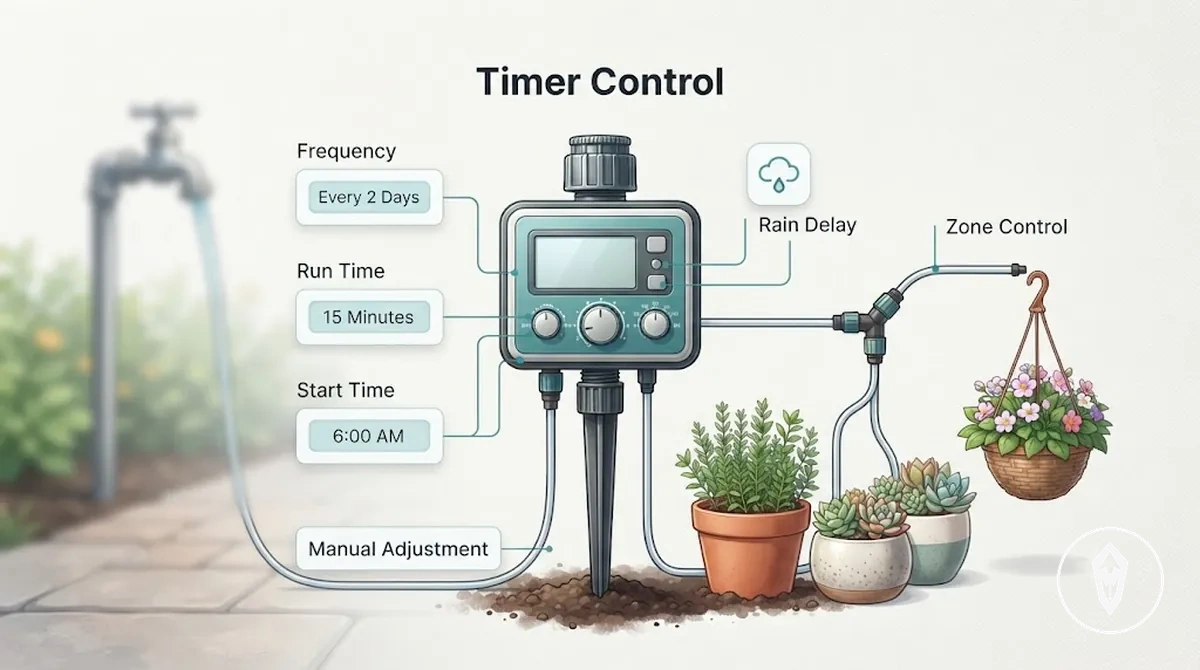
A watering timer should be evaluated by how its available controls match the watering requirements of the connected layout. A programmable timer with options such as manual override, rain delay, zone control, and program memory provides different ways to adjust watering schedules when plant groups or conditions change. These controls can help manage missed watering risk or unnecessary watering when the schedule requires adjustment.
These controls can help manage missed watering risk or unnecessary watering when the schedule requires adjustment.
The main timer attributes that influence watering consistency include:
- Frequency: Controls how often watering cycles repeat, affecting schedule consistency.
- Run time: Controls the duration of each watering cycle, affecting the time available for water delivery.
- Start time: Controls when a scheduled cycle begins, helping align watering periods with the intended timing requirement.
- Manual override: Provides a temporary schedule change without replacing the programmed settings.
- Rain delay: Allows a temporary pause or adjustment to the watering schedule when conditions require a change.
- Zone control: Separates watering schedules for connected plant groups with different timing needs.
- Program memory: Stores selected schedules so programmed settings can be retained after adjustments or interruptions.
A timer setting can appear correct while another control factor still affects watering consistency. For example, the selected run time may match the intended schedule, but emitter output, flow control, or layout demand can still influence the final water distribution. Timer controls therefore need to be evaluated as part of the wider automatic watering kit control relationship.